
Collection Facts
Historical Context
Frederick Walster was born in 1842 in Bavaria and at the age of sixteen immigrated to New York in 1859 with his mother, Catherine, and siblings, Christian, Conrad, and Catherine. His father had passed away in 1857. The family lived in Fort Plain, Montgomery County, New York.
In August, 1862 Fred Walster and his brother Christian (who died of typhoid pneumonia, in October, 1862) enlisted in the Town of Minden, Montgomery County, New York, as members of Company E, 153rd Regiment New York Volunteer Infantry. Fred was twenty-one years old and enlisted for three years. After the war he returned to his home in Fort Plain. On July 13, 1870, he passed away.
Scope of Collection
The Fred Walster diary is one of seventeen individual collections of materials from the Binghamton University Libraries Civil War Collections. The diary, beginning on January 1, 1865, describes Walster’s experiences during active duty in the war, and continues through his hospitalization in April, 1865 and to his discharge in June of that year. The diary then continues with his civilian life, with the last entry written on December 31, 1865. The back of the diary contains accounts of his experiences between enlisting in 1862 and 1864, including being sent to Alexandria, VA, Washington, D.C., and New Orleans, LA, before returning to Fort Plains, NY. Many of the entries recount weather conditions, spending patterns, rations, attending church, and the letters he had sent or received. Walster also details his time in the hospital as he is sick and then recovering, and his time as a business clerk. Notably, the diary includes his learning about the assassination of President Abraham Lincoln and shares his reaction to that event. Walster's purchases for each month are recorded at the end of the diary. This diary is transcribed true to text, meaning all grammatical errors and misspellings replicate Walster’s original writing.
Browse within this collection
Additional Information
<p>Binghamton University</p>
Browse similar collections

Collection Facts
Historical Context
The Onondaga Reservation is located in Onondaga County, New York, south of the city of Syracuse. It is recognized by the United States Government as a politically independent entity. The Onondaga people are one of the original five constituent nations of the Iroquois Confederacy that occupied much of present-day New York State, and were called the “Keepers of the Fire” by the other nations. They have a traditional form of government, where chiefs are nominated by clan mothers. Onondaga culture continues to evolve and incorporate aspects of both traditional and modern ways of life.
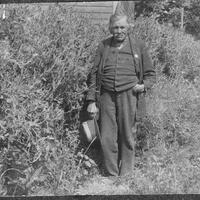
Fred Wolcott (1862-1946), who took most of the photographs of this collection, photographed and documented daily life on the Onondaga Nation territory around 1910. It is not known whether Wolcott took the photographs because of a personal interest in the Haudenosaunee people or for a commissioned project. In 1986, forty years after his death, the Onondaga Department of Parks organized this collection and published it in a book, ONONDAGA: Portraits of a Native People, and listed Wolcott as author and photographer.
Scope of Collection
The Wolcott Collection contains photographs taken by Fred Wolcott, who photographed and documented daily life on the Onondaga Nation Territory in the early 1900’s. The collection is significant because it provides a visual interpretation of the “in-between years” when the traditions of the Onondaga Nation were facing the pressures of acculturation from the outside world. The collection covers many aspects of life on their reservation near Nedrow, New York including dress, religion, sports, and prominent families.
Browse within this collection
Browse similar collections

Collection Facts
Historical Context
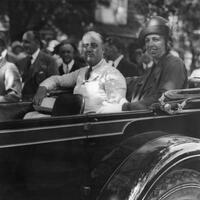
Franklin D. Roosevelt was proud of his heritage and family name. He idealized and strived to assume the gallant qualities he saw in his ancestry - generations of which he learned about from family stories passed down, and from the papers they left behind. Like his legendary stamp collection, FDR collected, sorted, and cared for the records of the Delano and Roosevelt families.
Scope of Collection
This collection includes photographs, correspondence, and other historical materials relating to the Roosevelt and Delano families. These documents simultaneously tell the history of settling on the banks of the Hudson River and the rise of two of the Hudson River Valley’s great families.
Browse within this collection
Browse similar collections

Collection Facts
Historical Context
Scoutmaster Emeritus Roger Elmer Burgess established the first Boy Scout Troop in Herkimer County, New York, in 1910 when he started Frankfort Boy Scout Troop 1. He served as Scoutmaster of Troop 1 for fifty years. The Frankfort Boy Scouts have focused on community outreach and Scout character development. Troop 1’s goal has been to mold young men into capable leaders and citizens through experience. In 2010, they celebrated 100 years of activity during which they produced confident, knowledgeable Scouts who are able to contribute to the larger community. Camp Russell served as a common campsite retreat for Troop 1 before the camp’s closure in 2015. Troop 1 has also taken many trips to historically significant locations, such as Gettysburg, Pennsylvania, Plymouth, Massachusetts, Saratoga and Niagara, New York. Such visits instilled a sense of American patriotism within the Scouts that has promoted civic values of the nation. Troop 1 has received various awards and acknowledgements throughout its long history including a citation from the New York State Assembly and several Council Commissioner’s Awards. Today, Troop 1 still functions as a part of the Leatherstocking Council of Central New York, which is a consolidation of two previous councils (Revolutionary Trails Council #400 and Otschodela Council #393) in the area. The Troop still serves the community by establishing values within youth through hard work and moral guidance.
Scope of Collection
This collection contains photos and documents related to Troop 1, Frankfort, New York. Several awards are included in the collection that honor the efforts of the troop. Photographs of Troop 1 show its beginning and its development throughout time.
Browse within this collection
Browse similar collections

Collection Facts
Historical Context
Frank E. Estabrook (1860 - 1918) was a regionally renowned architect from Newburgh, NY whose specialty was designing public buildings and schools.
Scope of Collection
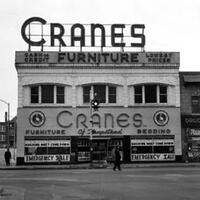
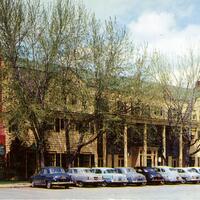
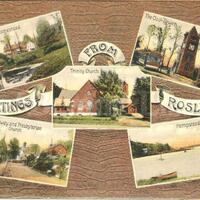
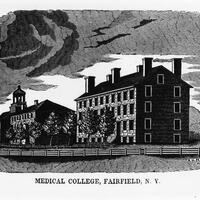
This collection consists of pages from the 1895 "souvenir" book called "Sketches" that Estabrook created. It features photographs and illustrations of the various hotels, churches, residences and public buildings that he designed at his office at the Mitchell Building, 75 Second St., Newburgh, NY. Probably intended as a sales or marketing tool, Estabrook wrote that the book "may be of interest and values to parties who propose to build." Included were "cards" or advertisements from artisans, manufacturers and tradesmen such as plumbers, carpenters, painters and others who worked with Estabrook.
Browse within this collection
Browse similar collections

Collection Facts
Historical Context
The American Civil War was fought between the years 1861 - 1865 between the Union (the North half of the country) and the Confederates (the South half of the country). The war began over the disagreements between the North and South regarding slavery. The Civil War is known for having more American deaths in a war than any other war America has been a part of. People from both halves of the nation joined this battle, both voluntarily and through a draft. Francis M. and Henry H. Stone were two brothers who were in the 27th Regiment of the New York Volunteer Infantry and the 1st Regiment New York Veteran Cavalry. The brothers were from Lima, in Livingston County, New York. These two soldiers participated in some of the most important battles, Bull Run, Manassas, Martinsburg and Richmond.
Scope of Collection
The Francis M. and Henry H. Stone Collection contain twenty-one letters written by the two brothers while they were in the 27th Regiment of the New York Volunteer Infantry and the 1st Regiment New York Veteran Cavalry. The brothers were from Lima, in Livingston County, New York. The letters home are to their father, sister Alta, and brother George. and are from 1861-1864. These letters are full of rich details concerning officers of the U.S. Army, battle positions taken up, troop strengths and movements, and capture of prisoners. These two soldiers participated in some of the most important battles, Bull Run, Manassas, Martinsburg and Richmond. The letters also furnish information about daily life for soldiers, limited food rations, bad conditions and illness within the camps and barracks.
Browse within this collection
Additional Information
Browse similar collections

Collection Facts
Historical Context
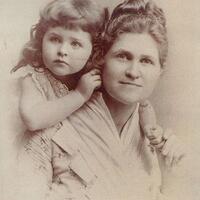
Frances Folsom Cleveland Preston was born on July 21, 1864 in Buffalo, New York. Frances Folsom graduated from Central High School in Buffalo and attended Wells College in Aurora, New York. During her senior year at Wells College, Frances Folsom received a letter from President Grover Cleveland asking her to marry. Frances accepted and married him at the age of 21 on June 2, 1886 at the White House. Frances became the youngest First Lady and took over the duties of hostess in the White House. Grover Cleveland lost the 1888 presidential election, but won again in 1892. Upon the post-presidential period, Frances became a widow after her husband’s death in 1908. Frances moved to Princeton, New Jersey and met Thoms Preston. Frances moved back to Aurora, New York along with Thomas, whom she married in February of 1913. Frances Cleveland Preston served as a trustee member at Wells College during the second decade of the 20th century. During the Great Depression, Frances helped lead the Needlework Guild of America and raised clothing drives for the poor. Frances Folsom Cleveland Preston passed away in Baltimore on October 29, 1947 and was buried next to her first husband, Grover Cleveland in Princeton, New Jersey.
Scope of Collection
The Frances Folsom Cleveland Preston Collection covers three periods of the life of the famed Wells alumna. The years of 1884 to 1885 cover Frances’ attendance at Wells College as a student. The second covers her life as a newly wedded First Lady of President Grover Cleveland from 1886 until the early twentieth century. The third part of the collection covers Frances’ departure from the White House to her return to Aurora, New York in 1913, when she married Thomas Preston, who taught at Princeton University before teaching at Wells College. The collection also contains portraits, articles, and photographs of the commemoration after her death in 1947.
Browse within this collection
Additional Information
Wells College
Browse similar collections

Collection Facts
Historical Context
In the fall of 1898, a number of Main Street merchants got up a display of farm fruits and produce on the sidewalks in front of their stores, and this was the nucleus of the Fort Plain Street Fair, famed throughout Central New York. Great crowds come by horse and automobile conveyances and by trains from up and down the valley to this September carnival. As many as 50,000 visitors are estimated to have attended the fair, during the week in which it is held, and 15,000 are said to have been present on a single day. Excellent displays of fruit, farm produce, field crops and poultry were held under canvas covered booths on the brick pavement of Canal and Main streets. Races, free attractions , band concerts, merry-go-rounds, etc. were added. These images from the early 1900s. The fair was abandoned during the war years.
Scope of Collection
This collection contains images and documents related to the Fort Plain Street Fair.
Browse within this collection
Browse similar collections

Collection Facts
Historical Context
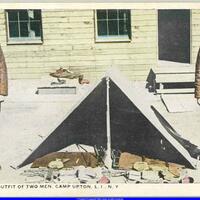
After the United States entered World War I, The New York National Guard began the task of guarding the New York City water supply. This included the Catskill Aqueduct through Ulster County. The fear of terrorism predicated that this vital resource be protected from potential acts of sabotage, as German sympathizers had already blown up ammunitions plant in Jersey City, New Jersey.
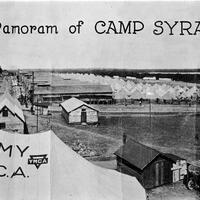
In August of 1917, the New York National Guard was sent overseas. To take over watch on the aqueduct, a state militia (the First Provisional Regiment) was created. This included men who were otherwise not eligible for active service and boys who, at 17, were too young. They were married, they were single; not a few hailed from wealthy families, others came from humble means. The site of their barracks, mess hall, and officer's quarters was called "Camp Fort Orange."
When the influenza pandemic of 1918 spread to the United States, thirty seven New York Guard soldiers died. Yet amidst it all, the men faithfully performed their duty and maintained the line. The First Provisional Regiment of the New York Guard began their withdrawal following the Armistice of November 11, 1918.
Scope of Collection
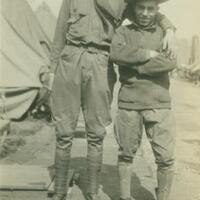
This collections include letters written by private Merville Harrington, highlighting his experience of guarding the Catskill Aqueduct. The collection also includes photographs taken by Sergeant Thomas Burke. Burke brought a camera with him and took photographs of his friends, fellow soldiers, and the animals that lived and worked with them, including their beloved cavalry horse, Peggy. The photos he shot are a rare, unique and singular glimpse into the past.
Browse within this collection
Browse similar collections

Collection Facts
Historical Context
Folk arts are traditional cultural expressions through which a group maintains and passes on its shared way of life. They express a group's sense of beauty, identity and values. A living cultural heritage, folk arts link the past and the present. Never static, folk arts change as they are adapted to new circumstances while they maintain their traditional qualities.
Scope of Collection
This collection contains folk art and related items from Upstate New York and other regions which were collected by folklorist Todd DeGarmo. Each item has supporting materials on artist, tradition, etc. in Folklife Collections files.