
Collection Facts
Historical Context
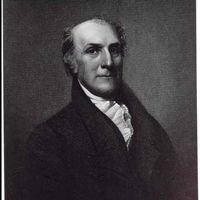
Fairfield Medical College developed out of the Medical School of Fairfield Academy, whose instructors taught several subjects in the areas of medicine, pharmacy, and surgery. However, the Academy itself did not grant medical degrees. To be able to respond to the demand for an actual medical degree, Fairfield Medical College was incorporated by Lyman Spalding, Westel Willoughby, and James Hadley in 1812. A charter was granted under the formal name, The College of Physicians & Surgeons of the Western District of New York, located in Herkimer County.
The medical college closed in 1841. Though professors began teaching at Geneva Medical College, the institution which eventually became Upstate Medical University. Former students of Fairfield Medical College became faculty members of Syracuse University Medical College, demonstrating another connection between the two schools.
Scope of Collection
The collection contains photographs of Fairfield Academy, Seminary, and Medical College. Also included: an address delivered at an 1889 Syracuse University Commencement, an article by Dr. Mather titled “Early Recollections of Fairfield Academy”, and “Circular and catalogue of the faculty and students of Fairfield Medical College” for years spanning 1826-1840.
Browse within this collection
Additional Information
Browse similar collections

Collection Facts
Historical Context
Ernest P. Simon was a former senior editor of the Port Washington News for over 30 years until his death in 1976. Often referred to as “Mr. Port Washington,” Simon was a prominent member of the community and advocate of local history.
Scope of Collection
The Ernie Simon Collection includes his personal collection of “Port Remembered” articles as well as his personal papers, correspondence, writings, photographs and memorabilia.
Browse within this collection
Browse similar collections


Collection Facts
Historical Context
Erma DeWitt was born on September 27th, 1907. Though originally from Long Island, she eventually moved to New Paltz, NY, where she met her husband Dr. Virgil DeWitt. Erma was a trained nurse and professional photographer. She loved photographing wildlife, children, and the historic stone houses across Ulster County. Erma also helped out New Paltz High School and Normal School by taking the photos needed for their yearbooks.
Erma died in her home on March 17, 1999 at the age of 91. Erma expressed a dream that one day her photographs would be published. Due to a generous donation made by her son, Dirk, that dream has come true.
Scope of Collection
This collection contains Erma Dewitt’s photographs, primarily taken during the 1940’s and 50’s. Among these photographs are her images of historic stone houses across Ulster County. The collection also includes portraits of local residents, images of events, and some of the yearbook photos Erma took for New Paltz High School.
Browse within this collection
Browse similar collections

Collection Facts
Historical Context
The area that would form the Town of Nelson was acquired by New York State following treaties with the Oneida and Tuscarora tribes following the American Revolutionary War. The town was established in 1807, from a portion of the town of Cazenovia, and named after an English naval hero, Horatio Nelson. Erieville is a small hamlet located in the southern portion of the town of Nelson, near Tuscarora Lake. Tuscarora Lake, also known as Erieville Reservoir, was constructed to serve as a feeder for the Erie Canal.
Scope of Collection
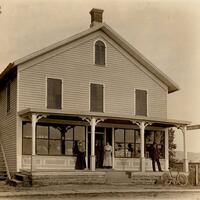
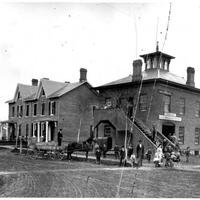
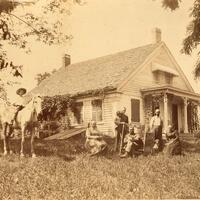
The Erieville-Nelson Historic collection contains photographs that share the history of the Erieville and Nelson areas. Photographs include images of landmarks, people, and structures during the nineteenth and twentieth centuries.
Browse within this collection
Browse similar collections

Collection Facts
Historical Context
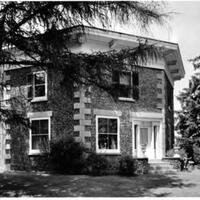
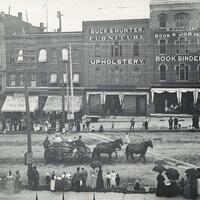
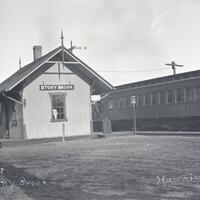
Construction began on the Erie Canal in 1817 and it officially opened in 1825. The canal ran about 360 miles and spanned across most of New York State. The Village of Fort Plain was established in 1831, and the Erie Canal helped enhance the manufacturing businesses of the village, especially the textile mills.
Scope of Collection
This collections contains images of the Erie Canal in the Fort Plain area. They illustrate how crucial the Canal was in the history of the village of Fort Plain.
Browse within this collection
Browse similar collections

Collection Facts
Historical Context
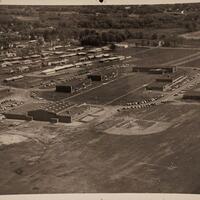
Eric Lindsay was a great friend of the Steele Memorial Library in Elmira, NY until his passing in 2015 at 90 years of age. His friends and family created a memorial fund that made this historical postcard collection through the Steele Memorial Library possible. This postcard collection depicts Elmira, NY and Chemung County, NY in historic pictorial images. Chemung County is located in New York's southern Tier. It is known for its soaring planes, rolling hills, the picturesque Chemung River, and for its capital, Elmira. Elmira was once known as The Queen City and was a center of commerce, culture, and manufacturing for the late 19th and early 20th centuries.
Scope of Collection
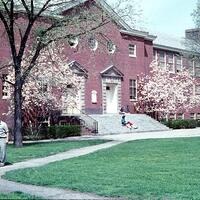
This collection includes, but is not limited to, cityscapes of Elmira, images of historic buildings and Victorian homes, and views of the Chemung River and the Chemung River Valley from the many hills in Chemung County. Elmira New York's parks are also prominently featured.
Browse within this collection
Additional Information
Steele Memorial Library
Browse similar collections


Collection Facts
Historical Context
The Village of Endicott is located in Broome County, New York, within the Binghamton Metropolitan Area. Endicott is known for being the first home of IBM and other strong industries.
Scope of Collection
This collection contains photographs and postcards that share the history of the Village of Endicott.
Browse within this collection
Browse similar collections

Collection Facts
Historical Context
The Village of Endicott is located in Broome County, New York, within the Binghamton Metropolitan Area. Endicott is known for being the first home of IBM and other strong industries. The major title is the Endicott Bulletin, which enjoyed a run from 1914 until its 1960 merger with the Binghamton paper. Endicott-Johnson Publications - soon to be published - will include the Endicott-Johnson Workers Review, a c.1918-1925 magazine published by the Endicott-Johnson Corporation, along with numerous other E-J pamphlets.
Scope of Collection
This collection includes many papers that enjoyed short runs, some originating in the old village of Union that merged with Endicott in 1906.
Browse similar collections


Collection Facts
Historical Context
The Emporium Lumber Company was originally formed in 1892 in Pennsylvania. The success of the company led to expansion in New York State. The sawmill in Conifer, New York opened in 1911 and the Grasse River Railroad, a primary means of transportation for the logging business, followed soon after in 1913. The railroad was used to haul cut lumber and traveled between New York Central Station at Childwold, New York and the Emporium Forestry Company operation at Cranberry Lake, New York. The Emporium Forestry Company was dissolved in 1950.
Scope of Collection
The collection is comprised of black-and-white photographs relating to the Emporium Lumber Company, Grasse River Railroad, and Conifer, New York region. Images depict lumber industry operations, sawmills, lumberyards, railroad operations, and the local environment, including notable buildings and nature scenes. The photographs date from the early to mid-20th century.
Browse within this collection
Browse similar collections

Collection Facts
Historical Context
The Emporium Lumber Company was originally formed in 1892 in Pennsylvania. The success of the company led to expansion in New York State. The sawmill in Conifer, New York opened in 1911 and the Grasse River Railroad, a primary means of transportation for the logging business, followed soon after in 1913. The railroad was used to haul cut lumber and traveled between New York Central Station at Childwold, New York, and the Emporium Forestry Company operation at Cranberry Lake, New York. The Emporium Forestry Company was dissolved in 1950.
Scope of Collection
The maps in this collection depict the development of land in the Cranberry Lake area to support the Emporium Forestry Company's timber harvesting operation from 1866 to 1958. These maps show the plotting of the Grasse River Railroad, the development of the town of Conifer, the purchase and sale of land, and proposed reservoirs created by damming local rivers.