
Collection Facts
Historical Context
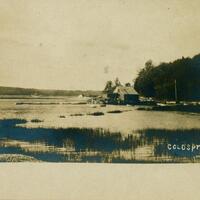
The photographs in this collection are from an album belonging to a woman named Grace Cogswell. Images are of various places in the Adirondacks that show locations where Grace and her family and friends stayed and traveled from 1899 through 1914. Starting in the 1850’s and rapidly accelerating in the early 20th century, Adirondack tourism brought thousands of Americans out of the cities and into the wilderness for weeks at a time.
Scope of Collection
This collection consists of numerous black and white photographs. Included are numerous group portraits, including both children and adults in costume, as well as landscape photographs. Also included are individuals hiking, snowshoeing, playing hockey, and engaged in other recreational pursuits.
Browse similar collections

Collection Facts
Historical Context
The St. Lawrence-Lewis School Library System collection consists of high school yearbooks from area high schools. The Deanonian is the annual yearbook of the Gouverneur Central School.
Scope of Collection
This collection consists of issues of the Deanonian dating between 1927 and 2019.
Browse within this collection
Browse similar collections

Collection Facts
Historical Context
The Diocese of Central New York was established in 1868 from the Diocese of Western New York. The Diocese of Western New York was in turn established in 1838 from the Diocese of New York, which was created in 1785. The Diocese of Central New York includes 14 counties in the center of New York State: Broome, Cayuga, Chemung, Chenango, Cortland, Jefferson, Lewis, Madison, Oneida, Onondaga, Oswego, Seneca, Tioga and Tompkins.
Scope of Collection
The digital collection of the Gospel Messenger of the Episcopal Diocese of Central New York includes 52 issues from Volume 1 (1827) that were published weekly and distributed in newspaper form, 12 issues from Volume 42 (1917), and 4 issues of Volume 43 (1918) that were published monthly and distributed in newsletter form.
Additional Information
The Archives of the Diocese of Central New York holds a nearly complete set of The Gospel Messenger, a weekly church newspaper begun in 1827 in Auburn, and the forerunner of our current e-mail newsletter, The Messenger. It provides a wealth of information about the growth of the Episcopal Church throughout the nineteenth century in upstate New York. Bound volumes are available from January 1827–April 1907, January 1910–December 1919, and January 1943–December 1945; unbound volumes are available from 1880 to 2010.
Browse similar collections

Collection Facts
Scope of Collection
This collection consists of historic postcards of Goshen, NY, located in Orange County. The postcards show street scenes, private residences, public buildings, businesses and the historic race track.
Browse within this collection
Browse similar collections

Collection Facts
Historical Context
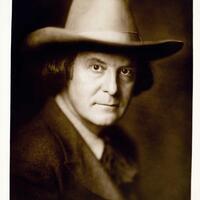
Gordon Muck was a colorful, creative force of artful nature. Born and bred on Syracuse’s north side, he lived, worked and taught in Central New York his entire life. His lasting influence as an artist, art critic, instructor and supervisor of art programs, antique dealer and mentor is still evident in the places he worked, lived and studied.
By 1948, Muck was teaching in rural DeRuyter, NY, where he encouraged his students to reach their highest potential and best effort. In 1956 Muck left DeRuyter to teach at Nottingham High School, and in 1960 he became the Art Supervisor for the Syracuse Schools. He also began writing a weekly art column for the Syracuse Post Standard two years into his tenure as Art Supervisor. Muck’s final teaching appointment was at Fayetteville Manlius High School from 1965-1981, where he also planned and managed the annual FM Art Show. Muck never seemed to tire of teaching and communicating with his students, always pushing them to perform to their potential, both as artists and as human beings.
Muck’s work graced several shows throughout the years. He participated in both group and solo shows in venues across Central New York and beyond. He also displayed his paintings and drawings in his own gallery at the “Pillars,” a Greek revival residence he and his wife Bertha purchased in 1959. Gordon Muck was a cultural innovator and brilliant teacher whose legacy continues in the hearts and memories of thousands of Central New York students, to whom this digital collection is dedicated.
Scope of Collection
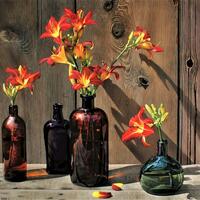
This digital collection includes all paintings by Gordon Muck that are in the New Woodstock Free Public Library’s collection. The included paintings exhibit a range of techniques and media, including watercolor, acrylic, oil, scratchboard, among others, and cover a broad range of Muck’s career from the 1940s to the 1970s. Many of the paintings depict landscape or seascape scenes, and a few are portraits.
Browse within this collection
Browse similar collections



Collection Facts
Scope of Collection
This collection includes historic photographs related to the Golden Hill School, a boarding school for boys in Kingston, N.Y.
Browse within this collection
Browse similar collections

Collection Facts
Historical Context
The Thousand Islands area of the St. Lawrence River has getaway for wealthy individuals in the United States and Canada since the late 19th century. A popular destination for recreation, it is the site of many large hotels, expansive summer homes, and luxury yachting.
Scope of Collection
This collection contains numerous photographs depicting homes, hotels, and watercraft in the Thousand Islands area. Images of the interior and exterior of Calumet Castle as well as of the Hotel Frontenac are included.
Browse within this collection
Browse similar collections

Collection Facts
Historical Context
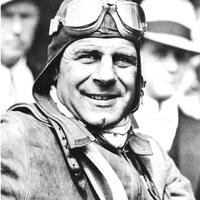
Originally comprising vast areas of the North Shore of Long Island, from Great Neck to Huntington, the Long Island Gold Coast, as it was called, was a favorite retreat of the rich and famous. Starting at about the turn of the century and through the 1930's, the North Shore was a virtual Who's Who of High Society. From the Astors to the Vanderbilts, this was the place to be for some of the most notable Americans. The mansions constructed during that period numbered in the hundreds.
Scope of Collection
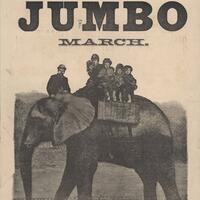
The collection consists of real estate brochures, railroad terminal maps and invitations from Glen Head and Glenwood Landing, NY.
Browse within this collection
Browse similar collections

Collection Facts
Historical Context
The North Shore of Long Island is the area along Long Island's northern coast, bordering Long Island Sound. Long Island's North Shore is known for its extreme wealth and lavish estates. The North Shore has a history of affluence, most notably at the turn of the 20th century, which earned it the nickname "the Gold Coast" Historically, this term is used only in reference to the Long Island coastline in the towns of North Hempstead, Oyster Bay, and Huntington, in Nassau and western Suffolk County. The easternmost certified Gold Coast Mansion is the Geissler Estate, located just west of Indian Hills Country Club in Fort Salonga, within the Town of Huntington.
Scope of Collection
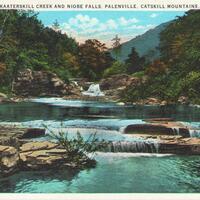
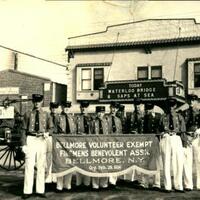
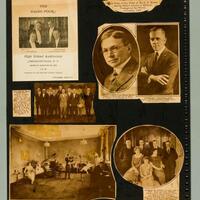
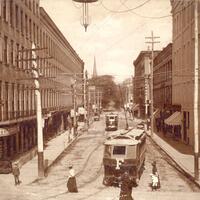
The collection consists of architectural renderings, advertisements, and promotional photos for neighborhoods prior to development on Long Island’s Gold Coast.
Browse within this collection
Browse similar collections

Collection Facts
Historical Context
The North Shore of Long Island is the area along Long Island's northern coast, bordering Long Island Sound. Long Island's North Shore is known for its extreme wealth and lavish estates. The North Shore has a history of affluence, most notably at the turn of the 20th century, which earned it the nickname "the Gold Coast" Historically, this term is used only in reference to the Long Island coastline in the towns of North Hempstead, Oyster Bay, and Huntington, in Nassau and western Suffolk County. The easternmost certified Gold Coast Mansion is the Geissler Estate, located just west of Indian Hills Country Club in Fort Salonga, within the Town of Huntington.
Scope of Collection
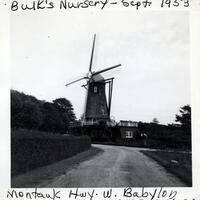
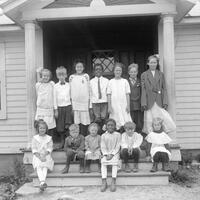
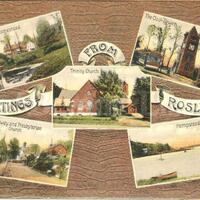
The collection consists of over 300 historic postcards from the early and mid 20th Century depicting commercial buildings, maritime activities, hotels, schools, roads, and natural scenes on Long Island’s Gold Coast.