

Collection Facts
Historical Context
The SUNY College of Environmental Science and Forestry in Syracuse, NY was originally founded as The New York State College of Forestry at Syracuse University in 1911. WHen the State University of New York (SUNY) public college system was established in 1948, The New York State College of Forestry at Syracuse University became a member of the SUNY system and changed its name to The State University College of Forestry at Syracuse University. In 1972, the name changed again and became The State University of New York - College of Environmental Science and Forestry (SUNY ESF).
The State University of New York - College of Environmental Science and Forestry has a main campus in Syracuse, New York and several remote campuses in New York.
Scope of Collection
This collection contains The Empire Forester, which is the yearbook for the main Syracuse campus of SUNY ESF, dating from 1915 to the present.
Browse within this collection
Browse similar collections

Collection Facts
Historical Context
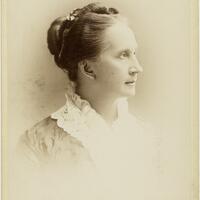
Emily Howland (November 29, 1827 – June 29, 1929) was an educator, abolitionist, suffragist and peace activist, as well as a bank director. She taught at the Normal School for Colored Girls in Washington, D.C., established a school in Virginia for the children of freed slaves, and later served as owner and consulting head of the Sherwood Select school. During the Civil War, she taught literacy skills to freed slaves, and provided nursing care to victims of a smallpox outbreak. Also active in women’s suffrage, temperance, and the peace movement, she made many significant contributions in these areas, particularly as a writer and public speaker. She served as the first woman director of a national bank in the United States, at the Aurora National Bank in Aurora, New York, a role that she held for nearly 40 years.
Scope of Collection
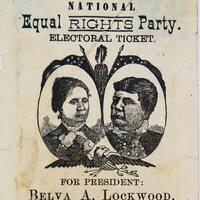
The collection includes Emily Howland’s personal correspondence and diaries, and many books from her private library, as well as an extensive collection of pamphlets, posters and ephemera related to her work in education, temperance, women’s suffrage, peace activism, and the abolition of slavery.
Browse within this collection
Additional Information
Wells College
Browse similar collections

Collection Facts
Historical Context
Elsie Gutchess was a women’s historian, interested specifically in the women of the United States and New York. Her research materials were compiled with the intention to write a column titled “Great Women of the USA”. Gutchess served as the village of Dryden’s historian before her death in April 2019, and a significant part of Gutchess’s research was about women in Dryden and Tompkins County.
Scope of Collection
The collection contains Gutchess’s research materials about women’s history, including her notes and transcripts of profiles she gave on women of history at various events. The collection is a mixture of primary and secondary sources, include a substantial portion of periodicals relating to the suffrage movement and health movements of the 19th and early 20th Centuries.
Browse within this collection
Additional Information
Wells College
Browse similar collections

Collection Facts
Historical Context
The Elmira Female College opened to 242 students of various academic backgrounds and proficiencies for its first term in October, 1855. The construction of the academic building fell behind schedule and upon opening lacked the furnishings and amenities as promised in the prospectus; in fact, the college was without a President until the following year. Under the direction of Simeon Benjamin, the Board of Trustees moved quickly to inject stability into the venture and by 1856, Elmira Female College had made significant progress.
The administration secured Augustus Woodruff Cowles as the first president of Elmira Female College. In his inaugural address, Cowles established a guiding principle of the College: to “promote the rights of woman to a larger share of education… to furnish an institution where the most gifted and intellectual may pursue a course of thorough and extended study...”
Under the leadership of Dr. Cowles, the College overcame the difficult years of establishment: meeting a rigorous standard of academic excellence and achieving financial solvency to sustain the College, including the successful navigation of the lean economic climate resulting from the Civil War. After a thirty-three year tenure, Dr. Cowles stepped down as president in 1889. A succession of short-term presidents over the next seven years put newly adopted, “Elmira College,” in financial hardship and the intermittent return of Dr. Cowles to serve as President Emeritus was crucial in establishing administrative continuity during this era. The historic records under the short-term presidencies of Dr. Wilson Phraner, Dr. Charles Van Norden, and Dr. Rufus Smith Green are not well-documented.
Dr. Alexander Cameron MacKenzie assumed the presidency in 1896 until his death in 1915. MacKenzie’s tenure proved to be a success, after increasing enrollment and running two successful capital campaigns, President MacKenzie was able to bring much needed stability back to Elmira College. During the closing months of the MacKenzie era, suffrage fervor began to build. Although, there is no existing official statement made by the College regarding suffrage and no existing statement made by President MacKenzie (or any Elmira College President) on the issue, student and faculty involvement survives in the campus newspaper, EC Weekly, and in the student run creative writing publications, The Lepidotus and The Sybil. Faculty members hosted a suffrage agenda as illustrated in the December 1914 issue of The Sibyl, “Miss Osler [economics professor at Elmira College] had the pleasure of introducing the popular speaker, Mrs. Forbes-Robertson Hale, who lectured on the Feminist Movement at the women’s Federation Building, Thursday evening, November 13th.”
Dean M. Anstice Harris briefly held the position of acting president after the death of Dr. MacKenzie in March, 1915, and is the only woman to have held the position at Elmira College. Dr. John Balcom Shaw was inaugurated as the 6th President of Elmira College in November, 1915. In his inaugural address, Shaw recognizes the strengthening woman’s movement, stating, “The supreme object of my thought lies far out beyond the perimeter of this institution’s life or interest. It is the call of modern womanhood that I am least able to shut out of my ears at this time. This is pre-eminently woman’s day, and that day is only just opening. She is now coming into her own by leaps and bounds. All callings fling wide their doors to her; all classes are uniting to give her coronation. Three outstanding words tell the whole story of womanhood’s new birth—equality, opportunity, regnancy.”
Elmira College students experienced similar tensions on campus that were manifested in the local and national discourse. Students hosted a suffrage night on Oct. 28, 1915. The suffrage night was described in the November 1915 issue of The Sybil, “There were two booths, yellow and red—each flaring its posters, literature, stamps, pins, ribbons, flowers, etc. Although the Suffrage followers were very much in majority, the Antis did not lack for adherents. Most of the girls came out very strongly for either one side [or] the other; there were few neutrals.”
Students were actively involved with the campaign to pass suffrage on and off campus. The November 12, 1917 issue of the Elmira College Weekly states, “The college girls under the leadership of Catherine Morgan, personally interviewed some 900 men of the seventh ward… Over 1500 letters were addressed and sent out from the college to voters. Some thirty girls, rounded up by Pick [Hannah Pickering], tumbled out of their warm beds in the cold grey dawn, for once without muttered imprecations at the alarm clock, to tackle unsuspecting victims approaching the polls. Miss Osler’s entire government class was conscripted to appear on the scene of the conflict to enlarge their political education (No exemptions allowed). The passage continues:
A miniature campaign was staged within the college. On Monday night a parade and mass meeting was held at which noise was the most conspicuous feature. A regular election with rigid registration and voting rules was carried on in the most approved official manner. Marjorie Hough, as Commissioners of Elections, made a ruling right and left and cruelly cast out Pick’s vote because she didn’t register properly. The “soldiers’ vote” (of those at the polls) helped to swell the suffrage vote. Complete returns showed that suffrage won by the overwhelming majority of 99 to 40.”
There are no existing records of a statement made by President Shaw after suffrage passed in New York State. Shaw stepped down from the Presidency in 1918 and was replaced by Dr. Frederick Lent. Dr. Lent was President when the 19th Amendment was adopted on August 18, 1920. In the immediate aftermath, no mention of the passage of the Amendment was made by Lent in any existing address, in official College literature, in the student run newspaper, Elmira College Weekly, or the literary magazine, The Sibyl.
Scope of Collection
The women’s rights and suffrage collection is a hidden collection within the Elmira College Archives. It contains campus publications (Lepidotus, Sibyl, EC Weekly, and the Alumni Bulletin), student letters, student scrapbooks and addresses made by college officials. The collection documents the student, faculty and institutional role in the women’s rights movement and is primarily comprised of records focused around the passage of suffrage in New York State in 1917.
The majority of materials that document the activities of students and faculty are found in the Elmira College publications Elmira College Weekly and The Sibyl. The materials compiled from scrapbooks suggest an inclination towards suffrage support; however, these documents provide little more than a cursory understanding of student involvement.
There is no surviving documentation of Elmira College’s official statement concerning suffrage. In lieu of these documents, the collection includes addresses from the administrations of Dr. Cowles, Dr. Shaw and Dr. Lent. Dr. Shaw and Dr. Lent were the sitting presidents when suffrage passed in New York State and nationally as the 19th Amendment.
The suffrage related records in the Elmira College Archives document vignettes of student, faculty and administrative attitudes, contributions and/or responses to the suffrage question that sprang from the first woman’s rights convention in Seneca Falls, NY in 1848. Elmira College, established seven years after the first convention, offers the unique perspective of women in higher education and their attitudes towards suffrage over the course of 60 years until the amendment passed in New York State, November 6, 1917. Their thoughts and perspectives compare and contrast with the members of the College administration. This duality is one of the highlights of the collection.
The collection is limited to material collected under the authority of the Elmira College Archives. Therefore, the collection frames the women’s rights and suffrage movement in context of the Elmira College campus community and is not a reflection of New York State suffrage as a whole.
Browse within this collection
Additional Information
Gannett-Tripp Library, Elmira College
Browse similar collections

Collection Facts
Historical Context
Elmira College was founded in 1855, the first institution of higher education to offer degrees to women equivalent to those being offered to men. Now a private, coeducational liberal arts college, Elmira emphasizes both general and professional education.
Scope of Collection
This is a collection of photographs of Elmira College dating from the founding in 1855 through the mid-Twentieth century.
Browse within this collection
Browse similar collections

Collection Facts
Scope of Collection
This collection includes postcards depicting Ellenville landscapes, architecture, and daily life.
Browse within this collection
Browse similar collections

Collection Facts
Historical Context
Ella Merrill Crippen Wheeler was born October 31, 1859 within weeks of her father John Crippen’s death. Her mother, Sarah Roxana Hyde Crippen, passed away in Hastings, New York around Ella’s seventh birthday. Both are buried in Coit Cemetery in Oswego County. Ella came to Oswego in 1880 upon marrying resident Fred Dobbie Wheeler in Batavia. When she began taking photographs, Fred and Ella Wheeler lived at 138 W. 4th Street in the house they built there. It was sold on his passing in 1904 and is now the Reynolds & McGowan Law Firm. After Fred’s passing, Ella boarded at 22 W. Oneida where physician D. D. (David D.) O'Brien was located before leaving for San Francisco in 1910. Fred, Ella upon her passing in 1940, her sister Elma, and their daughter Pauline are buried in Riverside Cemetery.
Scope of Collection
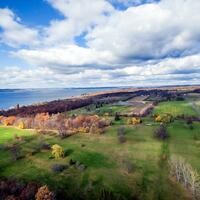
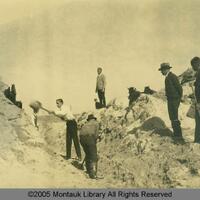
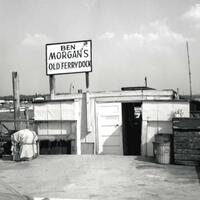
These glass plate photographs of Oswego and family trips to Michigan, Connecticut, and the Thousand Islands were taken between 1900 and 1910 by photographer Ella Merrill Crippen Wheeler. Capturing Oswego at a time when coal was king, the busy port and rail terminus recalls a time before automobiles ruled the roads.
Browse similar collections

Collection Facts
Historical Context
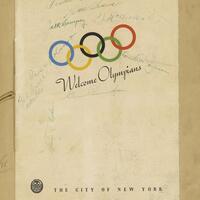
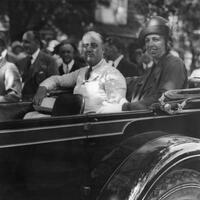
Elizabeth “Pat” Ryan (1923-1998) was the daughter of Dr. William J. and Elizabeth Ryan. Dr. Ryan was Superintendent of the Summit Park Sanitorium, Pomona, where the family lived. She began swimming at a young age, and joined the Women’s Swimming Association in New York at age 9. Pat began competing as an amateur, and qualified for the 1936 Olympics in Berlin at the age of 13. At the Berlin games, she swam as part of the 400 meter freestyle relay team, winning a bronze medal. Following the games, she continued to compete at the national level. Ryan was poised for a second Olympics, but the 1940 games were cancelled upon the outbreak of World War II. Ryan retired from competitive swimming around this time, but continued to make charitable appearances.
Scope of Collection
This scrapbook contains newspaper images, articles, letters and ephemera related to Elizabeth Ryan. It was made available for digitization thanks to Marita Doherty, Elizabeth’s sister, and Peter Scheibner of the Rockland County Sports Hall of Fame.
Browse similar collections

Collection Facts
Historical Context
Elizabeth Blackwell, MD was the first woman in the world to graduate from an accredited medical school. After arriving at Geneva Medical College in November of 1847, Blackwell began fifteen months of study to earn her medical degree. Dr. Blackwell graduated from Geneva Medical College on January 23, 1849 and ranked first in her class. Though successful as a medical student, Blackwell faced criticism and prejudice simply for being a woman who strove to be a physician. She faced similar intense reactions when she tried to practice medicine in Europe and subsequently when she tried to establish a medical practice in New York City. Geneva Medical College moved to Syracuse in 1872, becoming the Syracuse University College of Medicine
Scope of Collection
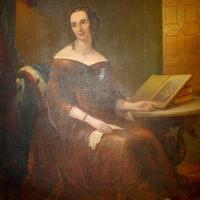
This collection features a portrait painting of Blackwell by Joseph Stanley Kozlowski completed in 1963. Other items in this collection include: various addresses and publications by Blackwell dating to the late 19th century, as well as a photograph of Geneva Medical College.
Browse within this collection
Browse similar collections

Collection Facts
Scope of Collection
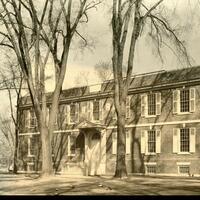
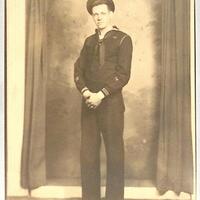
This collection includes black and white photographs taken by Elie Shneour '47 during the years 1943-1948. This collection offers a snapshot of Bard during and immediately after WWII. Included are some of the first images of women at Bard, as the college became coed in 1944 causing it to break its ties with Columbia University. Other items of interest include aerial shots of the campus, theatrical and musical events, dance parties, conferences, and portraits of individuals who made Bard such a vibrant community. The images were scanned directly from negatives found in the Bard Archives.