
Collection Facts
Historical Context
George N. Hemmer (1886-1965) graduated from the Syracuse University College of Medicine in 1909 and was a physician in Syracuse for 55 years. After completing his MD, Dr. Hemmer interned at St. Joseph’s Hospital, Germany Hospital in Brooklyn, and Misericordia Hospital in New York City. In 1912, he married Ethel May Place RN, who was from the class of 1911 at the Hospital of the Good Shepherd. They had two children: Ruth Hemmer Sarkus Costello (1915-2015) and Charles A. Hemmer MD (1917-1978). He was a member of the American Academy of General Practitioners, American Medical Society, New York State Medical Society, Onondaga County Medical Society, American Medical Association, and Syracuse Academy of Medicine. After Ethel died in 1920, he was married to Irene E. Boucher until his death on June 13, 1965.
Scope of Collection
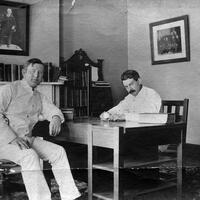
This collection contains three student notebooks from George N. Hemmer, who graduated from the Syracuse University College of Medicine in 1909.
Browse within this collection
Additional Information
Browse similar collections
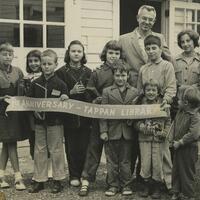
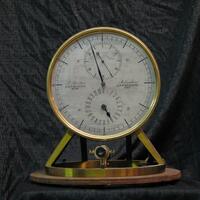
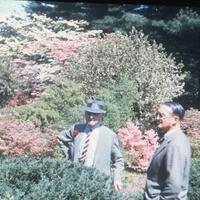
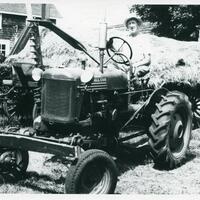

Collection Facts
Historical Context
George Marshall (1904 - 2000) and Bob Marshall (1901 - 1939) were brothers known for their conservationist efforts. The Marshall brothers’ father, Louis Marshall, a prominent constitutional lawyer, was co-owner of the Knollwood Club, an Adirondack Great Camp on Lower Saranac Lake. The Marshall brothers spent much of their youth exploring the Adirondack region, which inspired them to create the challenge of climbing all 46 of the Adirondack high peaks. Forty-sixers are hikers who have climbed all 46 of high peaks. The Marshall brothers and their family friend and guide, Herbert Clark are the original Adirondack High Peak “46ers”.
Scope of Collection
This collection includes black-and-white photographs depicting the Marshall family and friends, Adirondack region, and Knollwood Camp. The photographs were taken between 1910 and 1930. The collection includes many images of brothers George and Bob Marshall, as well as several images with their friend and guide, Herb Clark.
Browse similar collections

Collection Facts
Historical Context
Geneva Medical College was founded in 1834 by Dr. Edward Cutbush, a Professor of Chemistry at Geneva College, which is now named Hobart College. Among the graduates of Geneva Medical College is Elizabeth Blackwell, MD, who was the first woman physician in the world to graduate from an accredited college of medicine. At Dr. Cutbush’s suggestion, Geneva Medical College became a department of Geneva College. From 1834-1853 the official name of this new medical school was Medical Institution of Geneva College. As population shifted in the middle of the nineteenth century and other medical schools were growing, the faculty of Geneva Medical determined that it was necessary to move their school to a new location. They chose Syracuse University due to a number of factors such as, declining enrollments, the central location of the city of Syracuse, and an invitation from Mother Marianne Cope, Administrator of St. Joseph’s Hospital in Syracuse, to use St. Joseph’s for clinical training of medical students. Geneva Medical College was officially dissolved in 1871 and reopened in their new location and the new name of College of Physicians and Surgeons of the Syracuse University. Geneva Medical College is the predecessor of the Syracuse University College of Medicine and the current SUNY Upstate Medical University.
Scope of Collection
The collection contains images of Geneva Medical College buildings and obituaries of renowned alumni, dating from the late 19th century to early 20th century.
Browse within this collection
Additional Information
Browse similar collections

Collection Facts
Scope of Collection
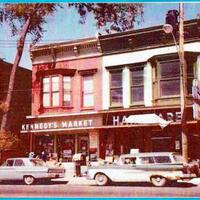
This collection includes images of tintypes, black and white photographs, and color photographs of the towns, countryside, and daily life in the southern Genesee Valley river valley region from the late nineteenth to the late twentieth centuries. Researchers may view additional collection photographs by contacting the Houghton College Archives.
Browse within this collection
Additional Information
Houghton College
Browse similar collections

Collection Facts
Historical Context
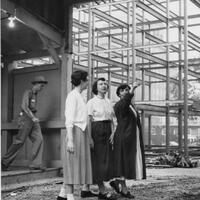
The founding of Genesee Community College exemplifies the importance of community action and the long-term positive impact of civic responsibility. In the early 1960s, the Genesee County Board of Supervisors conducted a study on the regional need and viability of a locally established community college and determined student enrollment would never exceed 75 students. The Batavia Jaycees, however, prevailed with its own study, and its findings were quite different. In February 1964, the Jaycees reported to the Board of Supervisors there was not only a desire and need for a community college, but also the financial ability to support a college, a favorable economic climate, and a growing population that included a sufficient student base necessary for a successful community college. The Board of Supervisors determined that a public referendum was the best method to make this important decision.
Through the course of the next year, a community-wide debate ensued over the possibility of establishing a college. Proponents of the community college developed a “Citizens Committee” and led a vigorous and well-planned campaign. In November 1965, the public voted “YES” by a margin of over 1400 to the proposition of establishing a community college in Genesee County. Genesee became one of only two voter-established community colleges in New York State.
On September 27, 1967 Genesee Community College welcomed its first class of 378 full-time and 243 part-time students—approximately 200 more students than projected, and 500 more students than the Board of Supervisors had anticipated! Little did the original founders know that their original 75-student, one-campus college would expand to another six campuses and over 6000 students. This digital collection features the early history of Genesee Community College from Citizens Committee brainchild to the construction of the College Road campus in Batavia
This digital collection features the early history of Genesee Community College from Citizens Committee brainchild to the construction of the College Road campus in Batavia.
Scope of Collection
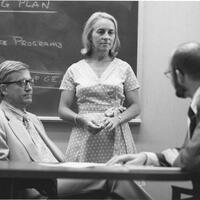
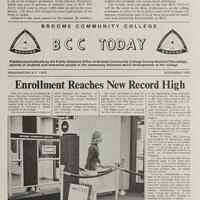
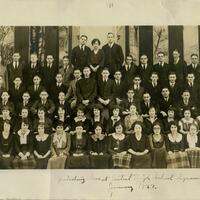
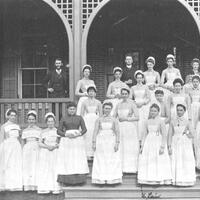
The collection includes photographs, brochures and promotional materials, and excerpts from a yearbook. The photographs cover campus groundbreaking and construction, as well as faculty and student events from the 1960s and 1970s.
Browse within this collection
Browse similar collections

Collection Facts
Scope of Collection
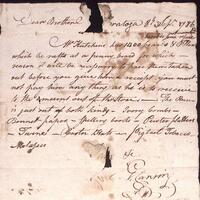
This collection consists of a handwritten speech written by General Curtis which critiques the prison system.
Browse similar collections

Collection Facts
Historical Context
In 1909, the Lake Champlain Tercentenary celebration was held near the ruins of Fort Ticonderoga, to commemorate the lake's discovery by Samuel De Champlain in 1609.
Scope of Collection
This collection consists of a single volume of captioned images which were meant to commemorate the Tercentenary celebration of Lake Champlain's discovery by Europeans. The collection contains images which document the history of the lake's discovery as well as the role it has played in the economic and military history both of the region and of the entire United States. Included are images depicting the Battle of Valcour Island and the later raising of the hull of the Revenge. There are also photographs and paintings of the nearby Fort Ticonderoga, which was then being reconstructed. Also included are many photographs of the Tetracentenary celebration itself and portraits of the committee responsible for planning and organizing the festivities.
Browse within this collection

Collection Facts
Historical Context
Albert Gayer (1897-1976) moved as a young child to Schenectady, NY, living not far from the banks of the Erie Barge Canal. He and his parents had emigrated from Hungary in 1903. Family tradition says that Gayer soon became fascinated with canal life and lore. By the 1950s he was collecting historical canal-related manuscripts, photographs, books and other artifacts. He was among the first directors of the Canal Society. His collections of historic postcards and photographic glass negatives are among the most outstanding resources on New York State canal history.
Scope of Collection
This large collection of historic glass and film negatives, prints, and postcards (both printed and real-photo) documents life along New York State’s canals, including the Erie Canal, Black River Canal, and Champlain Canal. The collection covers all of New York, with a heavier emphasis on the eastern half of the state, from the 1830s to the 1960s.
Browse within this collection
Browse similar collections

Collection Facts
Historical Context
During 1869, New York City merchant millionaire Alexander Turney Stewart set out to create a place that embodied his ideals, his wisdom and his wealth. The widely known business genius purchased 10,000 acres of Hempstead Plains on Long Island. There, at almost 70 and with no children, Stewart began creating his legacy...his Garden City.
One of America's earliest planned villages, Garden City was developed with wide avenues, hundreds of trees and shrubs, sixty well-built homes on spacious lots, a handsome hotel on a 30-acre park - all reached via its own railroad line, A.T. Stewart's Central Railroad of Long Island.
When Alexander Turney Sterwart died in 1876, his wife, Cornelia, built the landmark Cathedral of the Incarnation, Bishop's Residence and two church schools in memory of her husband. She agreed to deed these properties to the Episcopal Church of Long Island with one provision - that her husband be entombed in the Cathedral. They agreed. After Mrs. Stewart's death in 1886, her heirs formed the Garden City Company in 1893 to continue the orderly development of the Village. For many years there was little change in the original Village's overall dimensions.
In 1907, a period of explosive growth was ushered in with the building of Garden City Estates. Three years later, the Garden City Company developed another tract known as Garden City East.
In September 1919, three sections of the Village were incorporated under an unusual and highly successful non-political form of government called the Community Agreement. This Agreement was modified in 1931 to include the newly developed Western Section of the Village.
For more than one hundred years, Garden City has grown and flourished and, to this day, remains one of the most desirable residential communities in the country.
Scope of Collection
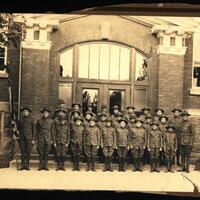
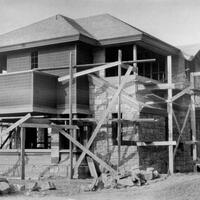
The collection contains maps, advertisements, building plans, and photographs. These materials span a wide range of subjects including: commercial, residential and municipal buildings, military camps, military personnel, airfields, public works, clubs, hotels, railroads, blizzards and sporting events. Of exceptional historical value are photographs taken of Charles Lindbergh before flying across the Atlantic.
Browse within this collection
Browse similar collections

Collection Facts
Historical Context
Garden City is a village in the town of Hempstead in central Nassau County, New York, in the United States. It was founded by multi-millionaire Alexander Turney Stewart in 1869, and is located on Long Island, to the east of New York City. Access to Garden City was provided by the Central Railroad of Long Island, another Stewart project which he undertook at the same time. The railroad's Hempstead branch opened in 1873. After World War II, following a trend of urban residents moving to the suburbs, Garden City continued to grow.
Scope of Collection
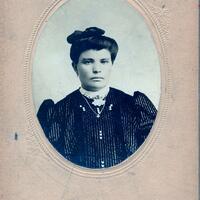
The collection consists of historic photographs and postcards of various houses, camps, railroad stations, court houses, and people of Garden City. The bulk of the materials are from the early-to-mid 20th Century.