
Collection Facts
Historical Context
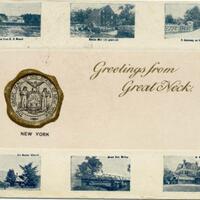
Settled in 1681, Glenwood Landing has a rich history of farming, sand mining, milling, oystering, fishing, boat building, and energy supply and production. In the late 1800s and early 1900s, the community was a popular resort destination for celebrities and others, who vacationed at Karatsonyi’s Hotel, below, and similar facilities around Hempstead Harbor.
Scope of Collection
The collection consists of historic photographs of Feeney Farm, Glenwood Landing Terminal, the waterfront, schools, and portraits in Glenwood Landing, NY.
Browse within this collection
Browse similar collections

Collection Facts
Scope of Collection
The images in this collection cover the building of the Gloversville, New York Carnegie Library that was erected with funds provided by Andrew Carnegie. Mr. Carnegie's grant was given largely due to the personal friendship between Mr. Carnegie’s secretary, Mr. Bertram and Professor Adolph Peck, the library's first professional librarian. As will all of these grants it was required that the City of Gloversville continue to support the library financially. The cornerstone was laid on August 27, 1904. Albert Randolph Ross, an architect with the New York firm of McKim, Mead and White, designed this masterpiece of Beaux Arts style, which, since 1976, has been listed in the National Register of Historic Places. When the library was first built, it literally gleamed, being constructed of a soft creamy colored limestone base and top and a slightly darker tan brick. It was Gloversville’s new library and it represented a beacon of self-education and opportunity to the population of Gloversville, many who had recently arrived here from the “old country” to work in the leather industry that dominated the city’s economy.
Browse within this collection
Additional Information
Browse similar collections

Collection Facts
Historical Context
Look (1937 - 1971) was a magazine published out of Des Moines, Iowa. Issues were published twice a month. Rather than having written articles, the magazine’s main focus was on photographs taken in different parts of the country. During World War II era, Look photographers went to Glens Falls, New York, to take photographs for six articles, where they presented Glens Falls as a patriotic model of the home front during the war. Look anticipated that these articles would provide other communities with ideas to stimulate their own postwar planning. The author of the series of articles was George F. Koether, associate editor of Look. Look sent a team of photographers to Glens Falls, a city in New York State north of Albany, for several months in 1943 and 1944 in preparation for these articles. The principal photographers were Harold Rhodenbaugh and Betty Truxell. A person identified only as Sandberg also took a few photographs.
Scope of Collection
This collection contains photographs taken by Look Magazine photographers in 1943-44 for a series of six articles in 1944 presenting Glens Falls as a patriotic model of the home front during World War II. The articles were published on April 4 and 18, June 27, September 5 and 19, and November 28, 1944.
Browse within this collection
Browse similar collections

Collection Facts
Historical Context
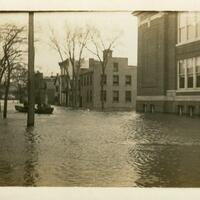
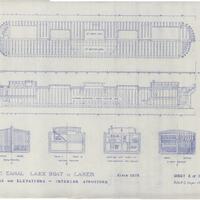
The Champlain Canal, celebrates its 200th anniversary in 2023. It runs from the Hudson River at Waterford, through Saratoga, and Washington Counties to Whitehall and Lake Champlain. The Glens Falls Feeder Canal was built in the 1820s and ran from Glens Falls to Fort Edward along a seven mile path. The purpose of the feeder canal was to feed water from Glen’s Falls, which is a high point on the Hudson River, to the highest point on the Champlain Canal.
Scope of Collection
This collection contains photographs, postcards, art work, and images pertaining to the Champlain Canal (including the Glens Falls Feeder Canal) that runs from the Hudson River at Waterford, through Saratoga, Washington, and Warren Counties, to Whitehall and Lake Champlain. Also covered are the boats and the canalers connected to the Champlain Canal and its feeder, and the importance of the Feeder Canal to the development of industry in Glens Falls, South Glens Falls, Hudson Falls, and Fort Edward, NY.
We want to thank all the repositories and private collectors who loaned us their images of the Champlain Canal, and have agreed to publish them here on New York Heritage. Many of these images are also used in our anniversary project, Champlain Canal Stories, a mini-video documentary series featuring grass-roots stories of life on and along the canal, sponsored in part by the Champlain Valley National Heritage Partnership.
Browse within this collection
Browse similar collections

Collection Facts
Historical Context
Glen Cove is a city in the north shore of Long Island. Glen Cove was used as a port by English migrants from New England and named "Moscheto" before 1668. On May 24, 1668 Joseph Carpenter of Warwick, Rhode Island purchased about 2,000 acres of land to the northwest of the Town of Oyster Bay from the Matinecock. In the 1830s, steamboats started regular service on Long Island Sound between New York City and Musketa Cove, arriving at a point still called "The Landing.” By 1850 the village of Glen Cove had become a popular summer resort community for New York City residents. The Long Island Rail Road was extended to Glen Cove in 1867, providing quicker, more frequent service to New York City. The availability of the train and the town's location on Long Island Sound made it attractive to year-round residents, and the population increased. On June 8, 1917, Glen Cove became an independent city, separating from the Town of Oyster Bay after 250 years
Scope of Collection
The collection consists of historic photographs and descriptions of commercial buildings in Glen Cove, NY.
Additional Information
The History Collection of the Glen Cove Public Library contains a variety of library and archival materials: books; periodicals; artifacts; pamphlets; maps; microfilmed documents; records and manuscripts, and microfilm of local newspapers. Almost all of the items are directly related to Long Island history, in particular, to the history of Glen Cove and its surrounding communities.
Browse similar collections

Collection Facts
Historical Context
Surrounded by water of three sides, Glen Cove presently has over ten miles of waterfront including: three public beaches and two nature preserves. It was the waterfront that first attracted the Native Americans, the City’s founding fathers and ultimately the wealthy families who would later create the Gold Coast of Glen Cove.
Scope of Collection
The collection consists of historic postcards of Glen Cove, NY depicting various commercial buildings, residences, nature scenes, roads and bridges, churches, and maritime activities. The bulk of the collection is from the early 20th Century.
Browse within this collection
Additional Information
The History Collection of the Glen Cove Public Library contains a variety of library and archival materials: books; periodicals; artifacts; pamphlets; maps; microfilmed documents; records and manuscripts, and microfilm of local newspapers. Almost all of the items are directly related to Long Island history, in particular, to the history of Glen Cove and its surrounding communities.
Browse similar collections

Collection Facts
Historical Context
These oral histories focuses on the impact of glass in Corning, NY, and around the world. The recordings in our collection explore a wide range of topics and professions, including glass artists and technicians, glass factory employees, Corning Museum of Glass institutional history,and topics unique to Corning, like the flood of 1972.
Scope of Collection
This collection includes oral histories conducted by staff at the Rakow Library.
We are always interested in adding to our oral history collection. If you would like to contribute your story or recommend someone, please contact [email protected].
Browse within this collection
Additional Information
Corning Museum of Glass - Juliette K. and Leonard S. Rakow Research Library
Browse similar collections

Collection Facts
Historical Context
The Town of Greenwich was established during the late eighteenth century. The town is known for being part of the Underground Railroad. Greenwich also contains locations listed on the National Register of Historic Places.
Scope of Collection
This collection contains images of postcards that show the buildings and surrounding area of Greenwich, New York.
Browse within this collection
Browse similar collections

Collection Facts
Historical Context
The photographs in this collection were taken by a man named George Whitfield Butts III. He took these photographs during several trips to the Adirondacks in 1907 and 1908.
Scope of Collection
This collection contains photographs taken by George Whitfield Butts III in 1907 and 1908. The contain images of his companions, as well as images of Adirondack landmarks, including Lake George and Ausable Chasm. Many of the images show Butts and his friends and family camping and canoeing.
Browse within this collection
Browse similar collections
Collection Facts
Historical Context
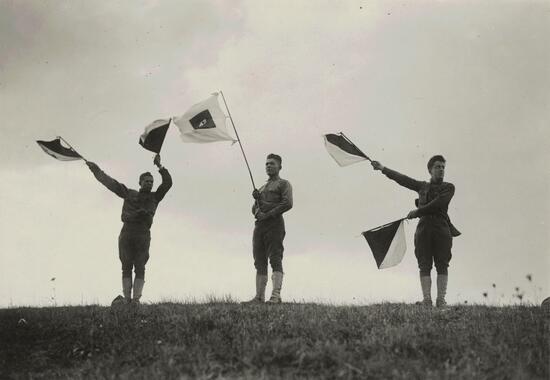
Syracuse served as a recruitment and training location for new troops during World War I. Situated on the state fairgrounds and in nearby Lakeland, over 30,000 troops were stationed at Camp Syracuse.
George W. Fenner was a staff photographer for the Syracuse Post-Standard Newspaper in the early 20th century.
Scope of Collection
This collection contains black-and-white photographs taken by George W. Fenner in 1918 pertaining to the War effort. Included views are of various parades supporting the War and drafted men leaving Syracuse for training camps.