
Collection Facts
Historical Context
Garfield “Gar” Wood (1880 - 1971) was the son of a ferryboat operator. He learned about boats and boating from a very young age. He began a successful business after inventing a hydraulic lift for unloading coal. His business soon focused on boats--especially racing boats, which was his true passion. He broke the world record for boating speed several times in the 1920s and 30s. He won the prestigious Harmsworth Cup and Gold Cup races many times. After his successful racing career, Wood focused on his businesses. Gar Wood Industries produced racing motorboats as well as truck bodies and winches. Gar Wood built one of the world’s finest line of production recreational boats.
In 2010 the factory documents and materials collected by the Society from the Gar Wood Boat Division were donated to the Antique Boat Museum by Gar Wood author, historian, and Antique Boat Museum Trustee Anthony S. Mollica, Jr. The Antique Boat Museum continues to provide research on Gar Wood boats as well as issuing Gar Wood Certificates. If you are interested in obtaining a Gar Wood Production Verification Certificate, please visit the following page:
Scope of Collection
This collection includes: articles, advertisements, price and specification lists, photographs, correspondence, and newspaper clippings. Many of the materials relate to the advertisement and production of GarWood Industries models. There are also materials relating to boat racing, including articles and black-and-white photographs of prominent Gar Wood racing boats. Much of the Gar Wood collection dates from the 1920s through 1940s. The correspondence files date to the late 20th century.
Browse within this collection
Browse similar collections

Collection Facts
Scope of Collection
This collection includes oral history videos conducted by students at Fulton High School.
Browse within this collection
Browse similar collections

Collection Facts
Scope of Collection
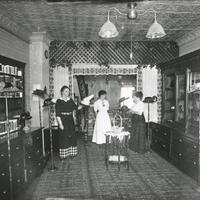
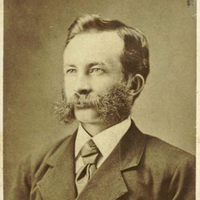
This collection features photographs taken by Ernest Blue in the Fulton Chain Lakes region around 1900. Images are of hotels and inns in Old Forge and Inlet, NY, and also steamboats, trains, and camps along the Fulton Chain.
Browse within this collection
Browse similar collections

Collection Facts
Scope of Collection
The oral history collection includes the recollections of Freeporters from the 20th and 21st centuries as well a speech given by Robert Moses at the Freeport Memorial Library. Selections are from the collections of the Freeport Historical Society and the Freeport Memorial Library.
Browse within this collection
Browse similar collections

Collection Facts
Historical Context
By the end of the 19th century, as theater, vaudeville, and the music circuit centralized, the stage was set for 20th-century show business to become a big commercial enterprise. Publishing songs was a part of that business. A lot of America’s popular-music publishing industry was centered in New York City, on Tin Pan Alley. One 1890s Tin Pan Alley song, "After the Ball," sold millions of copies. Others sold more modestly, but sheet music was widely available. Although performers used professional sheet music, scores sold to the public had lively and colorful covers. Sometimes they featured a performer’s photo, as well as an illustration. The covers can be used as historical evidence of what ideas and images were circulating in popular culture in the early 20th century
Scope of Collection
The collection consists of sheet music, playbills, theater programs, and advertisements from the late 19th to mid-20th Centuries. This collection can be accessed at the Freeport Historical Society and Museum.
Browse within this collection
Browse similar collections

Collection Facts
Historical Context
The Freeport Memorial Library was established in 1884 by Professor Loren M. Burdick, principal of the Freeport Schools, with funds raised by amateur entertainments. In 1895, the Board of Regents of New York State granted a provisional charter. A permanent charter, signed by Melvil Dewey, was granted on December 21, 1899. The Library was housed in a school until 1911 when it was moved to a rented room in the Miller Building on South Grove Street. On Memorial Day in 1924, the Beaux Arts building, designed by architect Charles M. Hart was dedicated as the first war memorial library in New York State. In 1925, the Freeport Library officially changed its name to the Freeport Memorial Library. On April 19, 1959, a new wing was dedicated. In 1982, on the 90th anniversary of the Village of Freeport the residents elected to expand their Library once again. Today the Freeport Memorial Library is one of the largest public library facilities in Nassau County.
Scope of Collection
The collection consists of typewritten library board minutes from the Freeport Memorial Library. The earliest minutes are from 1931.
Browse similar collections


Collection Facts
Historical Context
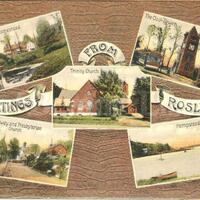
Freeport is a village in the town of Hempstead, Nassau County, New York on the South Shore of Long Island. A settlement since the 1640s, it was once an oystering community and later a resort popular with the New York City theater community. It is now primarily a bedroom suburb but retains a modest commercial waterfront and some light industry.
Scope of Collection
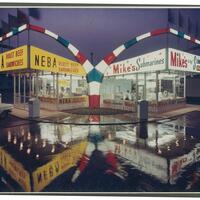
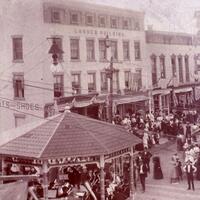
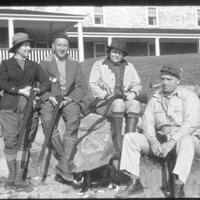
The collection consists of over 4000 historic photographs, newspaper clippings and postcards of Freeport, NY. The collection spans from the turn of the century up to Hurricane Irene in 2011. The collection is a microcosm of life in Freeport and depicts buildings, civic events, roads, businesses, maritime activity, severe weather events, portraits of individuals and families, etc. The majority of the collection is black and white photographs.
Browse within this collection
Browse similar collections

Collection Facts
Historical Context
Freeport High School yearbooks began publication in 1927. In 2016, the Freeport Memorial Library in cooperation with the Freeport Historical Society partnered to digitize a complete set of yearbooks.
Scope of Collection
Yearbooks are available from 1927 to 2005. Later yearbooks, are available for viewing at the Freeport Memorial Library and the Freeport Historical Society. Commencement programs date back to the 1890s.
Browse within this collection
Browse similar collections

Collection Facts
Historical Context
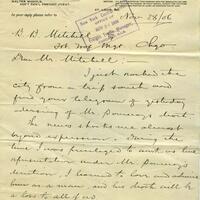
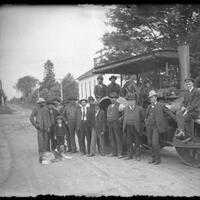
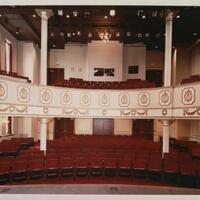
Frederick Lawrence Pomeroy (1855-1906) was born in Cortland, NY and later lived in Brooklyn. Pomeroy was the nephew of Lemuel Strong Pomeroy, a noted abolitionist. At the time of his death, he was Assistant General Traffic Manager with the New York Central Railroad. The Interstate Commerce Act of 1887 made the railroads the first industry subject to federal regulation. In 1906, in the first case filed under this act, the New York Central Railroad was convicted of giving “rebates” to the American Sugar Company and fined. As part of the judgment, Pomeroy was also fined $6,000. The stress of the trial is said to have contributed to his untimely death. In his 1906 State of the Union address, President Theodore Roosevelt, while agreeing with the fine imposed in the railroad, decried the imposition of a fine on Pomeroy. Roosevelt expressed the opinion that Pomeroy acted “in accordance with[…] the wishes of his employer.”
Scope of Collection
The Frederick Lawrence Pomeroy Collection consists of family correspondence, news clippings about the General Pomeroy Monument, telegrams, and transcripts of sermons. The collection is of interest to those studying the Interstate Commerce Act of 1887 and the “trust-busting” practices of Roosevelt as it gives some insight into standard business practices of the time and the effect of the conviction on Pomeroy and his family. Mrs. Ophelia Pomeroy maintained a correspondence with Rev. Albert Lyman, a prominent Congregationalist minister, and many of his letters are found in the collection.
Browse within this collection
Browse similar collections



Collection Facts
Historical Context
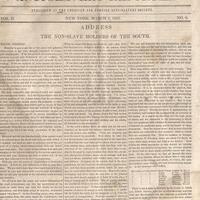
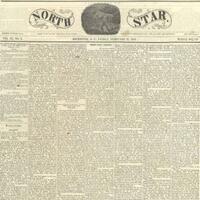
In 1851, The North Star paper, founded by Frederick Douglass, merged with the Liberty Party Paper of Syracuse and was renamed the Frederick Douglass' Paper. The abolitionist paper not only rejected slavery, but also the oppression of women and other minority groups.
Scope of Collection
The collection contains over 100 issues of the Frederick Douglass' Paper, spanning from its inception in 1851 through 1859. The contents relate to abolitionist issues of the time period.