


Collection Facts
Historical Context
Florence P. Service (1888-1983) was a life-long resident of Watervliet, NY. At the age of 14, she wrote a history of Watervliet, N.Y., and at 16 began working as a button sewer for Cluett, Peabody & Co., Inc. She would work there for 60 years before retiring at the age of 76.
Scope of Collection
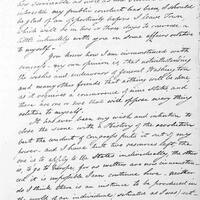
This collection contains both the history that Florence P. Service wrote in 1902 and a portrait that was taken of her by the Obenaus Studios in Albany, New York.
Browse within this collection
Additional Information
The local history collection contains materials on Watervliet, Troy, and selected materials on Albany County. It includes town histories and a vertical file of published materials, clippings, and other materials dealing with the Town of Watervliet. The vertical file also contains a History of Watervliet by Florence Service, 1902 (manuscript); and unpublished Watervliet histories by various authors (1980s through 1996).
Browse similar collections


Collection Facts
Historical Context
On September 14, 1893, a wealthy Boston hardware merchant and summer resident of Saratoga Springs, Franklin W. Smith, presented plans for “A Greater Saratoga” that would make the small upstate village “the summer capital of the United States.” His blueprint included a floral parade and battle of flowers to top off – and elevate – the gambling-oriented summer season. Smith’s vision blossomed on September 4, 1894 when Saratoga Springs held its first floral fete with a grand ball in the evening at Convention Hall. It was reportedly “one of the grandest and most successful events of the kind ever held in this country” with over 25,000 in attendance. It became an annual event, growing from one day to four and adding bicycle races, golf and polo matches, fireworks, and fancy-dress balls at Saratoga’s grand hotels. In 1901 and 1902 representatives from the Delaware and Hudson Railroad, which benefited from the annual crowds, and the Saratoga Floral Association visited New Orleans to purchase Mardi Gras floats to be used in the floral fetes. The events were spectacular and drew large crowds but the cost bankrupted the Floral Association, which dissolved in 1905. The Saratoga Chamber of Commerce held a one-day revival in 1924, and in 2013 Saratoga Springs held a floral fete as part of the 150th anniversary celebration of thoroughbred racing in Saratoga, drawing a crowd estimated at 40,000.
Scope of Collection
The Floral Fete Collection housed in the Saratoga Room at the Saratoga Springs Public Library contains souvenir programs, photographs, postcards, stereo views, articles, and ephemera from Saratoga’s floral parades. The items in the collection were donated by a number of individuals. Some items were purchased by the library to add to the collection. The digital collection also contains images from private collections and non-profit institutions in Saratoga Springs.
Browse within this collection
Browse similar collections

Collection Facts
Historical Context
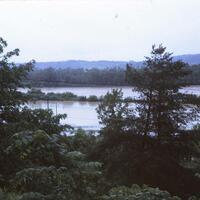
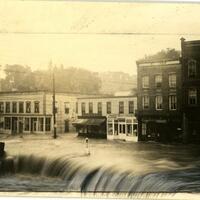
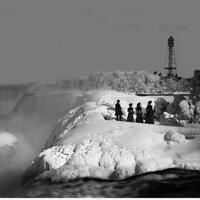
June of 2012 marked the 40th anniversary of the Flood of 1972. To commemorate this event, the Steele Memorial Library's Reference Department, in partnership with the Chemung County Historical Society and the Elmira Star Gazette, presented a collection of photographs from the floods occurring in Chemung County in 1889, 1902, 1946, and, of course, 1972.
Scope of Collection
This digital collection derived from the Chemung County Historical Society’s archive and the Chemung County Library District’s collection, includes photographs, documents, video, and/or sound recordings about the floods that impacted Chemung County.
Browse within this collection
Browse similar collections

Collection Facts
Historical Context
Born in Rochester, New York, Fletcher Steele (1885-1971) enrolled in the new program in Landscape Architecture at Harvard University in 1907. While only mildly successful in the academic realm, his talents were recognized by Warren Manning, one of America's foremost landscape designers at the time. In 1908, Manning persuaded Steele to leave Harvard and come work for him at his Boston office. Never looking back, Steele embarked on a career that would make him one of the most prolific and successful designers of the 20th Century. What Fletcher Steele represents to the profession of landscape architecture is a bridge between two different design periods. He was trained in the ideas of Beaux Arts classicism, yet he had a yearning to abandon its formulaic methods in favor of art. His clients had particular demands, and Steele was forced to compromise between the classical and the modern. His designs mingle in both camps. While many classical elements served as inspiration for his ideas, he customized them to fit the unique situations of his client's designs. This process tended to result in very idiosyncratic gardens.
Scope of Collection
The Fletcher Steele nursery orders are the original nursery orders used by Fletcher Steele to order trees, flowers, vegetation, stone, etc. for his clients. The orders have plant species information, nursery locations, hand written notes, etc. The orders offer insight into what plant materials were being used over 6 decades from 1916 when Steele began his landscape architecture practice to 1971 when he passed away. Steele designed over 700 gardens and these digitized nursery orders are a sampling of his work on gardens he designed and completed in New York, Massachusetts, Pennsylvania, Connecticut, Maine, Rhode Island and New Jersey.
See the Fletcher Steele Collection and Fletcher Steele Scrapbooks for related materials.
Browse within this collection
Additional Information
Browse similar collections


Collection Facts
Historical Context
Born in Rochester, New York, Fletcher Steele (1885-1971) enrolled in the new program in Landscape Architecture at Harvard University in 1907. While only mildly successful in the academic realm, his talents were recognized by Warren Manning, one of America's foremost landscape designers at the time. In 1908, Manning persuaded Steele to leave Harvard and come work for him at his Boston office. Never looking back, Steele embarked on a career that would make him one of the most prolific and successful designers of the 20th Century. What Fletcher Steele represents to the profession of landscape architecture is a bridge between two different design periods. He was trained in the ideas of Beaux Arts classicism, yet he had a yearning to abandon its formulaic methods in favor of art. His clients had particular demands, and Steele was forced to compromise between the classical and the modern. His designs mingle in both camps. While many classical elements served as inspiration for his ideas, he customized them to fit the unique situations of his client's designs. This process tended to result in very idiosyncratic gardens.
Scope of Collection
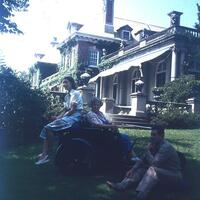
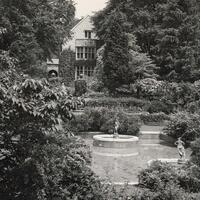
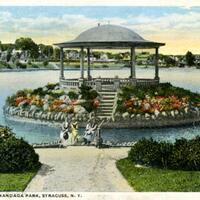
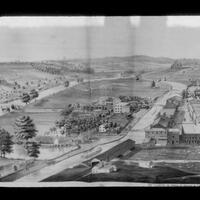
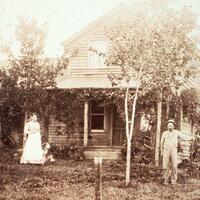
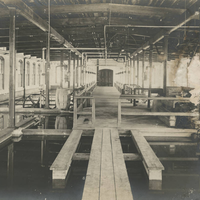
The Fletcher Steele Collection contains black and white photographs and a few design drawings of gardens designed by Fletcher Steele in the 20th century. The bulk of the items are from the late 1920s-1930s. Included are views of completed gardens, construction, architectural details, and the estates.
See the Fletcher Steele Nursery Order Collection and Fletcher Steele Scrapbooks for related materials.
Browse within this collection
Additional Information
Browse similar collections

Collection Facts
Historical Context
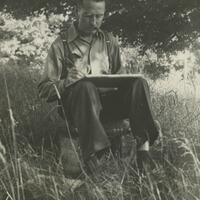
Fisk Boyd (1895-1975 was a painter, graphic artist, block printer and teacher who lived in Washingtonville with his wife for many years. He was a member of the Woodstock artist colony and his works have been displayed in prominent museums and galleries throughout the country.
Scope of Collection
This collection, donated by former Orange County Community College Dean George Shepard, contains fourteen works of art by Fisk Boyd.
Browse within this collection
Browse similar collections

Collection Facts
Historical Context
Russell Sage College was founded in Troy, New York, in 1916 by Margaret Olivia Slocum Sage and named in honor of her late husband, who had left her his considerable fortune. With Eliza Kellas, head of the Emma Willard School, Mrs. Sage was active in the women's suffrage movement; in founding the new College, they proposed to offer women the means of independence through the combination of broad education in the liberal arts with preparation for specific professional careers. In 1995, the Sage Graduate School became authorized to grant degrees independently, the Sage Evening College became recognized as a separate administrative unit, and the institution was re-chartered by the Board of Regents of the state of New York as The Sage Colleges, often referred to for the sake of convenience as "Sage." The words "Russell Sage College" now refer only to the college for women. In 2001, the Sage Junior College of Albany and Sage Evening College were replaced by a single entity, Sage College of Albany.
Scope of Collection
The First Hundred Years collection documents the history of Russell Sage College primarily through photographs. It contains images of students, faculty, staff, campus buildings, classes and events held on and off campus. Many of Russell Sage’s traditions are featured including Rally, Class Day, Class Dinners, and Winter Formal. The majority of the items in the collection date from 1916 to the 1950s.
Browse within this collection
Additional Information
Browse similar collections


Collection Facts
Historical Context
Finch, Pruyn and Company was founded in 1865 when Jeremiah and Daniel Finch, along with Samuel Pruyn, purchased the Glens Falls Company mill in Glens Falls, New York. In 1880, the company purchased its first Adirondack tract, more than 13,000 acres, and quickly accumulated well over 100,000 acres of Adirondack forestland, becoming the largest lumber business on the Hudson River. They were one of several forest product companies that owned and managed large tracts of Adirondack land before the creation of the New York State Forest Preserve in 1885, and the establishment of the Adirondack Park in 1892. The company was incorporated in 1900 and paper production began in 1905 and still continues to this day. The last river drive carrying logs from the Adirondack Mountains down the Hudson River occurred in 1950. In 2007, the company was renamed Finch Paper LLC under new owners. The company then sold 161,000 acres of its Adirondack lands to the Nature Conservancy.
Scope of Collection
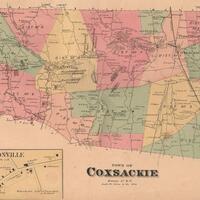
The Finch, Pruyn map collection includes approximately 400 maps, dating from 1829 through 1974, that document land ownership and timber harvesting throughout the region that would become the Adirondack Park. Created and used by the company in the course of its lumbering operation, the maps show (in great detail) not only the geography of one of the nation's largest wild areas, but also how that environment was exploited for its natural resources in the 19th and early 20th centuries. The maps indicate private property ownership, land held by the state, planned and implemented development of the land, and details on tree harvests, including types of trees cut, locations of lumber camps, and logging roads to move felled trees to waterways for transport to mills downriver. The Adirondack Experience also holds the business records of Finch, Pruyn and Company; contact the librarian for more information on this collection.
Browse within this collection
Browse similar collections

Collection Facts
Historical Context
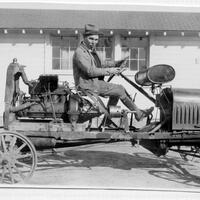
Logging in the Adirondacks constituted a sizable portion of the American lumber trade even after the creation of the Adirondack pack in 1895, with companies being able to harvest timber only in very limited quantities from designated zones. Titus Meigs founded the Santa Clara Logging Company in 1888. Ferris Jacob Meig succeeded his father as president in 1911, and operated the company until it went out of business in 1941. Ferris Meigs took numerous photographs documenting the activities of the Santa Clara Logging Company.
Scope of Collection
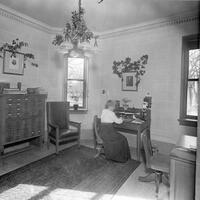
The collection consists of black-and-white photographs, mostly taken by Ferris Meigs in the early 20th century. Most of the photographs show various stages of the logging process. The images were taken at St. Regis Falls, Santa Clara, and Tupper Lake, NY. The collection also includes turn-of-the-century portraits of Titus and Ferris Meigs.Also included are interior and exterior views of Ferris Meigs’ home.
Browse within this collection
Browse similar collections

Collection Facts
Historical Context
The Fayetteville-Manlius School District is located in Manlius, New York, a town in Onondaga County. The district serves the Town of Manlius and the neighboring Town of Fayetteville. The villages of Manlius and Fayetteville had independent school districts until 1951, when they merged. A two hundred year old oak tree nestled by one of the schools in the district inspired the school’s alma mater hymn and yearbook titles. The characteristics of the tree, such as its strength and dependability, are reflected in the values of the Fayetteville-Manlius School District. The school’s mascot, the Hornet, is also inspired by the tree, as hornets were found living in the giant Oak.
The Manlius School was a top military school in the United States in the mid-20th century. It had been founded as the St. John's School in 1869, then reorganized as St. John's Military School in 1881. The Manlius School, as it became known as, faced dwindling attendance and merged with Pebble Hill School in 1970.
Scope of Collection
The collection includes World War II era yearbooks from Manlius High School and Fayetteville High School, a mid-century yearbook from the Manlius School, and Fayetteville-Manlius School District yearbooks spanning many decades from mid-to-late 20th century.