
Collection Facts
Scope of Collection
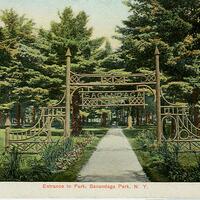
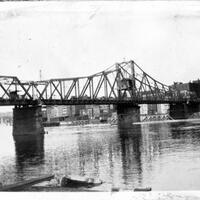
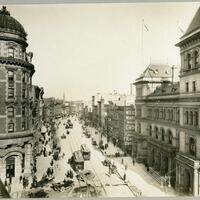
A collection of postcards donated by John Scott. Images range from the Hudson River, street scenes, homes, and churches in Rockland County.
Browse within this collection
Browse similar collections

Collection Facts
Historical Context
John S. Apperson Jr. and Paul Schaefer, two prolific pioneers of grassroots conservation activism in the United States, focused their conservation activities on the Adirondack region of New York State. Much of their work influenced and impacted the national dialogue about protecting the environment and the growing conservation movement. John S. Apperson, or “Appy” as he was known to his friends, was a Virginia transplant who relocated to Schenectady, New York as an engineer working for the General Electric Company from 1901 to 1947. Apperson’s true avocation, however, was his fierce protection of the Adirondacks and Lake George region; he spent many years educating the public on the disastrous and wide‐reaching effects of erosion and water pollution in particular. To develop his powerful message, Apperson used photography skills to inform the public about the inherent value of the wilderness and its need for long‐term protection. Apperson also founded conservation organizations that promoted his environmental causes to public officials and influential groups. An influential figure in the introduction of skiing and other winter sports to the US, Apperson also formed outdoor clubs that hosted social activities. These actions helped him meet and befriend a new generation of conservationists who also wanted to help promote his causes. One such new‐generation conservationist was Paul Schaefer. In 1931 Schaefer, along with others from the Mohawk Valley Hiking Club, met Apperson because of their interest in learning about the region. Schaefer noted that Apperson would “tell them what this conservation thing was all about”. Apperson, an adept mentor, quickly took Schaefer under his wing, and a lifelong friendship was formed. Paul Schaefer, a house builder and long‐time Schenectady area resident, already had a deep love for the wilderness. Forced to leave school at the age of 14, he was an avid reader and consumed books on the Adirondacks. This included exploring the spiritual and philosophical connection between humans and the wilderness through writers such as Burroughs, Emerson, Thoreau, and Muir. Working with Apperson ignited a fire within Schaefer that burned for the rest of his life. From the 1930s until his death in 1996 Schaefer grew into one of the foremost conservationists and defenders of the environment in New York. As a recipient of multiple awards and accolades for his commitment to advocating for the environment, Schaefer also actively participated in creating the Federal Wilderness Act of 1964. In 1979 Schaefer transformed his large personal library of Adirondack books and archival collections into the Adirondack Research Center, to make it publically accessible to all. Today, this collection is referred to as the Adirondack Research Library, held by Union College at the Kelly Adirondack Center.
Scope of Collection
A collection of photographs, pamphlets, letters, and other materials highlighting 20th century citizen political activism, grassroots conservation, daily life, and outdoor recreation in the Adirondacks in New York State. Items were selectively digitized during the Grass Roots Activism and the American Wilderness: Pioneers in the Twentieth Century Adirondack Park Conservation Movement project using the John S. Apperson Jr. papers and the Paul Schaefer Collection.
Browse within this collection
Additional Information
A larger collection of photographs and documents pertaining to conservation efforts of the Adirondack area.
Browse similar collections

Collection Facts
Historical Context
Captain John McConihe was born on September 4, 1834 in Troy, New York to Hon. Isaac McConihe, a prominent lawyer, and Sarah Strong McConihe. Beginning at the age of 16, McConihe studied at Union College in Schenectady and graduated in 1853. For a few months, he studied law with his father before attending Albany Law School. He graduated in 1855. McConihe then established a successful law practice in Troy. Probably due to the influence of his friend, John Newton, McConihe developed an interest in the West and moved to the Nebraska Territory in 1857. McConihe settled in Omaha. In addition to having several business ventures such as land speculation, he also was involved in local politics in Nebraska. He held several positions including private secretary to territorial governors, William A. Richardson and Samuel Black, Notary Public and Master in Chancery.
McConihe joined the First Nebraskan regiment at the outbreak of the Civil War and was appointed Captain of Company G. He was wounded in the shoulder during the Battle of Shiloh in Tennessee on April 6-7, 1862. He returned to Troy to recover but also traveled to Cincinnati and Washington D.C. during his recovery. While in Troy, he transferred to the 169th New York Company. He was appointed Lieutenant Colonel. McConihe was killed in action on June 1, 1864 at Cold Harbor. His funeral was held in Troy and he was buried in Oakwood Cemetery in Troy.
Scope of Collection
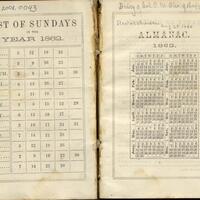
This collection contains primarily letters written by Captain John McConihe to his business partner, John B. Kellog. The letters date from April 1, 1862 to May 21, 1864. The letters give descriptions of military maneuvers, people and places he encountered during his military service, camp life, his finances, his duties as an officer, his health and his recovery from a shoulder wound sustained at Shiloh. There are some receipts that detail purchases he made during his military service. The collection also contains a carte-de-visite or small photograph of McConihe and one of his calling cards.
There are five newspaper articles in the collection. These articles give detailed accounts of McConihe’s death and funeral as well as provide some biographic information.
Browse within this collection
Browse similar collections

Collection Facts
Historical Context
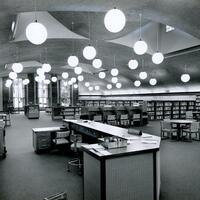
The John Jermain Memorial Library is located in Sag Harbor, New York. Financed by philanthropist Margaret Olivia Slocum Sage, the doors opened to the public on October 10, 1910 with Olivia Pratt Young as librarian.
Scope of Collection
The collection consists of photographs of the library building, people, and events.
Browse within this collection
Browse similar collections

Collection Facts
Historical Context
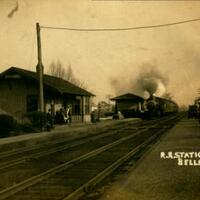
John J. Burger, who put together this collection of New York State railroad material, worked for many years as chief pharmacist at St. Luke’s Memorial Hospital Center, Utica, N.Y. His personal obsession in life was digging out the stories behind New York State’s railroads and documenting their histories. Burger’s intrigue with railroads was first established at his grandfather’s cottage at Canadarago Lake, Otsego County, N.Y., where, as a six-year-old boy, he used to sit by the tracks waiting for the daily freight to go by on the Southern New York Electric Railway. One day in 1941, when a wrecking crew came by tearing up the Oneonta-Mohawk line, he knew that the time he spent watching the freight cars was over. In high school, he began hunting through the library for background information on the railway. This search became a lifelong endeavor as he gathered newspaper articles, postcards, photographs, letters, and other primary sources, not only on the Southern New York Electric Railway, but on other New York State railroads. He compiled this exhaustive collection, including the many scrapbooks of photographs, for over 21 years. In 2012, after retiring, Burger donated the collection to the New York State Historical Association in Cooperstown, N.Y.
Scope of Collection
Included in this digital gallery is a selection of photo albums compiled by Burger, as well as his unpublished manuscript "The Leatherstocking Trolley".
Browse within this collection
Browse similar collections

Collection Facts
Historical Context
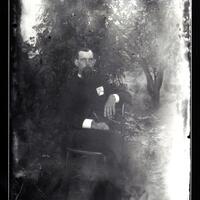
John H. Champney was an Adirondack "stickman" who made rustic furniture in the early 1900s. He was originally from West Parishville in Saint Lawrence County, but lived in the hamlet of Moody near Tupper Lake. Champney was a skilled carpenter and made many types of furniture, gun stocks, and agricultural implements such as sleds. He was a caretaker and guide for Mrs. John Sprague at her camp near Moody from 1912 to 1917.
Scope of Collection
The collection contains black-and-white photographs featuring John H. Champney at various Adirondack locations. Many of the images relate to boating, camping, and hunting. The collection dates from the late 19th century through early 20th century.
Browse within this collection
Browse similar collections

Collection Facts
Historical Context
John Burroughs (1837-1921) was a noted writer and environmentalist from the Hudson Valley. He wrote celebrated essays, particularly on birds, flowers, and rural scenes, but also on topics such as philosophy and literature. He spent the majority of his adult life on his homestead in West Park, NY.
Scope of Collection
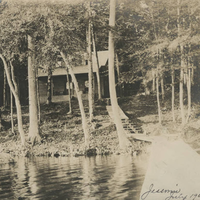
This collections contains postcards relating to John Burroughs. It includes images of Burroughs as well as his homestead, including his cabin "slabsides," which was used to study nature at close hand, write, and visit with friends.
Browse within this collection
Browse similar collections

Collection Facts
Historical Context
John Bourroughs was born April 3, 1837 in the Catskill Mountains near Roxbury, New York. His love of nature and his impulse to write made him one of America's great naturalist authors. His keen sense of the natural "wealth of the universe" - the trees, flowers, animals, and birds, is clearly revealed in his poetry and his life. He was close friends with such notable men as Henry Ford, Thomas Edison, Harvey Firestone, Walt Whitman, and Ralph Waldo Emerson. Burroughs' homestead, Woodchuck Lodge, and the boyhood Rock, where he is buried, receive thousands of visitors each year. John Burroughs died on March 29, 1921.
Scope of Collection
This collection, donated in 1955 by Miss Ethelwynn Doolittle - a good friend of Burroughs, includes a few of his published works, articles and poems written about him, photographs, postcards, memorabilia items from the John Burroughs Memorial Association, a wooden whistle hand carved by Burroughs, and a replica of the Tablet on the Boyhood Rock.
Browse within this collection
Additional Information
Browse similar collections

Collection Facts
Historical Context
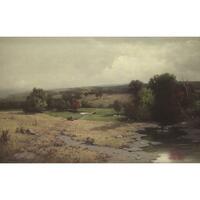
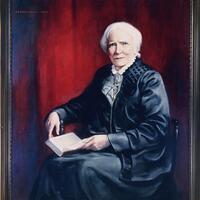
John Burroughs (1837-1921) was a noted naturalist, essayist and a significant figure in the history of environmentalism. He was born in a small town in the Catskills and spent the bulk of his adult life in West Park.
Scope of Collection
This set of John Burroughs journals dates from 1876-1921; An additional notebook covers the years 1860-1865. The journals contain Burroughs comments on the weather and his natural surroundings. In addition to research for his writing, his journals include reflections on the writings of others including Charles Darwin, Thomas Carlyle, and Ralph Waldo Emerson. He also writes about family members, notable events and visits with friends such as Walt Whitman.
The Burroughs project was conceived by Earth Science professor Jeff Walker and the scanning work was made possible by a Mellon Foundation grant awarded to Vassar's Environmental Studies Program. The project is currently a work in progress; journals are being added to New York Heritage as metadata and transcription work is finalized. At completion, there will be 54 volumes available. The journals are only a part of the John Burroughs Papers at Vassar. Please consult the online guide for more information or contact our library staff.
Browse within this collection
Additional Information
Browse similar collections

Collection Facts
Historical Context
John B. Jervis (1795-1885) was America's leading consulting engineer of the antebellum era (1820 - 1860). Jervis was a pioneer in the development of canals and railroads for the expanding United States. He designed and supervised the construction of five of America's earliest railroads, was chief engineer of three major canal projects, designed the first locomotive to run in America, designed and built the forty-one mile Croton Aqueduct (New York City's water supply for fifty years: 1842 - 1891), and the Boston Aqueduct. Jervis authored a book on economics, The Question of Labor and Capital (1877); helped found a local industry, the Rome Iron Mills; and, of course, is the founder of Rome's public library.
In the fall of 1986 the New York State Education Department, Division of Library Development, awarded Jervis Library a $10,300 Conservation / Preservation Discretionary Grant for the preservation of the drawings and papers of John Bloomfield Jervis. Assistant Director Keith Kinna wrote the grant and was the project coordinator.
Project Consultant John Dean, Conservation Librarian, Cornell University, advised that Jervis’ drawings were in most urgent need of attention. Immediate flattening, cleaning, deacidification, and proper storage were required. This task was assigned to Patrick Reynolds, then Assistant Curator at the Rome Historical Society. Mr. Reynolds also annotated briefly, and classified, 378 of the drawings. Dr. F. Daniel Larkin, Jervis scholar and biographer at SUNY Oneonta, assisted Mr. Reynolds in classifying the drawings by project.
The drawings have since been featured in exhibits at the Metropolitan Museum of Art, the Hudson River Museum, The Keeper's House in Dobbs Ferry, and other institutions; and used to illustrate numerous books, articles, and brochures.
Scope of Collection
This collection contains design drawings for the Mohawk and Hudson Railroad, the Delaware and Hudson Canal, the Saratoga and Schenectady Railroad, and other early canals and railroads in the United States; New York City's Croton Aqueduct, including the 1848 Harlem River High Bridge; and various locomotive designs.
Digital copies of most of the drawings are available for a fee. A digital index is available at www.jervislibrary.org. For more information, please contact Lori Chien at Jervis Public Library.
Browse within this collection
Additional Information
The drawings collections of the John B. Jervis collection comprises 367 items in total. Read more about the John B. Jervis collection at the Jervis Public Library in Rome, NY here: http://clrc.org/digital/jervis/jervisindex.htm