
Collection Facts
Historical Context
1653 April 2: First purchase of land from the Matinecock, establishing the Town of Huntington (Town governed
by a “New England” style Town meeting)
1656 July 30: Second purchase of land from the Matinecock, adding eastern portion of Huntington
1657 First school established; Jonas Holdsworth, teacher
1658 Old First Church founded, the oldest religious institution in Huntington (Rev. William Leverich, the first
minister from 1658-1669, was also Huntington’s first miller)
Thomas Powell began service as the first recorder (Town Clerk)
1663 April 6: John Lome (Lum or Lume) chosen as the first constable
1664 British gain control of Manhattan and Long Island from the Dutch, establishing governance by the Duke of
York; Duke’s Laws govern the lives of Huntington residents until 1669
1665 Old First Church constructed Huntington’s first “meeting house” in accordance with Duke’s Laws at the NW
corner of Meeting House Brook (now Prime Ave.) and Main St.
1666 Nov. 30, Governor Richard Nicolls issued patent defining Huntington’s territory & boundaries
Town was inhabited by 57 freeholders and heads of families
1683 Governor Thomas Dongan convened representative assembly and established Suffolk County
1684 Town was inhabited by 84 freeholders and heads of families
1688 Governor Thomas Dongan issued new Town charter, authorizing governing body of elected trustees
1694 April 9: Huntington’s first seven Trustees elected.
1694-99 John Adams served as the first Town Supervisor
1715 Old First Church constructed new meeting house at current location (125 Main St.)
1748 St. John’s Episcopal Church built on East Street (now Park Ave.) in Huntington
1752 Tide mill built by Dr. Zophar Platt, first physician in Huntington
1759 June 29: Town’s first public library formed with 115 books, 39 members, and Rev. Ebenezer Prime as the
“Library Keeper;” library dissolved in 1768, but re-established intermittently in 1801, 1817, 1843, & 1869
1761 Country’s first publication of poems by an African American – Lloyd family slave Jupiter Hammon
1762 The last “Indian Deed” with the Matinecock settles lingering questions about prior purchases of Indian lands
1774 June 21: Huntington Declaration of Rights adopted
1776 July 22: Declaration of Independence read on the Village Green; Huntington Liberty Flag first raised
Aug.22-29: Huntington members of the Suffolk Co. Militia participated in the Battle of Long Island, a British
victory; the original Huntington Liberty Flag is captured by the Hessians
Sept. 1: Occupation of Huntington by British began; it would last until March 1783.
Mid-Sept.: Capt. Nathan Hale landed on the shore of Huntington Bay at the start of his tragic spy mission;
captured just a few days later, he was executed in New York City on Sept. 22, 1776.
1781 July 12: A combined force of French and American vessels and infantry sailed across Long Island Sound and
unsuccessfully attacked Fort Franklin on Lloyd’s Neck
Oct. 2-3: 100 American soldiers crossed Long Island Sound and launched a successful early morning raid on
British Fort Slongo. Sgt. Elijah Churchill, who led the charge, was wounded and became the first recipient of
General Washington’s newly created Badge of Military Merit, now known as the Purple Heart.
1782 Nov. 16: Col. Benjamin Thompson, an American loyalist in charge of British troops, orders the Old First
Church demolished and uses the lumber to build Fort Golgotha on the Town Burying Ground on Main Street
Timeline of Huntington History (as of 8/1/08) Page 2 of 4
1783 March: British occupation of Huntington ends; Fort Golgotha is torn down by residents
1784 Old First Presbyterian Church is rebuilt on its 1715 site
1786 First Huntington slave freed by decree in his owner’s will
1790 April 23: President Washington had dinner at Platt’s Tavern on the SE corner of Main St. and Park Ave. in
Huntington during his April 20-24 tour of Long Island (Huntington’s population was 2,000)
1799 NY State adopts Manumission Act with procedure for owners, prior to their death, to voluntarily free slaves
1800 First Huntington slave freed under the NY State Manumission Act
1810 Census records Huntington’s population as 4,424
1816 First organized fire department formed
1816-20 Cold Spring Harbor woolen mills built; one for carding and spinning, and one for weaving and fulling
1827 Slavery abolished in New York State
1828 Huntington Methodist Church purchased property on Main St. in Huntington and began construction
1835 St. John’s Episcopal Church built in Cold Spring Harbor by Oliver Smith Sammis, builder & architect
1836 July 18: First whaling voyage from Cold Spring Harbor began with the sailing of the Monmouth
Universalist Church first established at 6 Nassau Rd., Huntington.
1838 Walt Whitman began publishing The Long-Islander
1839 John Wood’s General Store ledger records coal shipment unloaded in Huntington, marking the beginning of
the Town’s transition from cord wood to this new energy source
1842 Cold Spring Harbor Methodist Church is established (merged with Huntington Methodist Church in 1975)
1843 Bethel African Methodist Episcopal (AME) Church, the Town’s first African American church, is established
1849 Roman Catholic Church in West Neck established on the present site of St. Patrick’s Cemetery (burned down
in 1867 and rebuilt on SE corner of Anderson Place and Main St., renamed as St. Patrick’s Church)
1851 Huntington Rural Cemetery is established
1852 Steamboats sailed from Lloyd’s dock, Cold Spring Harbor
1858 October: The Alice departs Cold Spring Harbor on the last whaling voyage from this port
First Huntington Union Free School completed; 26 graduates in first class
1862 June: The Alice returns to Cold Spring Harbor ending the last whaling voyage from this port
Aug. 16: Answering President Lincoln’s July 1 call for additional troops during the Civil War, Hewitt J.
Long & George S. Sammis begin mustering Company E of the 127th Regiment in Huntington
1864 Central (Second) Presbyterian Church established
1868 Jan. 13: Long Island Rail Road (LIRR) begins service to Huntington
Fayette Gould, first woman to be elected Town Clerk
Huntington Baptist Church established
1872 March 13: NY State Legislature passed act authorizing separation of the southern portion of the Town to
form the new Town of Babylon; Huntington’s Board of Trustees implemented land transfer on Jan. 3, 1873
NY State abolished the separate office of “Trustee,” transfering Town governance to a six-member Town
Board (Supervisor, Town Clerk, and four justices of the peace.)
First Presbyterian Church of Greenlawn established
The family of Simon Hirschfeld became the first Jewish family to settle in Huntington
Timeline of Huntington History (as of 8/1/08) Page 3 of 4
1875 January: Mrs. Mary Talmadge starts Huntington Library Association; opens library May 17th in Issac Adam’s
store with Miss Mina Downs as first librarian.
1879(86?) December: Soldiers & Sailors Memorial Association formed; Association’s new building constructed at 228
Main St. (Huntington) opens in 1893 (1892?) as Town’s first dedicated library building
1887 First volume of Huntington Town records is compiled, transcribed and published by Charles R. Street
1885 25 Huntington subscribers petitioned for telephone switchboard
1893 Huntington Gas and Electric received permit to install electricity
1894 Village of Northport is incorporated
1898 Electric trolley line established in Huntington
1899 Samuel Ballton is acclaimed as “Greenlawn’s Pickle King” for growing 1.5 million pickles in one season
1903 Huntington Historical Society founded on the occasion of Huntington’s 250th Anniversary
1906 Huntington Jewish Center, Huntington’s first synagogue, established
1908 First Vanderbilt Cup Race for autos on the new Vanderbilt Parkway
Huntington’s first public park and beach (Halesite Park) opened
St. Peter’s Lutheran Church established
1910 First Huntington Town Hall constructed for this purpose is built at 227 Main St., Huntington
William K. Vanderbilt II begins construction of “Eagle’s Nest” estate in Centerport (completed 1935)
Evergreen Baptist Church established
1913 John Trainer, Huntington’s first regular policeman is hired
St. Hugh of Lincoln Church established
1915 Joseph Cantrell built and sold the forerunner of the station wagon, a “depot wagon”
1916 Huntington Hospital built on land donated by Cornelia Prime
1917 The Long-Islander reported 26 men responded to Pres. Wilson’s call to serve in U.S. Naval Reserve
New York Ave. is paved from the Train Station to Main St., becoming the Town’s first paved road
Women in the Trade School canning kitchen put up 5,000 jars of fruit & vegetables for the war effort
1920 Census records Huntington’s population as 13,893
August Heckscher dedicates and opens to the public his new art museum in Heckscher Park
1924 Village of Huntington Bay is incorporated
1925 Village of Asharoken is incorporated
1926 Village of Lloyd Harbor is incorporated
1927 Motor buses replace the Electric Trolley in Huntington
1928 Huntington’s first Planning Board is appointed
1933 Adoption of Huntington’s first Comprehensive Plan
August 1: The position of Town Clerk was dropped from the Town Board, reducing its membership to five.
1934 Huntington’s first zoning ordinance is adopted
1936 Whaling Museum Society founded to preserve history of Cold Spring Harbor’s whaling era
1938-45 Bertha Rembaugh served as Huntington’s first woman Justice of the Peace
1942 Whaling Museum Society opens Cold Spring Harbor Whaling Museum on present site at 279 Main St.
Timeline of Huntington History (as of 8/1/08) Page 4 of 4
1949 Richard H. Robertson hired as Huntington's first black policeman; serves with the Huntington Police Dept.
until 1960 when it is merged into the Suffolk County Police Dept. (SCPD); retires from SCPD in 1970 as Sgt.
1950 Census records Huntington’s population as 47,506
Suffolk County Vanderbilt Museum opens to the general public on his former estate, “Eagles Nest”
1952 Temple Beth El established
1953 West Hill Baptist Church established
1956 St. Paraskevi Greek Orthodox Church established
1957 First Church of Christ, Scientist established
1960 Jan. 1: Huntington Police Department merges into the newly created Suffolk County Police Department
1962-65 Ruth F. Corcoran served as Huntington’s first woman to be elected to the Town Board
1966 Our Lady Queen of Martyrs Church established in Centerport
1980 Census records Huntington’s population as 201,512
2000 Census records Huntington’s population as 195,289
Scope of Collection
The collection consists of deeds, chattel mortgages, emancipation certificates, declarations, and other legal manuscripts from early Huntington history. The Manuscript collection housed in the Huntington Town Clerk’s Archives is one of several groupings of records and includes some of the County’s greatest manuscript treasures. The collection consists of 193 bound volumes, 52 linear feet of material and 200 maps/drawings documenting all aspects of Town history.
Browse within this collection
Browse similar collections

Collection Facts
Historical Context
The photographs were taken by Benjamin Sargent Conklin, a noted photographer in and around Huntington, L. I. in the early 20th century, was born in Huntington 29 August 1873 and died 22 November 1964.
Scope of Collection
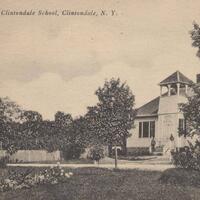
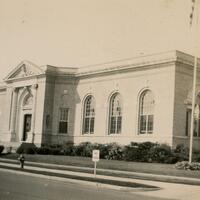
The collection consists of historical photographs of Huntington, N.Y, taken by Long Island photographer, Benjamin S. Conklin in the early and mid 20th Century. Photographs depict area industry, schools, and library functions.
Browse within this collection
Browse similar collections

Collection Facts
Historical Context
In 1683, Suffolk County was created as an original county from the East Riding of Yorkshire in the Province of New York, earlier part of New Netherland.
Scope of Collection
The collection consists of maps documenting land purchases, disputes and boundaries of early Huntington, NY.
Browse within this collection
Browse similar collections


Collection Facts
Historical Context
The Town of Huntington is one of ten towns in Suffolk County, New York, United States. Founded in 1653, it is located on the north shore of Long Island in northwestern Suffolk County. With its main building in Huntington Village and its branch library in Huntington Station, the Huntington Public Library (HPL) exists to serve the 34,000 residents of the Huntington Public Library District. HPL is a school district public library, a not-for-profit organization and a member of the Suffolk Cooperative Library System.
Scope of Collection
The collection consists of historical documents and land deeds related to the Town of Huntington its various families: Ketcham, Wood, and Lloyd-Cogswell. Other documents include, "The Sag Harbor Sea Fencibles" (1814-1815) and correspondence of the Town Historian, Benjamin Thompson (1821).
Browse within this collection
Browse similar collections

Collection Facts
Historical Context
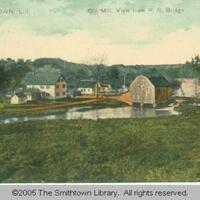
In 1653, three men from Oyster Bay, Richard Holbrook, Robert Williams and Daniel Whitehead, purchased a parcel of land from the Matinecock tribe. This parcel has since come to be known as the "First Purchase" and included land bordered by Cold Spring Harbor on the west, Northport Harbor on the east, what is now known as Old Country Road to the south and Long Island Sound to the north. The three men immediately turned the land over to the white settlers who had already been living there.From that initial settlement, Huntington grew over subsequent years to include all of the land presently comprising the modern Towns of Huntington and Babylon.
Because Huntington was populated largely by English settlers, unlike the rest of the New Amsterdam colony, the town voted in 1660 to become part of the Connecticut colony rather than remain under the authority of New Amsterdam. It was not until the British gained control of New Amsterdam in 1664 (renaming it New York) that Huntington was formally restored to the jurisdiction of New York.
Scope of Collection
The collection consists of early deeds conveying land transactions between the Matinecock Indians and English settlers. Also included are agreements as to divisions of land between the early settlers themselves.
Browse within this collection
Browse similar collections

Collection Facts
Historical Context
The formal European history of Huntington dates to April 2, 1653 when three English settlers from Oyster Bay—Richard Holbrook, Robert Williams and Daniel Whitehead—secured a deed from Raseokan, Sachem (i.e. leader) of the Matinecocks for six square miles of land stretching from Cold Spring Harbor to Northport Harbor and from the Long Island Sound to what is now Old Country Road. Most of the early settlers were English. They arrived in Huntington by way of Massachusetts and Connecticut. In 1664, the English gained control of the Dutch colony of New Netherland. The Duke of York became proprietor of the area and the colony was renamed New York. The Duke’s representative, Governor Richard Nicholls, asserted control over all of Long Island and summoned representatives of each town on Long Island to meet in Hempstead early in 1665. During the colonial period, Huntington became an established community. Consisting mostly of farms, the community also included a school, a church, flour mills, saw mills, brickyards, tanneries, a town dock and a fort. Shipping was also an important part of the economy with vessels traveling not only to and from other ports along the Sound but also as far as the West Indies.
Scope of Collection
The Mary Talmage Local History Room houses a collection of materials consisting of photographs, postcards, scrapbooks, maps, newspaper clippings, oral histories, and many unique items that were originally housed in the Soldier's and Sailor's Memorial Building. The collection consists of early legal documents, land transactions, maps, laws and codes, meeting minutes, and photographs of various public programs to support the archives and town history. The collection was Donated by Dorothy Conklin to the Huntington Public Library, Mary Talmage Local History Collection.
Browse within this collection
Browse similar collections

Collection Facts
Historical Context
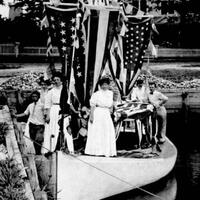
The Hudson-Fulton Celebration was held from September 25 through October 2, 1909. Towns along the Hudson River celebrated the tercentenary of the discovery of the Hudson River and the centenary of the invention of the steamboat by Robert Fulton. Homes and businesses flew flags and banners commemorating the eventful week. In Newburgh, Sunday was devoted to religious services. Monday and Tuesday were devoted to family reunions and gatherings. On Wednesday, a statue of Anthony Wayne was dedicated at Washington's Headquarters. Thursday, Firemen's Day, was celebrated with a parade down Broadway culminating in the unveiling of a state of a volunteer fireman at Concord and Broadway. Friday was Hudson-Fulton Day with a parade of floats and replicas of Hudson's Half Moon, Fulton's Clermont, and the ice breaker Norwich, up and down the Hudson River. Saturday, Aquatic Day, was devoted to sailboat and yacht racing. The week's celebration came to an end with the lighting of the Beacon Fires.
Scope of Collection
This collection consists of photographs documenting the 1909 Hudson-Fulton Celebration in Newburgh, NY.
Browse within this collection
Browse similar collections

Collection Facts
Historical Context
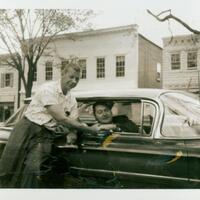
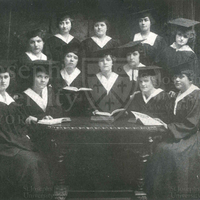
Hudson Valley Technical Institute, located in Troy, New York, was founded in 1953. The building it occupied was originally called the Veterans Vocational School. When it first opened, the school focused on training and preparing World War II Veterans for the workforce after the war had ended. Eventually, board members believed the college needed to broaden its academic offerings. In 1959, the college became known as Hudson Valley Community College which is the name is still possesses today.
Scope of Collection
This collection contains photographs and documents relating to Hudson Valley Technical Institute.
Browse within this collection
Browse similar collections



Collection Facts
Scope of Collection
The college currently offers intercollegiate sports for men and women. Teams compete in Region III of the National Junior College Athletic Association (NJCAA) and in the Mountain Valley Athletic Conference. The college’s teams have won national championships in ice hockey (2001), men’s cross country (1996), women’s bowling (1995, 2010), women’s basketball (1993) and women’s alpine skiing (1977). This collection contains images of HVCC sport teams and individual athletes.
Browse within this collection
Browse similar collections

Collection Facts
Historical Context
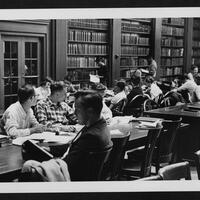
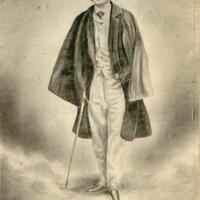
Hudson Valley Community College is a two-year college located in Troy, New York. It became known as Hudson Valley Community College in 1959. HVCC has the highest enrollment of community colleges in the capital district. The college offers a wide variety of academic programs, athletics, and extracurricular activities.
Scope of Collection
This collection contains photographs and documents that share the history of Hudson Valley Community College.