

Collection Facts
Historical Context
The majority of items in this collection were donated by the estate of Katherine Deyo Cookingham Downer of Poughkeepsie, N.Y. in 1976.
Scope of Collection
This collection consists of photographs, artifacts, and ephemera related to the Deyo Cookingham Family. This includes a family photograph album with images of the Deyo, Cookingham, Howell, and Brodhead families. The collection also contains selected articles of clothing worn by family members, genealogical information, and assorted ephemera detailing events in the history of the family.
Browse within this collection
Browse similar collections


Collection Facts
Historical Context
Justus F. Mueller (1902-1993) was an American parasitologist known for the development of the Mueller-Ward Models. Born in Baltimore in 1902, he received a BA in Zoology at Johns Hopkins University in 1923. While at John Hopkins and shortly thereafter, he was a Scientific Assistant to the US Bureau of Fisheries at the upper Mississippi River; Ann Arbor, Michigan; and Woods Hole, Massachusetts. His background in art included studies at the Corcoran Art School and The Maryland Institute, and he held part-time jobs between 1923 and 1928 as an illustrator for the US National Museum, the US Bureau of Fisheries, and the Natural History Museum at the University of Michigan. In 1924, he became a research assistant to Henry Baldwin Ward at the University of Illinois, where he received a MA in Zoology in 1926 and a PhD in Zoology in 1928 after completing a thesis on microscopical anatomy and physiology of ascarids.
After receiving his PhD, Dr. Mueller moved to Syracuse to be a Field Naturalist and Instructor in Zoology at the Roosevelt Wildlife Station through the New York State College of Forestry, which is now known as the SUNY College of Environmental Science and Forestry. He obtained the rank of Assistant Professor in 1929 and Associate Professor in 1938, and, after 1930, he simultaneously served as a Lecturer in Parasitology at the Syracuse University College of Medicine. While at the Roosevelt Wildlife Station, he studied parasites in Oneida Lake fishes, and his research of cultivation in vitro and discovery of the sparganum growth factor started when he found Spirometra mansonoides, a pseudophyllid cestode, in local cats and its sparaganum larva in water snakes. He utilized his artistic background to partner with Ward’s Natural Science Establishment, Inc. to create the Mueller-Ward Models, which covered 16 zoological subjects through 118 models.
Dr. Mueller left the Roosevelt Wildlife Station in 1943 to be an Associate Professor of Microbiology at Syracuse University. After SUNY acquired the Syracuse University College of Medicine, Dr. Mueller went on to become the Chairman of the Microbiology Department at SUNY Upstate Medical Center between 1954 and 1957 and a Professor of Microbiology between 1956 and 1972. His numerous publications included the widely circulated “Nature of Tropical Diseases,” and he traveled extensively in Asia and Central and South America for his research. He was well-known in the field of parasitology after serving as the editor of the Journal of Parasitology between 1962 and 1978 and as President of the American Society of Parasitologists in 1973. Later in life, he continued to study the sparganum growth factor and received various honors, including a Scholar in Residence appointment by SUNY, an honorary membership to the Helminthological Society of Washington, and election as President of the American Society of Parasitologists. He received an honorary Doctor of Science from SUNY Upstate Medical University in 1991 and died on April 2, 1993 at the age of 90.
Scope of Collection
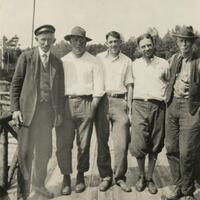
This collection contains photographs and scrapbooks from Justus F. Mueller that relate to his research and career as a Professor of Microbiology at Syracuse University and SUNY.
Additional Information
Browse similar collections

Collection Facts
Historical Context
The Junior League of Buffalo (JLB) has been recognized as one of the premier volunteer organizations in Western New York for nearly 100 years. In collaboration with community agencies and organizations, the JLB provides volunteers and funds to create projects designed to close the gap in critical community services. Through training, its members are equipped with skills that enable them to move beyond the organization and become community and civic leaders. On June 5, 1919 a meeting was held in the home of Mrs. Seymour M. Knox (800 Delaware Avenue) to discuss bringing the Junior League to Buffalo. Sixty-seven women responded to the first roll call with Mrs. Nelson Taylor presiding. The first community collaboration was with Children’s Hospital when the League donated $50 for sewing supplies. Since that first donation, the JLB has made a practice of identifying needs in the community and earmarking human and financial resources in order to meet those needs in a measurable way. It is Junior League of Buffalo tradition to create initiatives and programs that are sustainable and will continue to positively impact the community for years to come. Over the past 96 years, the Junior League of Buffalo has provided thousands of volunteer hours to those initiatives and programs. Funding in the form of grants, large and small, now exceeds four million dollars. As the JLB approaches its centennial celebration in 2019, the organization has continued to evolve and to recognize the changing dynamics within the community. Currently, members are focused on affecting change in the lives of female heads of households living in poverty. Through research, advocacy, partnering with local service agencies and dedicated financial resources, countless families in the community have been and will continue to be served. The Junior League of Buffalo has more than 400 members. It is one of 296 Junior Leagues in four countries comprising the Association of Junior Leagues International, Inc. Additional information regarding the Junior League of Buffalo can be found on their website.
Scope of Collection
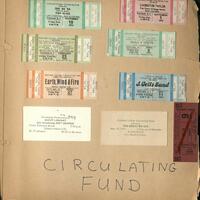
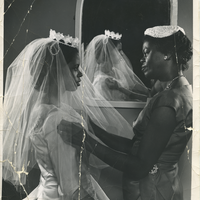
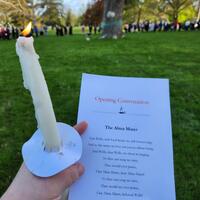
The collection includes many photographs depicting Junior League events and performances. Some of the photographs are portraits of prominent members. The Junior League of Buffalo is known for presenting a Decorator’s Show House in collaboration with the Buffalo News; many photographs and documents relate to these events. There are scanned images of many awards and certificates presented to the JLB. In addition, there are invitations, promotional materials, and even a book produced by the JLB. The collection spans almost a century, the entire lifespan of the organization from the early 20th century to present day.
Browse within this collection
Browse similar collections


Collection Facts
Historical Context
Julia Lawrence Hasbrouck (b. New York City, 1809) was one of eleven children born to Samuel Adams Lawrence and Catherine Remsen. Records can trace the prominent Lawrence family to Hertsfordshire, England as early as 1580. Julia Lawrence wed Garret Hasbrouck of Ulster County, in 1835. The Hasbrouck family was one of the original twelve Huguenot families who patented the village of New Paltz, New York in 1677. Garret Hasbrouck was the proprietor of a store in Greenwich Village near the Lawrence house. Although the Hasbroucks were well respected in Ulster County, their position in New York society was not equivalent to that of the Lawrences.
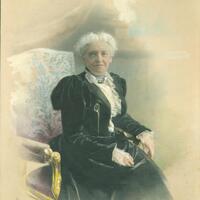
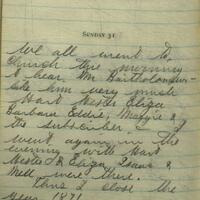
For nearly four decades, Julia Lawrence Hasbrouck diligently kept a diary, using it to chronicle her role and responsibilities as a 19th century wife, mother, and daughter. Julia's meticulous entries, written between 1838 to 1873, vividly expresses the tension in the lives of middle class women who were charged with raising responsible children and creating an emotionally sustaining home environment, but had little power over the world they inhabited.
Scope of Collection
This collection includes three of Julia Lawrence Hasbrouck’s diaries, covering 1838-1841. It also includes portraits of the Hasbrouck and Lawrence families.
Browse within this collection
Browse similar collections


Collection Facts
Historical Context
The New York State Unified Court System is the Judicial Branch of the New York State Government. The highest court is the Court of Appeals, followed by the intermediary appellate courts. The Appellate Divisions of the Supreme Court are divided regionally into 4 departments. The Appellate Division Fourth Department is located in Rochester and consists of Western and Central New York, as well as parts of the Adirondack region. The Seventh Judicial District is a local district court; it serves Cayuga, Livingston, Monroe, Ontario, Seneca, Steuben, Wayne, and Yates Counties.
Scope of Collection
This is a collection of approximately 300 photographic portraits of judges and court staff primarily from the Seventh Judicial District, the Appellate Division Fourth Department, and the Court of Appeals. Most of the collection is on permanent display in the law library. A small collection of oil paintings is also included. The inclusive dates are 1874-2013. Many photographs are undated.
Browse within this collection
Browse similar collections

Collection Facts
Historical Context
Joseph A. Scala Jr. (Joey, Joe) led a rich and full life. Born in Queens, N.Y., Joe was interested in art from a very young age. He began his art career at age 15 as an assistant to Tatyana Grosman, cutting stones for lithographs of such famous artists as Robert Rauschenberg, Jasper Johns, and Larry Rivers. Joe studied sculpture and painting with Pierre Bourdelle at Long Island University (C.W. Post College) and went on to receive his MFA at Cornell University. Joe founded Collaborations in Art Science in Technology (CAST), a non-profit organization that funded artists who used technology in their art. Joe spent the majority of his career as a professor in the art school at Syracuse University where he founded the computer art program and directed both the Joe and Emily Lowe Art and the Lubin House Gallery in NYC. He retired as Professor Emeritus. Upon retiring from S.U., Joe served as Executive Director of Stone Quarry Hill Art Park in Cazenovia and most recently a real estate agent with HUNT Real Estate.
Joe’s art is part of many collections, including the permanent collection at the Metropolitan Museum of Art in NYC. His work has been displayed in galleries and museums across the country, and his writings have been published in catalogues and anthologies. He participated in many art lectures and received numerous awards and accolades. Joe participated in such landmark exhibitions as “Some More Beginnings” in the Brooklyn Museum, and the Annual Avant Garde Art Festival in NYC.
Scope of Collection
All the pieces that incorporate clay, semi-precious stones and found objects were done between 2005 and 2010. The pieces with double mirrored imagery were created between 2010 and 2015. "Modligiani's Necklace" and "Magritte's Apple" were done in 2015 and 2016 and represent the style Joe was working on when he was diagnosed with cancer.
Browse similar collections


Collection Facts
Historical Context
Joseph Jacques Ramée was a well-known architect and an itinerant designer in Europe, whose work could be seen in Belgium, Germany, and Denmark. The style which developed in his designs was a product of his nomadism: to the Neoclassicism of his training in France, he eclectically adopted elements from the architectural pallet of whatever locale he was working in. His tendency was to work with basic shapes and spare forms, suitable to versatile settings. In January 1813, Nott came into contact with Joseph Ramée, as the architect traveled south through New York State on his way to Philadelphia. Nott had a unique vision for higher education, coupling a modern and practical focus in the curriculum with the ideal of a college community as an extended family. To embody this vision, the campus itself had to be more than just a functional space. Nott apparently found a practical match for his ideas in Ramée, whom he contracted to draw plans for the Union campus. While Ramée’s vision is evident in the Union College of today, its influence was felt throughout the collegiate world in its time. The Union College plan became a model for what a campus could be and what kind of values a college could embody.
Scope of Collection
This is a collection of Union College architectural plans which includes Schaffer Library and the Nott Memorial, drawn by Joseph Jacques Ramée in 1813.
Browse within this collection
Additional Information
The Ramée Architectural Plans for Union College is a collection of the surviving plans drawn for the College by French architect Joseph Jacques Ramée in 1813, presented here for the first time in a digital format. Ramée’s designs, drawn in collaboration with Union College President Eliphalet Nott, reflect an evolving vision for the campus.
Browse similar collections


Collection Facts
Historical Context
The American Civil War was fought between the years 1861 - 1865 between the Union (the North half of the country) and the Confederates (the South half of the country). The war began over the disagreements between the North and South regarding slavery. The Civil War is known for having more American deaths in a war than any other war America has been a part of.
Scope of Collection
The Joseph H. Treyz Collection contains 149 patriotic envelopes printed during the Civil War. They represent the Union cause and contain patriotic images such as the Union flag, state seals, soldiers, goddesses, depictions of Northern cities, prominent leaders and military officers, and cartoons and caricatures depicting Southern life. The majority of the envelopes include a slogan or poetry supporting the Union cause. Most of the envelopes are beige in color, with a few that are yellow, blue, or pink. The images are printed in black and white or with colors of blue, red, or a combination of red, white and blue.
Browse within this collection
Additional Information
Browse similar collections

Collection Facts
Historical Context
In 1836 brothers, John Hewlett Jones and Walter Restored Jones, along with 32 other local investors founded the Cold Spring Whaling Company. During its operation, the Cold Spring Whaling Company financed 44 voyages on 9 ships. John H. Jones was the principal agent for the company until it was disbanded in 1852. He coordinated the voyages by hiring whalers and outfitting the ships from his General Store in Cold Spring. Walter R. Jones recruited investors and located ships for the fleet using his connections as the president of the Atlantic Mutual Insurance Company. Amos and Samuel Willets, of the ship chandler shop A & S Willets, obtained stores and gear for the voyages and sold whale oil and bone on behalf of the Cold Spring Whaling Company.
The Bark Monmouth was the first vessel sailed by the Cold Spring Whaling Company. She was bought in Boston in 1836 by John H Jones and a number of his associates and was outfitted as a whaler. The voyage was profitable however, when the Monmouth returned to New York in 1839, the Customs Collector took issue with her documents and claimed that her cargo was subject to the same duties as foreign goods. Despite public outcry and several delays, the Cold Spring Whaling Company reluctantly paid the additional duties and the Monmouth went on to sail twelve more voyages from Cold Spring.
The Ship Huntsville was built in 1831 and was one of a new generation of flat-bottomed coastal packets which allowed the ship to travel faster with a larger cargo. The Huntsville was bought by Cold Spring in 1844 and sailed on 4 voyages before being sold again in 1858. The Huntsville then returned to the merchant trade and was still sailing in San Francisco in 1870, 39 years after her launch.
The Ship Nathaniel P. Tallmadge was the only purpose-built whaleship in the Cold Spring Whaling Company’s fleet. She was named for United States Senator from New York, Nathaniel Pendleton Tallmadge. She sailed on two whaling voyages in 1836 and 1840 for the Duchess Whaling Company before being sold to Cold Spring in 1843.
Although the Cold Spring Post Office added “Harbor” to the town’s name in 1826 to avoid confusion with the upstate New York town of Cold Spring, the residents of Cold Spring Harbor referred to the town as “Cold Spring” for the majority of the nineteenth century.
The Jones collection was assembled by descendants of the Jones family and donated to the Whaling Museum in two gifts in 1959 and 1971.
Scope of Collection
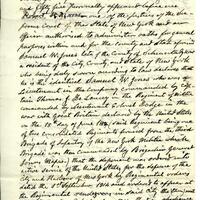
The Jones collection is made up of financial records for the Cold Spring Whaling Company between 1836-1852. The majority of the records relate to the voyages of the Cold Spring Whaling Company’s nine vessels: Monmouth, Tuscarora, Nathaniel P. Tallmadge, Richmond, Alice, Huntsville, Splendid, Sheffield, and Edgar.
Browse within this collection
Browse similar collections


Collection Facts
Historical Context
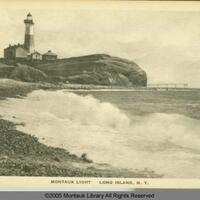
During the early 20th century, new concepts in transportation and destinations were developed by different levels of government with the advent of the automobile. On August 4, 1929, Jones Beach state park and the Wantagh causeway were opened to the general public. This was the first major public project created by the Long Island State Park Commission under the direction of Robert Moses, its first President. Unusual for the time period, he did not allow any commercial carnival - like amusements in the public park. This was to be a new type of leisure and recreation facility that could only be reached by automobile. Since the parkway ended temporarily at Merrick Road, Wantagh became known as,” The Gateway to Jones Beach”.
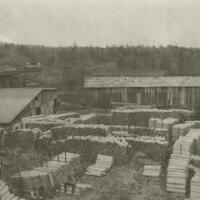
To build the park complex during the 1920’s the existing beach community of High Hill Beach was demolished with some homes moved to West Gilgo Beach by barge. Two Art Deco bathhouses and an Italianate – style water tower, became the central features of the park. Later a boardwalk was added along with a small golf course, dance area and restaurants. During the late 1930’s, an amphitheater was built at Zach’s Bay to stage, “Broadway Shows by the Ocean”.
Today Jones Beach is a world - famous park, renowned for its beaches on the Atlantic Ocean. It is the most popular visited beach on the East coast of the United States, with an estimated 6 million visitors a year.
Finally, the concept of,” automobile parkways”, was to have a profound effect on the development of Long Island in the 20th century. Farmland that existed for centuries, overnight became,” suburbs”, a new concept of living in the country but commuting by car to work in the city. Wantagh within decades went from a farming village to a bedroom community of New York City.
Scope of Collection
Pictorial history of High Hill Beach, Jones Beach and the New York State Parkway system during the 20th century to the present time.