

Collection Facts
Historical Context
At the beginning of World War II, Thomas Watson, Sr., IBM’s chairman, offered President Franklin Roosevelt IBM facilities for manufacturing armaments. This resulted in the establishment, in 1941, of the Munitions Manufacturing Company in Poughkeepsie, New York. Soon IBM added other buildings nearby and then created a network of laboratories. Research in these laboratories would lead directly to IBM’s decision to expand operations northward across the Hudson River to Kingston.
The IBM main plant was dedicated on November 2, 1956 on 200 acres in the Town of Ulster. IBM Kingston recruited locally for assembly line workers but also sought out professionals locally, nationally, and even internationally. Thousands of people worked at the IBM plant, and thousands more owned or worked for local businesses that benefited from the presence of IBM in the community. Some people built homes for new arrivals, some supplied IBM with equipment, others taught IBMers’ children or sold them their cars. The Kingston area transformed, with new suburbs popping up in all directions.
IBM Kingston’s peak employment—7,100 workers—was in 1985. By 1990, there were 5,700 people. Then in 1993, what was known as “The Downsizing” began. By the end of 1993, they had decreased to 4,300 employees. By July 1994, there were only 1,500 left. It was then that IBM announced the Kingston plant would be closing. The loss of IBM was devastating for both Kingston and Ulster County. It has been estimated that IBM counted for 12% of the county’s entire economy. Businesses that served IBM and IBMers suffered. The housing market was glutted with properties as IBM employees who relocated to other areas sold their homes.
Fortunately, thousands of IBM families stayed in the region, continuing to contribute to the economy and volunteering for scores of non-profits. Though Kingston was initially hurt by the loss of IBM, its unique neighborhoods continue to grow, and are thriving with new businesses.
Scope of Collection
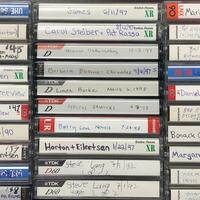
This collection consists of oral interviews conducted in 2014 of former IBM employees and community members in conjunction with a book and exhibit.
For more information, please visit the online exhibition Kingston, The IBM Years.
Browse within this collection
Browse similar collections

Collection Facts
Historical Context
A vivid memory of World War II is the troop trains leaving the Kingston railroad station. At the station, families hugged their loved ones and hung on to them until they had to board the train. The steam locomotives disappeared out of sight around the bend on Railroad Avenue bound for Weehawken, New Jersey where the men were sworn into the service and sent on to training camps across the country. Two blocks south, a similar scene took place as gray buses pulled away from the Central Post Office on Broadway.
Early in 1940, it was enlistees boarding the trains and buses, but after the fall of France later that year, Congress enacted the nation’s first pre-war conscription act drafting men aged 21 to 35 for one year of service restricted to the Western Hemisphere and U.S. Territories. In 1941, after the bombing of Pearl Harbor, Congress extended the draft to men aged 18-35 (and briefly to 45), for the duration of the war and removed all restrictions. Approximately, 10 million men were drafted across the country by the Selected Service System.
To publicly honor its service men and women, the City of Kingston erected war memorials in each ward listing each service person’s name. Throughout the city in the front windows of houses hung silk banners bearing a blue star for each family member serving in the military.
One Kingston woman created a remarkable document to their service. Anna Norton Dederick (1887-1972) clipped from the Kingston Daily Freeman from 1940-45 and pasted into three scrapbooks more than 5,000 photos and articles of Kingston’s military.
Scope of Collection
The collection includes scrapbooks compiled by Anna Norton Dederick, presented as one digital document. Also included is an index of people named in the scrapbooks and the page(s) on which they appear.
Browse within this collection
Browse similar collections

Collection Facts
Scope of Collection
This collection consists of photographs of Kingston soldiers and local events during the First World War, drawn from the collections of William Anderson Carl and Samuel Bernstein. They depict Kingston’s role in the war effort of 1917-1918.
Browse within this collection
Browse similar collections


Collection Facts
Historical Context
The mission of the Kent Historical Society is to preserve, promote, and disseminate information and materials relevant to the history of the town of Kent in Putnam County, New York. The Society seeks to provide informational presentations to its members and the general public to increase awareness and appreciation of the town's history.
Scope of Collection
This collection includes historic photos of Kent farmlands and local residents. It also includes photographs of the Ludingtons, a prominent family from Putnam County.
Address:
PO Box 123
Carmel, NY 10512
Phone: 845-225-2481
Browse within this collection
Browse similar collections


Collection Facts
Historical Context
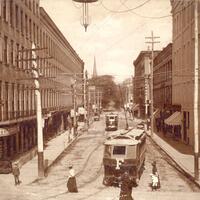
The FJ&G railroad originated in 1867 and the first train ran in 1870. The railway consisted of 132-miles of tracks that carried people from all different statures between east central New York and the Schenectady, New York area as well as carrying freight. The railroad carried both steam engine and electric interurban cars. In the 1930s, after the Great Depression, passenger traffic declined, resulting in freight only service. Eventually, the railroad was taken over by the Delaware-Otsego Railroad management company and was officially abandoned in the 1980s.
Scope of Collection
This collection is comprised of the historical records of the Fonda, Johnstown, and Gloversville Railroad.
Browse within this collection
Browse similar collections


Collection Facts
Historical Context
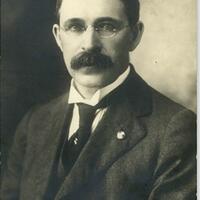
Ken Spooner is a musician, author and historian who grew up in Mastic Beach during the 1950s. He is known for his book, The Knapps Lived Here.
Scope of Collection
The collection consists of photographs, postcards, and maps showing the early and mid 20th Century history of Mastic Beach, Long Island. Included in the collection are photos of the Knapp Family, as part of the research done for the book, The Knapps Lived Here.
Browse within this collection
Browse similar collections


Collection Facts
Historical Context
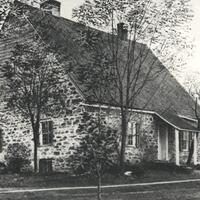
This well-illustrated book primarily provides the history of the Jefferson County village of Sterlingville, a small community that ceased to exist upon the government’s expansion of Pine Camp (now Fort Drum) prior to the United States’ entry into World War II. Several other small communities that met the same fate in the area are mentioned as well: Sterlingburgh, Lewisburg (Louisburg, also formerly known as Sterlingbush), Leraysville, and Reedville.
Scope of Collection
The book provides details on the relocation process and the personal stories of many of those affected by the loss of their communities. Information on the 19th-century iron industry in Jefferson County is included as it is central to the history of Sterlingville and the other communities in the surrounding area. Also included is information on James LeRay and his mansion, as well as a brief section relating to the detainment of POWs at Pine Camp during World War II.
Browse similar collections


Collection Facts
Historical Context
The town of Keene, New York, Located in Essex County, was founded in 1808, where it, like many small towns in the North country, primarily produced timber and iron for export.
Scope of Collection
This collection of photographs and postcards dating between 1880 and 1967 depicts numerous candid and staged portraits of local residents, most prominently multiple generations of the Holt family , as well as images of local houses and landmarks, including the AuSable Club and Tahawus House.
Additional Information
Keene Valley Library
Browse similar collections

Collection Facts
Historical Context
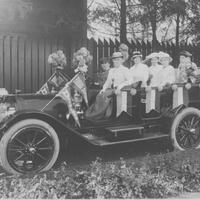
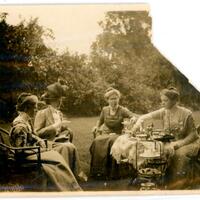
Katherine (Kay) Flickinger Dockstader (1910-1995) was a lifelong resident of the Schenectady, New York area who worked for General Electric. She was one of the first women to hike the 46 Adirondack High Peaks and was an active member of the Adirondack Mountain Club (ADK), Mohawk Valley Hiking, and Otyokwa Clubs. Kay took extensive scenic photographs, detailing many of them with personal notes about the locations and participants. The images reflect Flickinger’s opinion that “up here, everything is beautiful!”
Scope of Collection
The collection includes photographs, reverse side personal notes, and postcards of the Adirondack Mountains and other Northern New York locations; many of the images include Flickinger’s friends and fellow outdoor enthusiasts.
Browse similar collections

Collection Facts
Historical Context
Kathleen Louise Johnson was born on October 3, 1917, in Akron, Ohio. She received a Bachelor of Arts in Sociology from the College of Liberal Arts at Boston University in May 1939. Kathleen (Kate) married Jacob Oser on December 17, 1954, and tended to household duties at their home in Endicott, New York. During this time, social activism became a prominent component of Ms. Oser’s life. Her activist endeavors focused on improving the lives of migrant workers, fighting for equal rights for women and members of the gay community, and events related to the peace movement during the Vietnam War. As a student at Boston University from 1938 to 1939, Oser became a member of the Young Communist League. In 1940, she joined the Communist Party and remained a member through the early 1940s. Oser eventually left the Party because she was unable to fully dedicate herself to the Party’s agenda. She was an active member of the National Organization for Women (NOW). NOW was established in 1966, two years after the Civil Rights Act of 1964 outlawed sex discrimination, and three years after the publication of The Feminine Mystique by Betty Friedan (NOW’s co-founder and first president). Kate Oser served as the secretary for the local Utica, New York, chapter of NOW. In addition to being a prominent activist in the Utica area, Ms. Oser was the mother of three, the grandmother of four, and the great-grandmother of five. At the age of 91, she died on September 8, 2009.
Scope of Collection
The Kathleen Oser Collection contains a vast assortment of documents, newspapers, magazines, and photographs relating to the National Organization for Women (NOW) as well as to significant political, social, and cultural events (at the local, state, and national level) during the 1960s, 1970s, and 1980s. Her collection includes documents related to various organizations and groups, including: Planned Parenthood; National Abortion Rights Action League (NARAL); Mohawk Valley Friends of Choice; Conscience-Catholics for a Free Choice; Family Planning Advocates of NYS, Inc. (FPA); and United Farm Workers. Additionally, the collection contains documents related to: Civil Rights; feminism; sexual abuse and rape; harassment; marriage and divorce; childcare; nuclear arms; poverty; and sexism. Pertaining directly to NOW, the collection contains: documents from the 1970s and 1980s; do it NOW publications; NOW National Times publications; and documents on the local NOW chapter (Utica) and the Central New York chapter.