
Collection Facts
Scope of Collection
This is a collection of photographs, predominantly black and white, of the visiting guests of Canisius College
Browse within this collection
Browse similar collections

Collection Facts
Historical Context
Leah Catharine Deyo was born in New Paltz, NY in 1818 and resided in the Hudson Valley until her death in 1849.
John and Katia Jacobs, descendants of Leah Catharine preserved a collection of her correspondence, daguerreotypes, clothing and photographs. They generously donated it to the Haviland-Heidgerd Historical Collection at the Elting Library in the 1980s.
Scope of Collection
This collection includes correspondence related to Leah Catharine Deyo, as well as portraits of her family. The collection contains the correspondence of Leah Catharine Deyo to her sister-in-law Maria Lefevre Deyo. The letters recount personal experiences, as well as aspects of early Victorian family life such as farming, child-rearing, sewing and knitting, and fashion.
Browse within this collection
Browse similar collections

Collection Facts
Historical Context
The National League of Women Voters was established in February 1920, six months before the 19th Amendment to the Constitution was ratified, which gave women the right to vote following a 70 year struggle. In 1939 the League of Women Voters of Amherst was founded. The League of Women Voters, a nonpartisan political organization, encourages the informed and active participation of citizens in government, works to increase understanding of major public policy issues and influences public policy through education and advocacy.
Scope of Collection
The collection includes League of Women Voters of Amherst newsletters, newspaper articles, publications, and meeting minutes dating from 1940 - 1983.
Browse within this collection
Browse similar collections

Collection Facts
Scope of Collection
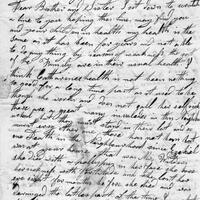
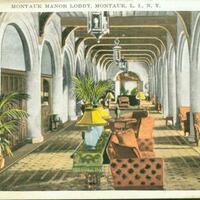
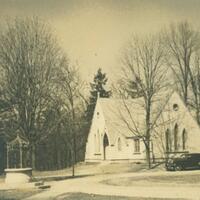
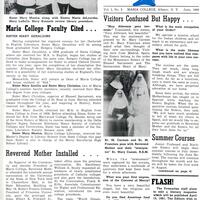
Eighty-five page scrapbook created by Laura Abigail (Abbie) Gosline during her time at the State Normal School at New Paltz, N.Y. from 1915-1917. It includes accounts of parties and events that occurred while she was in school. Pages also include event programs, invitations to parties and graduations, school assignments and other memorabilia of her time in New Paltz.
Browse within this collection
Browse similar collections


Collection Facts
Historical Context
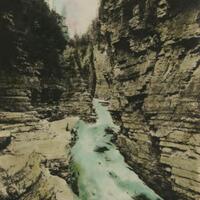
The American Museum of Natural History was an early partner of the Palisades Interstate Park Commission (PIPC), providing scientific, historic, and other expertise as the Commission developed environmental education programs, public nature trails, group camping programs for children, and more. In 1927, the American Museum partnered with the PIPC to found Trailside Museums & Zoo, often call the Bear Mountain Zoo, as a field station and component of a larger regional network of outdoor nature museums to provide context and information to our tens of thousands of group campers.
In the late 1910’s and 1920s, the American Museum created glass lantern slides for PIPC. Lantern slides were, in a sense, the earliest form of PowerPoint. These slides have two glass plates, one that holds a negative image and a second protective cover. These are held together with tape and, in our case, hand-tinted to colorize them. These slides were accompanied by a written presentation to tell a specific educational story. The slides were held up to a light source (the lantern) which would “project” the image onto a surface similarly to our modern projector system.
Scope of Collection
This collection contains glass lantern slides created by the American Museum of Natural History in the late 1910s and 1920s. It includes images of the park and visitors, as well as local plants and wildlife (particularly birds). There are also many ink drawings of historical figures and scenes relating to the American Revolution.
Browse within this collection
Browse similar collections

Collection Facts
Scope of Collection
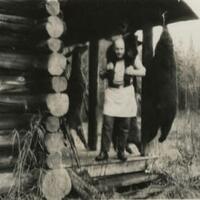
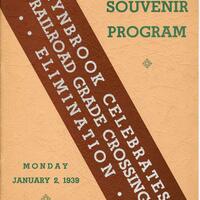
This collection consists of historical photos, newspaper articles, postcards, and some personal notes of people, places, sports, and businesses pertaining to the Town of North Elba and Village of Lake Placid as created by Town and Village Historians Mary MacKenzie (1964-2001) and Beverley Reid (2001-present). Mary MacKenzie accumulated an array of materials in her 37 years as Town and Village Historian, and all around aficionado, dating back to the pioneer days focusing on telling the history of the area.
Browse within this collection
Browse similar collections

Collection Facts
Historical Context
High school instruction in LaFayette began in 1889 and the school received full accreditation in 1921. In 1937, the LaFayette Central School District was formed from the LaFayette Union Free High, Cardiff, Collingwood, Octogan, Reidy Hill, Hiscock, Miller, and Sentinel Heights schools. Several other districts later joined with this district, including the Coye, Flaherty, and Tilden districts. In 1954 the State Education Department requested LaFayette Central School to integrate the Onondaga Indian Reservation School within the district. This program brought the Indian students from grades 7-12 into the main building.
The Class of 1920, under the guidance of Preceptress Marian Woglum, produced the first year book. The project was accomplished after much labor and unified effort, so much so that when a name was sought it was decided to christen it "The Spirit" in recognition of that unique unity. A yearbook has ever since been produced, but on its 50th anniversary the innovative Class of 1970 elected to change the name of the annual to "The Lancer" which over the years has become the symbol of the school.
*adapted from the book “LaFayette, New York: A History of the Town and It’s People”, by J. Roy Dodge.
Scope of Collection
This collection contains yearbooks from LaFayette High School.
Browse similar collections


Collection Facts
Historical Context
In 1987 John B. Johnson, Sr., editor, and publisher of the Watertown (N.Y.) Daily Times, suggested to Frank P. Augustine, a 38 year Times employee, that he research the Italian community of Watertown. Augustine's work resulted in an 18-week series published in the Times from September 1988 to March 1989, and a book, La Bella America: From the Old Country to the North Country published by the Watertown Times. In the course of his research Augustine, himself a child of Italian immigrants went into the homes of members of the Italian community in Watertown. He tape-recorded over three dozen interviews, primarily with Italians who had come to the United States as young people in the early twentieth century. Most of those interviewed were in their late 70s, 80s or 90s. Assisting as interpreter was Henry V. Cumoletti, a Watertown resident who had served as an interpreter and court reporter at the Nuremberg Trials in 1946.
Scope of Collection
The book provides details on the relocation process and the personal stories of many of those affected by the loss of their communities. Information on the 19th-century iron industry in Jefferson County is included as it is central to the history of Sterlingville and the other communities in the surrounding area. Also included is information on James LeRay and his mansion, as well as a brief section relating to the detainment of POWs at Pine Camp during World War II.
Browse within this collection
Additional Information
Jefferson Community College Library
Browse similar collections

Collection Facts
Historical Context
In 1836 brothers, John Hewlett Jones and Walter Restored Jones, along with 32 other local investors founded the Cold Spring Whaling Company. During its operation, the Cold Spring Whaling Company financed 44 voyages on 9 ships. John H. Jones was the principal agent for the company until it was disbanded in 1862. He coordinated the voyages by hiring whalers and outfitting the ships from his General Store in Cold Spring. Walter R. Jones recruited investors and located ships for the fleet using his connections as the president of the Atlantic Mutual Insurance Company. Amos and Samuel Willets, of the ship chandler shop A & S Willets, obtained stores and gear for the voyages and sold whale oil and bone on behalf of the Cold Spring Whaling Company.
The Bark Alice was built in Newbury, Massachusetts and sailed under Captain Thomas Hale as a coastwise trader. She was originally outfitted as a brig then modified to a bark. The Walter R. Jones arranged the purchase of the Alice in from Thomas and Josiah Hale. The Hales continued to own partial interest in the Alice during her Cold Spring Whaling voyages.
The Ship Sheffield was built by the Smith and Dimon shipyard, New York in 1831. The Sheffield was built as a transatlantic packet ship with weekly service to Liverpool. The Sheffield broke records for eastbound Atlantic crossings by completing the journey in just 16 days and with an average of 17.8 days over her career as a packet. In 1843 the Sheffield was driven ashore on Romer Shoal off of New York in a storm. The 130 passengers and crew were rescued by a Staten Island steamboat after about 12 hours. The Sheffield was repaired and returned to service but the newer packet ships were smaller and faster. The Sheffield was purchased by the Cold Spring Whaling Company in 1845 and was the third largest whaler in the country for the next 15 years.
Although the Cold Spring Post Office added “Harbor” to the town’s name in 1826 to avoid confusion with the upstate New York town of Cold Spring, the residents of Cold Spring Harbor referred to the town as “Cold Spring” for the majority of the nineteenth century.
The Knight collection was donated to the Whaling Museum in 1972.
Scope of Collection
The Knight collection is made up of financial records and business correspondence for the Cold Spring Whaling Company between 1836-1862. The majority of the records relate to the voyages of five of the Cold Spring Whaling Company’s vessels: Alice, Huntsville, Monmouth, Nathaniel P Tallmadge, and Sheffield.
Browse within this collection
Browse similar collections


Collection Facts
Historical Context
Since its charter in 1901, the Kirkland Town Library has played a unique role in nurturing, supporting and preserving artistic endeavors in our community. The Library was the first home of the Kirkland Art Center from 1960-1966 and hosts monthly art exhibits in our Bristol Room gallery space. A key feature of the Library building is a wide-ranging collection of artwork gifted to the library.
Scope of Collection
The library’s complete collection contains approximately sixty pieces of art and photography. The pieces convey a variety of subjects from landmark buildings to local scenes to significant events in the life of the community. They are done by painters, photographers and textile artists who either lived in Clinton or have a special connection to our town. Our hope is that eventually, this archive will serve as an online museum for the library’s entire collection so that visitors from far and wide can experience it.