
Collection Facts
Scope of Collection
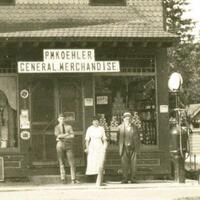
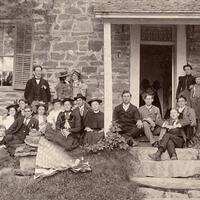
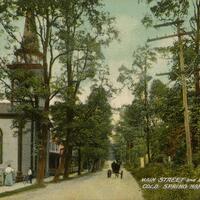
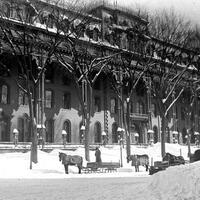
This collection contains historic images of landmarks, buildings, and people in Rockland County.
Browse within this collection
Browse similar collections


Collection Facts
Historical Context
The city of Kingston, New York began as two communities: Wiltwyck, the uptown area within a stockade, and Rondout located on the creek. In 1872, the two villages were incorporated as the City of Kingston. Land located between both villages, now midtown, was selected as the site on which to build the City Hall, an Italian Gothic building that opened in 1875 and still serves as the seat of government.
Scope of Collection
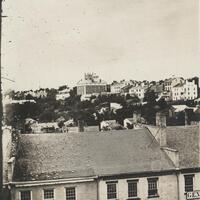
The collection features Kingston buildings, city life, and street scenes photographed in the 1880-1920s from the archives of the Friends of Historic Kingston. It includes images from Kingston's unique neighborhoods, including the Stockade District, the Rondout, and Midtown.
Browse within this collection
Browse similar collections



Collection Facts
Scope of Collection
The collection makes available all of the photographs in the Archives Files collection, which provide visual documentation of Raymond Avenue, Vassar Lake, college buildings and buildings relating to Matthew Vassar's family, as well as class groups, faculty, presidents, students, trustees, and Matthew Vassar and his relatives.
Browse within this collection
Browse similar collections


Collection Facts
Historical Context
The Village of Ilion was incorporated in 1852 largely due to the efforts of Eliphalet Remington, II, the founder of Remington Arms. With the firearms manufacturer located along the old Erie Canal business was booming and the population of the surrounding area increased. It became necessary to locate a post office in this location and eventually Ilion was incorporated. Most of the village buildings were erected in wood with the first known business block built by Reuben Hotaling prior to 1875. However, fires broke out on a regular basis throughout the latter part of the nineteenth century mainly due to these wooden structures. Some of the most catastrophic fires occurred in the 1880s and in 1890 when a large part of downtown Ilion went up in flames. As a result of the calamities, the Ilion Charter was amended to impose penalties for “erecting wooden buildings in the village limits” according to a March 10, 1893 Ilion Citizen newspaper article. Thus, Ilion entered an “Era of Progression and Improvement” in the late 1800s and into the early twentieth century. Many new buildings made of brick would now line the streets including Reuben Hotaling’s new 1893 three story business block on Main Street that replaced his previous wooden structure. Otsego Street would also change in appearance during this era as many brick buildings replaced their wooden predecessors. Unfortunately, many of these historic buildings that were built during this time period were razed about 70 to 80 years later during Ilion’s Urban Renewal Project.
Scope of Collection
Ilion’s Era of Progression and Improvement Collection contains photographs from 1875 to 1935. The majority of the photos are from the 1870s and 1880s. More than half of the photographs are from unknown sources, but creators of the others include Ilion photographer William Bremer, Remington Arms, Village Historian R.C. Dimock, Spedding Studio, and Ilion photographer Duane Ross. The photos were taken on Main Street, Otsego Street, and Bridge Square where the old Erie Canal passed through the village. They show how the village looked before, during, and after the building boom that occurred in the late 1800s to early 1900s. Called “The Era of Progression and Improvement,” Ilion began to replace many of its wooden buildings with brick structures along these streets.
Browse within this collection
Browse similar collections

Collection Facts
Historical Context
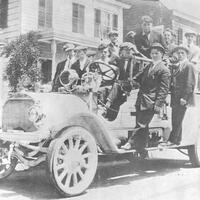
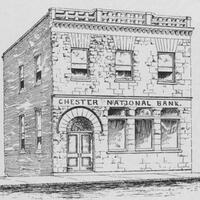
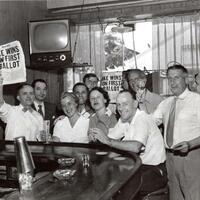
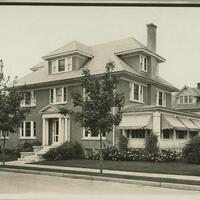
In April 1965 a Master Plan was written to study a potential Urban Renewal Project for the Village of Ilion, New York. A Village Planning Board, the Village Board, and citizens of Ilion collaborated with Federal and State Governments to develop a project that would revitalize the central business district and improve the streets/highways. The plan was to replace the substandard, near century old buildings with pedestrian malls, plazas, and better off-street parking. The Urban Renewal Agency, with Donald Hall as Executive Director, was created to oversee the project, which broke ground in 1968 and concluded in 1974. A dedication was held on June 20, 1974 with Chairman of the Urban Renewal Agency, Harold H. Riddell, as Master of Ceremonies. Also speaking at the event, were Ilion Mayor James F. Garnsey, Donald Hall, Executive Director, and dignitaries Edwyn E. Mason, New York State Senator and Anthony J. Casale, Administrative Assistant to U.S. Congressman Donald J. Mitchell. A major effect of the Urban Renewal Project was a change in the street pattern, previously an east-west route through the village, to a north-south direction. As a result of Ilion’s Urban Renewal, the historic Main Street, with its renowned building blocks such as Powers/Thompson, Union, and Hotaling, was gone, but a small pedestrian shopping plaza called the Keystop Mall had become the new face of the village.
Scope of Collection
The Urban Renewal Collection contains photographs of several locations in the village of Ilion, New York affected by the revitalization project. The photos are dated from 1967-1973 with the majority of them from 1972. Various businesses and individuals produced the photos including the Remington Arms Company, Alan Studio, the Utica Observer-Dispatch, John Berberik, and some unknown sources. Many photos in the collection were taken within the Central Business District, primarily Main Street, Otsego Street, and areas within the vicinity of these locations. Taken before and during the project, the photos show the razing of buildings, the construction of new ones, and the rerouting of streets.
Browse within this collection
Browse similar collections


Collection Facts
Historical Context
Hurricane Sandy (unofficially known as "Superstorm Sandy") was the deadliest and most destructive hurricane of the 2012 Atlantic hurricane season, and the second-costliest hurricane in United States history.
Scope of Collection
The collection consists of over 250 color photographs documenting the effect of Hurricane Sandy on Mastic Beach, Mastic and Shirley, Long Island.
Browse within this collection
Browse similar collections


Collection Facts
Historical Context
Hurricane Irene was a large and destructive tropical cyclone, which affected much of the Caribbean and East Coast of the United States during late August 2011. Irene is ranked as the seventh-costliest hurricane in United States history.
Scope of Collection
The collection consists of over 150 color photographs documenting the course of Hurrican Irene around the town of Brookhaven, NY.
Browse within this collection
Browse similar collections

Collection Facts
Historical Context
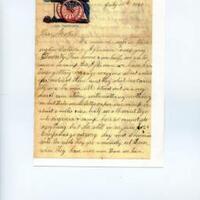
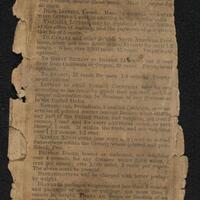
During the Revolutionary War, the occupying British army forced Huntington residents to take oaths of allegiance to the Crown. If a man refused to take the oath, he and his family could be turned off their property, losing everything. The British established a headquarters in Huntington and used Long Island as a supply depot for the occupying forces in Manhattan. Crops and livestock were taken, horses and oxen were commandeered, and residents were forced to provide food, housing and labor. Residents resisted as best they could. Men who had fled to Connecticut conducted raids across the Sound, aided by patriots who remained on Long Island. British troops were harassed. In 1781, American and French forces attacked Fort Franklin on Lloyd’s Neck, but were repulsed.
During the Civil War, records in the Town Clerk’s archives show the town was required to send 263 volunteers into the field or submit to the draft. In response to the correspondence received by the Town on August 1862, numerous Town meetings were scheduled to secure money to pay bounties to volunteers and provide for their families while in the service. The 127th Infantry Division, known as the National Volunteers or Monitors, was principally recruited on Long Island and in New York City (including Huntington), where it was mustered into the U. S. service for three years, Sept. 8, 1862, and left two days later for Washington. It served during the siege of Suffolk in the spring of 1863 in Hughston's (3d) brigade, Gurney's division, and in June was engaged in minor affairs at Diascund bridge and at Nine-mile Ordinary, VA.
Scope of Collection
The collection consists of manuscripts, receipts payable, inventories, disbursements, and other documents pertaining to Huntington’s involvement in the both the Revolutionary and Civil Wars.
Browse within this collection
Browse similar collections



Collection Facts
Scope of Collection
The images described in this collection cover the years 1815-1872 and total 2.5 linear feet of material. They form sub-series IV in Record Group #1, Department of the Town Clerk and they are open for research under the conditions of the Huntington Town Clerk’s Archives Records Access Policy.
These records describe the boundaries of each school district in the Town of Huntington, document number of students in the school districts, monies paid to districts and teachers as well as the amount allotted to the libraries.
Browse within this collection
Browse similar collections


Collection Facts
Scope of Collection
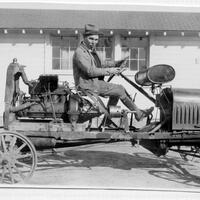
The collection consists of historic postcards showing landscapes and buildings in Huntington, NY from the early 20th Century.