
Collection Facts
Historical Context
The St. Lawrence-Lewis School Library System collection consists of high school yearbooks from area high schools. The Seymour is the annual yearbook of Knox Memorial High School. The Edwardian is the name of the Edwards Central School yearbook before 1956. After 1956, the name of the Edwards Central School yearbook is the Hornet. The Cougar is the annual yearbook of the Edward Knox Central School.
Scope of Collection
This collection consists of issues of the Edwardian, the Seymour, the Hornet, and the Cougar dating between 1946 and 2010.
Browse within this collection
Browse similar collections

Collection Facts
Historical Context
Edward M. Ruttenber was born in Bennington, Vermont on July 17, 1825. According to his obituary, he arrived in Newburgh by sloop in 1836 at 12 years of age apparently unaccompanied by parents. As a young man, he was apprenticed to Charles Cushman, who managed the Newburgh Telegraph. Ruttenber was transferred to the Newburgh Gazette in 1839, returned to the Telegraph in 1845 and purchased the Telegraph in 1850. Later he consolidated the Excelsior, the Gazette, and the Daily News. He began publishing what would become the Newburgh Evening News newspaper in 1885. The Evening News would be the newspaper of record for Newburgh, NY for the next 100 years. He was a charter member of the Newburgh Historical Society and is responsible for writing and / or publishing numerous works including a History of Newburgh, Historic Flags of the New York Regiments, History of the Indian tribes of Hudson's River, The history of Orange County, and Footprints of the Red Men. E.M. Ruttenber died on December 4, 1907, leaving a widow, two sons, 3 grandchildren and 3 great-grandchildren. He is buried in Woodlawn Cemetery in New Windsor, NY.
Scope of Collection
This collection contains the handwritten drafts of History of Orange County, NY, revised genealogy of the Ruttenber family and Footprints of the Red Men: Indian Geographical Names. Also included in the collection are handwritten copies of regimental histories and individual personal histories of local soldiers who fought in the Civil War.
Browse within this collection
Browse similar collections

Collection Facts
Historical Context
In July 1833, Edmund Blunt (1799-1866) accepted a position as Assistant on the Coast Survey of the National Oceanic and Atmospheric Administration. He remained affiliated with the Coast Survey until his death in 1866. As part of this survey, he and his team mapped the Hudson River shoreline including the area around Newburgh, NY.
Edmund Blunt's father, Edmund March Blunt, a bookseller and publisher, published the first edition of "The American Coast Pilot," one of the most popular pilot guides used by both American and foreign seamen. The Blunt family produced 21 editions of this important work. The Blunt's bookstore, the "Sign of the Quadrant" in New York City, also sold every edition of the Coast Survey charts. According to the NOAA, the Coast Survey and the Blunt family forged a strong alliance which was beneficial to the maritime interests of the country for over 70 years.
Scope of Collection
This collection consists of 66 maps taken from a notebook which was bequeathed to the Newburgh Free Library by George Kimball in 1895. Each map represents Blunt's field notes from that survey and are dated between 1852 to 1858. The maps are hand drawn and each is named to indicate a feature of the area surveyed. They include the triangulation points used in the survey process.
Browse within this collection
Browse similar collections


Collection Facts
Historical Context
The town of Keene, New York, Located in Essex County, was founded in 1808, where it, like many small towns in the North country, primarily produced timber and iron for export.
Scope of Collection
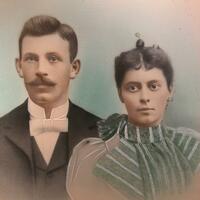
This collection contains numerous photographic portraits of various members of the Edmonds family.
Additional Information
<p>Keene Valley Library</p>
Browse similar collections

Collection Facts
Historical Context
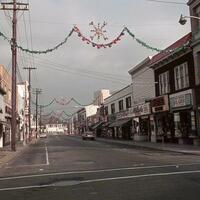
East Meadow is an unincorporated area in the Town of Hempstead. In 1655, two surveyors for Hempstead Town reported that the "east meadow" would be suitable for grazing. The area quickly became a grazing area for cattle and later, in the 18th century, for sheep. During the American Revolutionary War, East Meadow was occupied by British forces when they discovered the vast amounts of livestock herded there, and remained under their control until the end of the war. The community was home to many Gilded Era estates. The old Hoeffner homestead is now the site of Veterans Memorial park, and East Meadow's Post Office.
Scope of Collection
The collection consists of published histories of East Meadow, NY.
Browse within this collection
Browse similar collections

Collection Facts
Scope of Collection
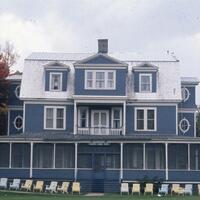
From 1978 to 1980, the New York State Historic Preservation Office (SHPO) in conjunction with the Orange County's Historian's office took on a project to photograph buildings in the City of Newburgh to determine their historical significance. There were over two thousand structures in the City of Newburgh that were reviewed at that time. Included here are some of the images that were determined to be the most significant & contributing to a potential National Register District at the time. More structures were added to the list in subsequent years. Over time we plan to digitize more of the collection.
Browse within this collection
Browse similar collections

Collection Facts
Historical Context
On November 24th, 1846, a special meeting was called for the transaction of uniforms. "On motion an Indian with the letters IO of OF overhead and three links underneath was adopted as the device of the seal of the Lodge." It is likely that this choice was made to honor either Sacarissa, the Tuscarora Turtle clan chief at the time, William Chew (also known as Sacarissa), or an earlier Sacarissa, "the venerable chief" who had been respected and beloved by many, a founding member of the Tuscarora Congregational church in 1806 and the legendary chief who, along with Solomon Longboard, had led the last exodus from the Carolina country.
The Sacarissa Lodge was an active organization for many years; however, it ceased to exist on September 24, 1857. On March 27, 1872, the lodge was reinstated as Sacarissa Lodge No. 307. On January 2, 1985, the Niagara Falls Lodge No. 81 closed and its membership was transferred to the newly named Sacarissa Bell Rose Lodge No. 307 in Lewiston, New York. The Sacarissa Bell Rose Lodge No. 307 continues to exist as a fully functioning lodge.
Throughout the years there have been over a dozen IOOF lodges in Niagara County, including Cataract Lodge, Lockport; Bellevue Lodge, Niagara Falls; Niagara Falls Lodge, Niagara Falls; Bell Rose Lodge, LaSalle; Fort Niagara Lodge, Youngstown; Wilson Lodge, Wilson; Forest Lodge, Sanborn; Newfane Lodge, Newfane; Gasport Lodge, Gasport; Electric City Lodge, North Tonawanda; Middleport Lodge, Middleport; and Barker Lodge, Barker. The earliest lodge in Niagara Falls was Niagara Falls Lodge No. 252. It was formed around 1850, and members met in the dining room of the Old Eagle Tavern on the west side of Main Street. In the late 1850s they surrendered their charter. For a time during the 1860s a German lodge was instituted in Suspension Bridge (now Niagara Falls). In 1869 public sentiment favored forming an English lodge once again, and in 1876 Niagara Falls Lodge No. 81 became an English lodge.
The Rebekahs were the female lodges associated with the IOOF and included the Riverdale Rebekahs (at one time the largest lodge in New York state), the Dorothy Bell Lodge, and the Rosebud Rebekah Lodge. Several Encampment branches existed in Niagara County as well. In Odd Fellowship one must go through the Encampment first before seeking entrance into the highest branch, the Patriarchs Militant.
As the various IOOF lodges in Niagara County began dismantling the records, regalia and charters were transferred to the Sacarissa Bell Rose Lodge No. 307, located at 732 Center Street, Lewiston, New York, where they remain today. These records contain membership applications, meeting minutes, death notices, newsletters, news clippings, photographs, costumes and regalia, monographs, correspondences, accounting records, property deeds, statistical records, visitors' registers, and various records from other non-IOOF groups who happened to meet in the buildings owned by the IOOF.
About the Independent Order of Odd Fellows (IOOF)
The organization name "Odd Fellows" comes from the fact that in 17th century England, the birthplace of the organization, it was considered odd for people of varying backgrounds (social and occupational) to come together to provide aid to those less fortunate. The Odd Fellows are also known as "The Three Link Fraternity" where the three links are friendship, love, and truth. The Odd Fellows pledge is: "Visit the sick; relieve the distressed; bury the dead and educate the orphan."
The IOOF movement in the United States is identified as having started around 1819 in Baltimore, Maryland. The founder of the American Odd Fellowship was Thomas Wildey, born in England in 1782. Wildey learned the trade of coach spring making at age 14. He joined Lodge #17 City of London Odd Fellows in 1804 and emigrated from England to the United States at age 35 in 1817. In 1818, Wildey met John Welch who had emigrated earlier from England to America. The two men found that they had both been members of Odd Fellows in England, and determining that such an organization could benefit the workers and craftsmen of this country, organized their first meeting in April 1819.
The Independent Order of Odd Fellows was thus founded in North America. The word "Independent" in the name was given by the English parent organization as part of the chartered title in the new chapter. Although several unofficial lodges existed in New York prior to 1819, the charter obtained by the Washington Lodge #1 (Wildey's lodge) established it as the first official Odd Fellow organization in North America. The Odd Fellows were perhaps the first fraternal organization to allow female membership with the establishment of the first Rebekah Lodge in Baltimore, Maryland, in 1851. A separate Grand United Order of Odd Fellows was established in 1843 for African Americans who wished to join the Odd fellows. This organization received its charter from the United Order in England because the Independent Order in the U.S. refused to allow any membership in its lodges, or lodges to be organized, that would include African Americans.
Prior to the development of modern day unions and government-sponsored programs, fraternal societies played a vital role in ensuring the economic security of their members by providing a broad range of social services. These included fraternal hospitals, sanitariums, children's homes, nursing homes, and cemeteries. In addition, some of these fraternal groups provided actuarially-based life insurance to their members, including providing assistance in the form of sickness, funeral, and widow's benefits. As forerunners to modern trade unions, patterns in membership and nature of activities of these societies reflect societal shifts away from an agrarian to an industrial economy in the early 20th century. The later records also demonstrate the impact of deindustrialization in many areas of the country like that of Western New York.
There is an incredibly detailed and interesting account of the history of economic security on the U.S. Social Security website that also explains how the insurance model of organizations like the IOOF helped move the country towards the social insurance system we know today as Social Security.
Scope of Collection
This collection consists of inactive records from the active Independent Order of Odd Fellows (IOOF) Lodge #307 (prior to 1999), which merged the #256 and #179 lodges, and records of several defunct lodges from the area, including the Niagara Falls Lodge #81 (ca. 1866-1950s), Bell Rose Lodge #179 (ca. 1950s), the LAPM Auxiliary Lodge #9 (ca. 1930s), the Youngstown Lodge #716 (ca. 1894-1960s), and the Lewiston Sacarissa Lodge #256 (ca. 1846). The collection includes constitutions, minute books, member cards and register books, building deeds, bibles, cash books, correspondence, ceremonial badges, and cards.
Browse within this collection
Browse similar collections

Collection Facts
Historical Context
Potsdam is located in St. Lawrence County, New York and was founded in 1806 and was the site of both the St. Laswrence Academy (Now SUNY Potsdam) and Clarkson University. It is famous as the exporter of Potsdam sandstone.
Scope of Collection
This collection consists of images of prominent buildings in Potsdam, New York, as well as the portrait of Benjamin Raymond and two Thatcher Milk Bottles, as well as images of the Racquette River.
Browse similar collections

Collection Facts
Historical Context
In many ways the characteristics and history of education in the New Paltz, NY area reflects similar trends in the region and country. However the story of education in New Paltz is also unique in that it’s very early history is related to the French Huguenot settlers of the 1600s and in later years reflects the creation of an Academy that became a New York State Normal School.
Scope of Collection
This collection includes historic photographs and documents that offer a glimpse into many aspects of early education in New Paltz.
Browse within this collection
Browse similar collections

Collection Facts
Historical Context
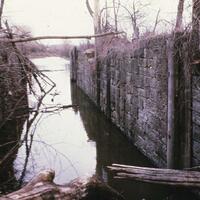
The Village of Canastota is located in Madison County, New York. It was originally inhabited by the Oneida Nation and later settled by Europeans. Captain Reuben Perkins was the original founder in 1810, and the village was formally established in 1835. A portion of the Erie Canal ran through Canastota and had a major impact on the village's development. The Erie Canal, part of the New York State Canal System, officially opened in 1825. It connected all areas of New York State, including New York City to areas in Upstate New York and to the Atlantic Ocean. It was a major source of travel and trade in the nineteenth century. Because of its location on the Erie Canal, Canastota became a prosperous area for trading, commerce and agriculture during the mid-nineteenth century. The canal also offered opportunities for recreation, especially during the cold New York winters. Tragically, the early records of the village were destroyed in the great Canastota fire in 1873.
Scope of Collection
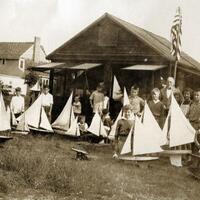
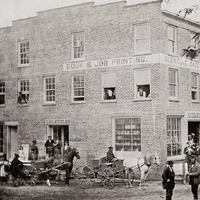
The Early Canastota Collection documents the importance of the canal on the village's social and economic landscape. The bulk of the collection consists of newspaper clippings of historical photographs. Several reprinted photographs depict the widening and eventual filling in of the canal. Other photographs illustrate the canal's use in various seasons, from the businesses that depended on the canal to the passenger boats and ice skaters who used it for recreation. Additional materials include newspaper reprints of local activities, a 1934 manuscript describing the village in 1860, and obituaries of prominent citizens. Together, these materials illuminate the impact of the Erie Canal on the small rural communities along its route.