
Collection Facts
Historical Context
Burt Garfield Loescher (1917-2006) was a significant researcher on Roger’s Rangers. Robert Rogers (1731-1795) was an American-born soldier and adventurer who served in the British Army during both the French and Indian War and the American Revolutionary War.
During the French and Indian War, Rogers raised companies of soldiers, dubbed “rangers” and known for their bold exploits in the Lake Champlain and Lake George regions of Northern New York. His military strategies were the inspiration for the formation of the U.S. Army’s elite Ranger Corps and he continues to capture the public’s imagination as the main character in novels, films, and television.
Scope of Collection
In 2004, the Ticonderoga Historical Society received eight cubic feet of Loescher’s original research into Roger’s Rangers. This collection includes an unpublished manuscript, as well as rosters of enlisted men not previously published. Rosters also include listings of Loyalist officers who served under Rogers during the American Revolution.
Browse within this collection
Browse similar collections

Collection Facts
Scope of Collection
This collection consists of numerous examples of English ceramics and tableware, containing numerous jugs, mugs, and tea sets. Most of the objects have some combination of transfer print images on them, overglazes, and elaborate molding. Many were manufactured in England and exported to the United States, and are parts of larger matched sets or tea sets.
Browse within this collection
Additional Information
The pieces in this collection are a small part of the full Burnap Collection of English Pottey and Porcelain held at the Potsdam Public Museum.
Browse similar collections

Collection Facts
Historical Context
On November 19, 1939, President Franklin D. Roosevelt appeared before a gathering of his Hudson Valley neighbors and dignitaries to lay the cornerstone of the Franklin D. Roosevelt Library in Hyde Park, New York. His speech that day was broadcast to a nation-wide radio audience. The Library was conceived by FDR to hold his personal and official papers and his large collections of books, manuscripts, artwork, and memorabilia and to make them available to the people of the United States for generations to come. It was important to FDR that the building's design reflect the Dutch Colonial heritage of the Hudson Valley and that its location on his Dutchess County estate be harmonious with the surrounding landscape. The Roosevelt Library is the nation's first presidential library and is part of the National Archives and Records Administration.
Scope of Collection
This collection includes a sound recording of FDR’s speech at the cornerstone ceremony, as well as an image of him laying the cornerstone.
Browse within this collection
Browse similar collections

Collection Facts
Historical Context
The Buffalo Postcards collection shows several aspects of Buffalo's history, primarily during the golden era between 1901 and 1915, when its industrialization and population were at a high point and life was centered downtown. At this time, President Theodore Roosevelt was in office, and the Progressive Movement was sweeping the country, hoping to create better opportunities for ordinary citizens by regulating big business.
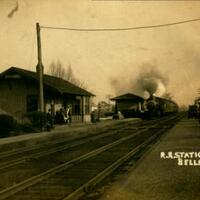
Buffalo had become a major transportation center, thanks to its location on the eastern end of Lake Erie and at the terminus of the Erie Canal. It was an important inland port, handling tons of grain, coal, lumber, and iron. Postcards show a busy Buffalo Harbor filled with shipping vessels. Buffalo also had an extensive railroad system to bring in raw materials for manufacturing and deliver finished products to market as well as to transport millions of passengers in, out, and around the city. The Belt Line, a freight and commuter line that originated at the Exchange Street Station and ran a 15-mile loop around the outskirts of the city, served hundreds of industries. A close look at many of the postcards reveals an electric trolley, freight train, or railroad track, which is not surprising, considering there were over 600 miles of track within the city limits. Buffalo's automobile industry was beginning to take hold, and in the postcards you can spot cars on streets and on the boat that ferried them to Canada before the Peace Bridge was built. You can also spot an occasional horse-drawn wagon from earlier days.
Buffalo's transportation infrastructure spurred tremendous growth in industry and manufacturing. Thousands of livestock arrived by rail from the Midwest, passed through stockyards on the city's East Side, and provided raw material for the tanning, meatpacking, and soap-making industries. The Larkin Company grew from a small soap manufacturer into one of America's largest mail-order businesses, producing hundreds of household items. Low-cost electric power generated from nearby Niagara Falls also contributed to the rise in manufacturing. Electricity was the major feature of the Pan-American Exposition held in Buffalo in 1901.
The wealth created by industry led to the construction of many outstanding buildings and homes designed by well-known architects. The Buffalo Postcards collection features buildings that have since been demolished, such as the Larkin Administration Building (designed by Frank Lloyd Wright), the Live Stock Exchange (designed by America's first woman architect, Louise Blanchard Bethune), and the D.S. Morgan office building (designed by Green and Wicks).
Business and industry attracted thousands of workers, and by 1910 Buffalo was the 8th largest U.S. city in terms of population. Workers needed space for recreation and relief from the chaos and noise of everyday urban living. Nobody understood that better than American landscape designer Frederick Law Olmsted, who created a magnificent system of parks and parkways in Buffalo for use by ordinary citizens, giving them easy access to peaceful, natural settings.
Postcards and postcard collecting were all the rage in the early 20th century. Postcards were a handy form of communication before telephones became widespread. Mail delivery was twice a day, so a message could be mailed in the morning and be received in the afternoon. Postcards could be purchased for one cent and mailed for one cent, a price so affordable that it was common for people to send one every day. Before World War I, most postcards were printed in Germany where masters produced high quality cards. Later, Curt Teich Co. of Chicago printed many cards. Since publishing dates were rarely printed, an effort has been made to determine the date based on the type of card and the subjects depicted.
For those interested in deltiology, the study of postcards, this collection offers examples from most of the postcard eras, including the Private Mailing Cards issued between 1898 and 1901, divided-back cards beginning in 1907, white border cards, linen cards with romanticized images such as the one of Memorial Auditorium, and Chrome cards.
Postcards for this collection were selected from 5,000 cards that are available for viewing at the Buffalo History Museum's Research Library. Library hours are listed on the Research Library Web page. The library's postcard collection runs from around the turn of the century to the present, with the bulk from the period between 1904 and 1950. Major subjects covered include Buffalo Harbor, buildings (armories, churches, hotels, etc.), lake marine vessels, monuments, streets, towns and villages in Western New York, Niagara Falls, and the Pan-American Exposition.
Almost every postcard tells a story. Use the zoom feature, read the descriptions, and follow up with research using Buffalo History Museum Research Library's Ready Reference files.
Additional Resources
General History of Buffalo and Western New York
Buffalo Architecture & History
Buffalo-Niagara Connections: A New Regional History of the Niagara Link: Geography's Impact on the History of Western New York and Ontario's Niagara Peninsula, by John W. Percy
Designated Landmarks of the Niagara Frontier: A History of the Niagara Frontier as Told Through its Landmarks, by Austin M. Fox and Lawrence D. McIntyre
Western New York Heritage Press
Architecture
Buffalo Architecture & History
Buffalo Architecture: A Guide, by Francis R. Kowsky
Buffalo: Good Neighbors, Great Architecture, by Nancy Blumenstalk Mingus
Louise Blanchard Bethune: Architect Extraordinaire and First American Woman Architect, Practiced in Buffalo, New York (1881-1905), Ph.D. thesis by Johanna Hayes
Business and Industry
Frank Lloyd Wright's Larkin Building: Myth and Fact, by Jack Quinan
"Livestock Yards, Once Pulsing with Activity, at End of the Line," Buffalo Evening News, 29 Mar 1983
My Trip Thru the Larkin Factories, by Marion Harland and Frank Lloyd Wright
"Sad goodbye to Kleinhans," Buffalo News, 26 Sep 1992: C–2
The Dynamics of an East Buffalo Ethnic Neighborhood: Old (1846) and New (1976), by Fred Francis Jablonski
"The Empire Built on a Bar of Soap," Buffalo News, 03 May 1981
Lafayette Square
150 Years, 1836-1986: Buffalo and Erie County Public Library, by Paul M. Rooney
Buffalo German Insurance Company: Fiftieth Anniversary, 1867-1917
Designated Landmarks of the Niagara Frontier: A History of the Niagara Frontier as Told Through its Landmarks, by Austin M. Fox and Lawrence D. McIntyre
"Passing of Old Building Recalls Early Buffalo; Structure at Lafayette Square was Home of Bank Before it was Family Theater," Buffalo Express, 29 Oct 1920
The Soldiers & Sailors Monument in Lafayette Square, Buffalo, New York
Niagara Square
"Old Niagara Square," Buffalo Express, 22 Apr 1916
"The Changing Town," Publications of the Buffalo Historical Society, Volume 25, 1921: 391-397
Townsend Hall: Early 1900s
Women's Union-Townsend Hall
Parks
Annual Report of the Buffalo Park Commissioners
Olmsted in Buffalo: Buffalo's Olmsted Parks and Parkways System
The Best Planned City: The Olmsted Legacy in Buffalo, by Francis Kowsky, et al.
Postcards
Curt Teich Postcard Archives
Metropolitan Postcard Club of New York City
Picture Postcards in the United States, 1893-1918, by George Miller and Dorothy Miller
The Picture Postcard & Its Origins, by Frank Staff
Touring Turn-of-the-Century America: Photographs from the Detroit Publishing Company 1880-1920, Library of Congress
Shelton Square
Commemorating our 80th Anniversary, by Erie County Savings Bank
Erie County Savings Bank Building
Wings on My Heels: A Newspaperwoman's Story, by Ellen Taussig
Transportation
A History of Railroads in Western New York, by Edward T. Dunn
Erie County Railroads, 1836-1972: Origin and Development, by Roger Squire
Images of America: Buffalo's Waterfront, by Thomas E. Leary and Elizabeth C. Sholes
The Belt Line Railroad: Its influence on the Development of Buffalo's Neighborhoods
Scope of Collection
Illustrated postcards depicting scenes and buildings in the City of Buffalo and Western New York region during the early 20th century.
Browse within this collection
Browse similar collections

Collection Facts
Historical Context
The City of Buffalo, located in Erie County, grew significantly in the 19th and early 20th centuries due transportation and trades routes, including the Great Lakes, Erie Canal, and railways. Buffalo was one of the first cities to have widespread electricity, thanks to the hydroelectric power generated by the Niagara River.
Scope of Collection
The collection of glass-plate lantern slides depict buildings, street views, and events in the City of Buffalo in the late 19th to early 20th century.
Browse within this collection
Browse similar collections

Collection Facts
Historical Context
Buffalo Olmsted Parks Postcards & Stereoviews
"A park is a work of art, designed to produce certain effects upon the minds of men."
—Frederick Law Olmsted
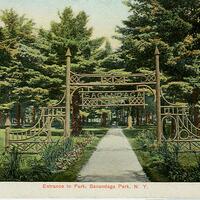
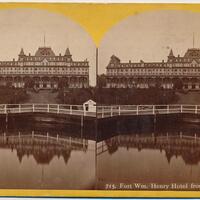
The Buffalo Olmsted Parks Conservancy (BOPC) has made available 418 postcards, photographs, and stereoviews of the Buffalo Park System designed by Frederick Law Olmsted. At 850 acres, these parks and parkways comprise the largest park system in the United States. The Buffalo Park System is the first park and parkway system designed and built in the U.S. and is considered Olmsted's best work. The majority of the images included in this digital collection are from retired librarian and BOPC archives volunteer Jim Mendola's collection of pre-1923 public domain postcards and stereoviews of the parks in Buffalo. For 88 items, Mr. Mendola has also taken recent photographs of the places pictured in the postcards, so the user can see "before" and "after" shots.
History of the Buffalo Park System
In the late 1800s, visionary citizens brought Olmsted to Buffalo. It was here that Olmsted, inspired by Joseph Ellicott's radial street layout, designed his first system of parks and parkways, and proclaimed Buffalo to be "the best designed city in the country, if not the world." During the 1901 Pan American Exposition, Buffalo was celebrated not only as the City of Light, but the City of Trees. (Source: Buffalo Olmsted Parks Conservancy, "History")
Scope of Collection
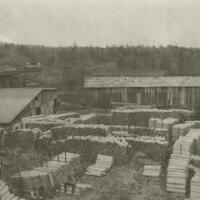
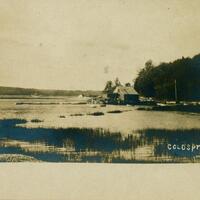
The collection consists of over 400 late 19th and early 20th century postcards and stereographs depicting Buffalo Parks, including Bidwell, Cazenovia, Delaware, Humboldt, and Riverside Parks, among others.
Browse similar collections
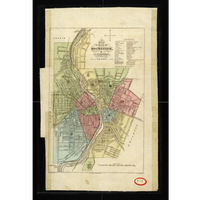
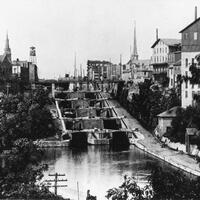
![The [George Nathan] Newman Collection of Photographs of Vanished and Vanishing Buffalo](/sites/default/files/styles/browse_thumbnail/public/content/collection/covers/VHB004.jpeg?itok=iQTc6n6S)
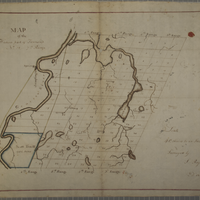

Collection Facts
Historical Context
This collection maps selected from a Buffalo Municipal Housing Authority Report published in 1935. The report is a study of which communities in the city qualify as slum areas. In order to establish this, it contains information about the structural integrity of city housing, social welfare, and the economic status of the citizens. The study was considered essential in obtaining funding from the Federal Emergency Administration of Public Works in order to eliminate the slum areas of the city and provide low cost housing for the citizens of Buffalo.
These maps offer important historical and genealogical information about the City of Buffalo including: population density, population changes, the distribution of ethnic groups, the distribution of those in social welfare programs, major crime, cases of venereal diseases, Buffalo City Hospital Bed Patients, the Distribution of parks, City and public and parochial school playgrounds, location of churches, the distribution of Schools, and the councilmanic districts and wards of the City.
Scope of Collection
This collection contains several maps selected from a Buffalo Municipal Housing Authority Report published in 1935.
The full text of the 1935 report is available from Archive.org
Browse within this collection
Browse similar collections

Collection Facts
Historical Context
The Buffalo City Directories in the Grosvenor Room of the Buffalo & Erie County Public Library are a valuable source of information for local history and genealogical researchers. Access to the information contained in these city directories is vital to anyone researching local people/places in history so it is necessary to provide digital access for the frequent and continuous use they receive. City directories are bound annual publications that contain print listings of the city residents and businesses along with useful historical information in the front of each edition. B&ECPL houses the most complete run of Buffalo City Directories available. It is the Buffalo & Erie County Public Library's goal to make available digitally all city directories in the public domain.
Scope of Collection
A collection of Buffalo City Directories dating from 1832 - 1913.
Browse similar collections

Collection Facts
Historical Context
The first truly distinct published city directory appeared in the United States in 1785 in Philadelphia, Pennsylvania. As early as 1665, first under the Dutch and British, and then under American auspices, individuals published lists of city residents in New Amsterdam (now New York City), Baltimore, and Charleston, but the efforts were not consistent or uniform.
By the beginning of the 19th century, directories appeared routinely in New York, Baltimore, Boston, Charleston, and Hartford. This new industry was started by school principals, businessmen, and postmasters, but most commonly by newspaper editors who had printing presses and a strong interest in the private and commercial residents who were their customers. By the mid-1800s, full-time directory publishers appeared in most major U.S. cities.
In the late 19th century, city directories were big business. Directory publishers formed a trade association to promote higher standards, and names like R.L. Polk became part of the American consciousness. In an effort to attract more customers and to outdo the competition, publishers began to add features to their directories. Some features became standardized, while other features came and went in different areas. Select directories included Civil War soldiers who served from the city, death dates for people who had passed away in the preceding year, and notations of removals of residents from certain cities.
More traditional contents often include a publisher's introduction, history and map of that city (usually showing ward boundaries), churches and cemeteries (by denomination), city officials, laws and ordinances, fraternal and social organizations, and reverse or criss-cross listings. The latter, which lists residents in street and house number order, was often issued as a separate publication. The value of the reverse directory is that it helps establish home ownership and identifies an individual's neighbors.
As larger cities grew to enormous proportions, it became impossible for companies to continue publishing annual directories. Moreover, with the advent of the telephone in the early 20th century, free telephone directories eroded the market for traditional directories. The last annual directory for New York City (Manhattan and the Bronx) was published in 1925 (although during the Depression, WPA assistance enabled publication of directories in 1931 and 1933). The last directory for Chicago was issued in 1928, and the publication of directories for the Los Angeles area stopped in the 1940s. Although city directories are still published today, in many areas they are no longer annual, but more likely to appear every two years.
Who was included in the city directory? This decision was left to the discretion of each publisher, and would vary from city to city — and even within a city over time. The chief purpose of the directory was to serve business interests. So, in an effort to identify and expand their customer base, it would benefit the publisher to include as many names as possible. For a businessman who extended credit to his customers — as was often the practice in the 19th century — the directory enabled him to contact customers concerning their accounts. It also helped him determine if new customers would be reliable by reviewing their history in previous directories. Directories enabled businesses to arrange delivery of goods and services. Finally, the directory became a popular advertising medium.
Residential sections often listed all homeowners in the city, including head of each household. Many families living in cities rented rather than owned their residences, so publishers also included principal tenants. Some directories listed the head of every family in one house, even if there were multiple families at that address. Different publishers also used different abbreviations. While publishers established their own rules for who would and would not be listed, accuracy and diligence were left to canvassers hired to collect data each year. It is not unusual to find duplicate listings for a single individual since one canvasser may have obtained the name through a residential visit, while another obtained the name from a work location, and the duplication was not found before publication.
By the 1880s, almost any adult male living in that city (or at least employed and living in that city) was listed. Widows were also usually listed. By this time, many directories even listed men employed in, but not actually residing in, the city. The listing often included the town in which he lived, as well as his occupation or employer. By the end of the 19th century, single women were listed in several city directories, and the names of wives (usually in parentheses) appeared after the names of their husbands.
In the early 20th century, you might also find names of students. Usually post-secondary, they were identified with "student" as occupation. As telephones came into many households, telephone numbers were often included. The publisher's claim that each new year brought a new canvass is probably true since you can often find the same people at the same address over several years, but with changes (names spelled differently, new occupations). Directories usually omit minors, but you may find people in a directory who were overlooked in the census.
Although copies of older city directories are plentiful and found in most large public and academic libraries, they present researchers with other obstacles. Since the directories were only intended for temporary use, they were often printed on cheap quality paper using substandard inks. Hence, original copies are often very fragile and greatly deteriorated, making handling of the originals undesirable. Many libraries offer microfilmed versions instead, and digitized versions are increasingly available.
For more information on the background, content, and types of directories, go to the Progenealogists.com Web site, which provided most of the background for this description.
Other local collections of Buffalo City Directories
BuffaloResearch.com: Lists all available sites where Buffalo City Directories (years vary) are available in digital format.
Buffalo City Directories at the Buffalo History Museum: In addition to the New York Heritage digital collection of Buffalo Address Books and Family Directories, the Buffalo History Museum owns Buffalo city directories, 1828 to 2001; suburban directories, 1949 to 2001; plus business directories, social registers, and telephone directories.
Buffalo City Directories at the Buffalo & Erie County Public Library: 1828, 1832–1844, 1846–1942, 1946, 1948, 1950–1953, 1955–1978, 1980, 1982, 1984, 1987, 1989, 1993, 1996 to present. The Central Library's collection can be considered complete because Buffalo directories were not published in the years missing from the above list.
Buffalo City Directories available at the University at Buffalo Libraries: 1828-1935 on Microform in Capen Multimedia Center; 1848–present (not all years available) various locations; current year available in Lockwood Library (Reference).
Additional Resources
Cyndi's List: City Directories
Analyzing City Directories
Using City Directories to Research Old Buildings
Lesson plan: Explore and compare and contrast the business environment in Wilmington, North Carolina, and Charlotte, North Carolina, in the early 1900s by exploring the city directories.
Scope of Collection
A collection Buffalo address books and family directories ranging from 1883 to 1916.
Browse within this collection
Browse similar collections

Collection Facts
Historical Context
William N. Brockway founded the Brockway Carriage Works in Homer, New York and incorporated the business in 1875. His son, George A. Brockway, assumed full control of the business in 1889. In 1912, G.A. Brockway and F.R. Thompson leased a building that was previously owned by The Ellis Omnibus and Cab Company in Cortland, New York. Brockway's beginning is widely recognized as the 1912 incorporation of the Brockway Motor Truck Company of Cortland, New York. The first Brockway to roll out of the new Cortland factory was a model A, built for the Miller Corset Company of Cortland, New York. Brockway would build 95 trucks between 1912 and 1913.
Scope of Collection
This collection contains a sampling from the thousands of Brockway Motor Truck Co. slides, photographs and negatives.
Browse within this collection
Additional Information
A larger collection of slides, photographs, and negatives about the Brockway Motor Truck Co.