
Collection Facts
Historical Context
The Town of Middleburgh is located in Schoharie County and is one of the original towns within the county. The town was established at the end of the eighteenth century, after it survived many raids by the British during the Revolutionary War. Middleburgh grew in the area of industry and takes pride in the businesses within the town.
Scope of Collection
This collection contains photographs and documents related to the Best family.
Browse within this collection
Browse similar collections

Collection Facts
Historical Context
The Bentley Snow Crystal Collection of the Buffalo Museum of Science is a digital library providing a high-quality collection of stunning, un-retouched images of Wilson A. Bentley's original glass slide photographs of snow crystals, and includes dynamic resources to further an appreciation and understanding of Bentley and his work. In the spirit of Wilson Alwyn Bentley and his commitment to innovation and discovery, the Bentley Snow Crystal Collection of the Buffalo Museum of Science serves as an enriching legacy for all to share in the fascinating product of his life's work carefully observing and recording the intricate, dazzling wonder of snowflakes.
Wilson Alwyn Bentley was born February 9, 1865, on a farm in Jericho, Vermont. For his 15th birthday, his mother gave him a microscope. Looking at snow crystals through his microscope, Bentley was amazed at their beauty, complexity, and variety. He tried to make detailed drawings of magnified snow crystals, but the snow melted before he could finish. Frustrated but determined to capture the exquisite geometrical intricacies of snow crystals, he decided to try photography. It took Bentley two years of painstaking trial and error, but on January 15, 1885, at the age of 19 years, he made the world's first photomicrograph of a snow crystal. The process he developed was unique and innovative, and when he first shared his images with others, many people, especially scientists and professional photographers, "doubted Bentley's ability and his images'" authenticity. However, over time Bentley was recognized for what he had achieved. His boyhood interest in the snow's microscopic beauty expanded to include a scientific curiosity of snow crystals' structure and development, and he devoted himself to his photography and study of snow and other atmospheric phenomenon.
The fascination for snow that drove his scientific curiosity and photographic innovations led Bentley to record detailed weather observations and notes on his photographic techniques. Bentley filled nine notebooks with 47 years' worth of his observations and analysis, and these records provide useful information about daily weather conditions, and valuable details of his many sessions photographing snow crystals. The breezy, telegraphic style of these journal entries contrast the eloquently passionate language of the many articles he wrote that describe his discoveries and techniques.
In 1898, at the age of 33, he began to publish articles of his findings and images. He published 49 popular and 11 technical articles about snow crystals, frost, dew, and raindrops, including the entry on "snow" in the 14th edition of the "Encyclopedia Britannica." Although during his lifetime the scientific community largely ignored his innovative work, he was elected, in 1920, a Fellow of the American Meteorological Society. Since his death in 1933, he has achieved a reputation as a pioneering weather scientist and photographer. He lived to see "Snow Crystals," a book of his snow crystals images, published in 1931, but died of pneumonia that same year, after walking home through a blizzard.
As a boy Bentley brought to bear his great curiosity and imagination to the task of sharing with the world the beauty he saw in snowflakes. He went on to become a true pioneer in the field of atmospheric science, as well as an innovative, talented photographer with an artist's eye.
The Buffalo Museum of Science acquired Wilson A. Bentley's collection of glass plate slides and journals in the winter of 1947 after being contacted by Bentley's niece Mrs. Alice Hamalainen. Mrs. Hamalainen had come into possession of the slides upon her father's death, and in the fall of 1947 sent a letter to the Buffalo Museum of Science inquiring as to whether the Museum had interest in acquiring the collection. She wrote that she had been offered $500 from a private individual, but hoped instead to see her uncle's work preserved in a museum. During his lifetime Wilson A. Bentley had been connected to the Buffalo Museum of Science through his appearance at the Hayes Friday Evening Lecture platform in December of 1922 and through his article "Snowflakes, Nature's Wonder Gems," published in the museum's
"Hobbies" in January of 1929.
Cataloging and Digitizing of the Collection
Due to the extremely delicate nature of glass plate negatives, access to this valuable resource had until recently been very limited. In 2004, through partnership with Dr. June Abbas and graduate students from the University at Buffalo's Department of Library and Information Science, a digital library of this collection was created. In addition to digitizing Bentley's slides and notebooks, the project also included linking each glass plate slide with the meteorological observations recorded by Bentley at the time of image creation. This
project has greatly increased accessibility to the collection while helping to permanently preserve this delicate collection.
The Wilson A. Bentley Snow Crystal Collection is an important resource for all who seek inspiring examples of the artistry of snow crystals and knowledge of the science behind snow crystal formation.
Scope of Collection
The collection includes hundreds of glass plate negatives depicting snow crystals, clouds, and nature scenes taken by Wilson A. Bentley. Also included are his field notebooks, Museum acquisition documents and articles about the collection in "Hobbies," the Museum’s magazine.
Browse within this collection
Browse similar collections

Collection Facts
Historical Context
Potsdam is located in St. Lawrence County, New York and was founded in 1806 and was the site of both the St. Lawrence Academy (Now SUNY Potsdam) and Clarkson University.
Scope of Collection
This volume is a record of land sales in the Potsdam area in the years 1803-1818. Sales conducted by Benjamin Raymond, land agent for Clarkson family. Record includes contract dates and numbers, purchaser names, acreage, price, and land transfers.
Browse similar collections

Collection Facts
Historical Context
Benjamin Arthur Gilman was a U.S. Congressman for 30 years, from 1973-2002. Before that, he was a N.Y. State Assemblyman from 1966-1972 and served as the Assistant New York State Attorney General in the 1950s. Ben Gilman focused on foreign affairs most of his life, serving as chairman of the International Relations Committee as the House Foreign Affairs Committee was then known from 1995-2000. This collection was donated to Orange County Community College in 2002 by the Gilman Foundation.
Scope of Collection
The photographs here reflect his work, travels and meetings with important leaders worldwide.
Browse within this collection
Browse similar collections

Collection Facts
Historical Context
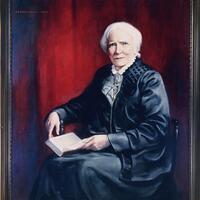
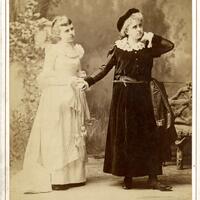
Belva Ann Lockwood (1830–1917), a noted lawyer and a National Equal Rights presidential candidate, was a native of the Town of Royalton, Niagara County, New York. She ran for president of the United States in the election of 1884, becoming the first woman to run a full-scale presidential campaign.
Scope of Collection
The Belva Lockwood Manuscript Collection contains original drafts of Lockwood’s speeches. Manuscript pages are accompanied by full-text transcriptions. Lecture titles illuminate the author’s thoughts on topics like: “The New Woman,” “Equal Rights,” “Suffrage,” “On Marriage” and “Women in Professions.”
Collection Image from the National Portrait Gallery: http://collections.si.edu/search/detail/edanmdm:npg_NPG.80.298.
Browse within this collection
Additional Information
Lockwood's grandson DeForest L. Ormes presented this collection of manuscripts to Mrs. Julia Hull Winner of Gasport, N.Y. while she was writing a biography of Lockwood. "Belva A. Lockwood" was published by the Niagara County Historical Association in 1969, and in 1971, Mrs. Winner donated the collection to the Fenimore Art Museum Research Library (previously known as New York State Historical Association)"
Browse similar collections

Collection Facts
Historical Context
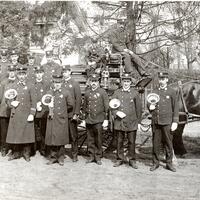
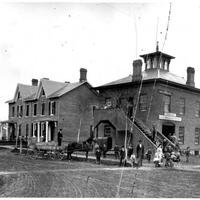
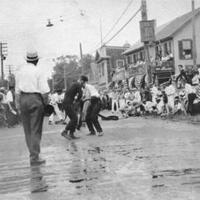
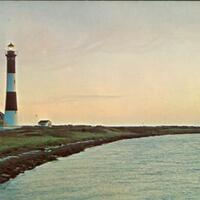
By 1920, the Bellmores had a population of 3000 as well as stores along Bedford Avenue. To support the commercial needs of the growing hamlet, stores opened to accomodate this vacuum.
Scope of Collection
The collection consists of postcards depicting streets and buildings of Bellmore, NY. The majority of the postcards are in black and white and were taken between 1910-1950.
Browse within this collection
Browse similar collections


Collection Facts
Historical Context
The town of Bellmore, which can trace its beginnings back to 1643, was a farming and fishing town until fairly recently in its history. Known as both Newbridge and Smithville South, the town officially became Bellmore in 1900 when the post office was established. The busy Long Island Railroad station in the center of town made Bellmore a “commuter’s paradise” in the 1920s and the population began to grow significantly. In the midst of residential growth, however, there were still active farms as late as the 1960s. Bellmore is now a vibrant suburb; home to various schools, houses of worship, and civic organizations. It is the gateway to Long Island’s beautiful beaches, parks, and major roadways.
Scope of Collection
The collection contains black and white photographs documenting the construction of the Bellmore Memorial Library, the Skou House, and a children's cooking class. The photographs were taken in the 1960s and 1970s.
Browse within this collection
Browse similar collections

Collection Facts
Historical Context
It is easy to think that the history of New Paltz begins with the Huguenots, but our story begins more than 8,000 years ago, long before Hendrik Hudson’s journey and generations before the Huguenots settled on the bank of the Wallkill River. Prior to the arrival of Europeans, groups of Native Americans occupied the area around what is now New Paltz. The native inhabitants of this area have been known by many names. The Waoranecks and Warranawankongs are the bands most associated with Ulster County. The Dutch came to call these people collectively the Esopus, which is the term the Native People used to describe the place where they lived.
Over the course of twenty years, Dr. Joseph Diamond, Professor of Anthropology the State University of New York at New Paltz, coordinated an annual summer archaeological field school at Historic Huguenot Street. Year after year, Dr. Diamond and his students uncovered thousands of artifacts bearing witness to a rich history that had been previously untold.
Scope of Collection
This collection includes images of historic Native American artifacts found in New Paltz, including pottery, beads, and projectile points.
This project was originally presented in collaboration with the Ulster County Clerk’s Office and the Senate House, operated by the New York State Office of Parks, Recreation and Historic Preservation. Supported in part by funds from the Ulster County Clerk’s Office, the DuBois Family Association, the New York Council for the Humanities and the New York State Education Department’s Teacher Center program.
Browse within this collection
Browse similar collections

Collection Facts
Historical Context
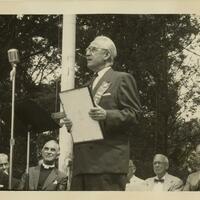
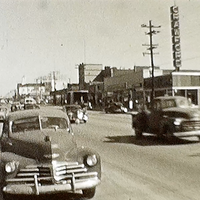
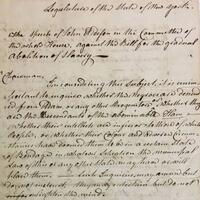
The town of Keene, New York, Located in Essex County, was founded in 1808, where it, like many small towns in the North country, primarily produced timber and iron for export.
Scope of Collection
This collection contains numerous photographic portraits of various members of the Beede family, as well as images of home and business occupied by the family.
Additional Information
Keene Valley Library
Browse similar collections

Collection Facts
Historical Context
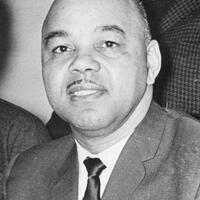
The Onondaga County Public Library Beauchamp Branch Neighborhood Photodocumentation Project was funded by the New York State Archives and Records Administration's Documentary Heritage Program. The project was intended to create a collection of photographs which would document the African American community served by the Beauchamp Branch Library in Syracuse, N.Y. Members of the community were asked to bring in personal photographs during four scheduled copy clinics held during May 1994 at the Beauchamp Branch Library. Selected photographs were copied by Ellen Blalock, a professional photographer, using a 35mm camera and black and white film. One set of negatives and two sets of photographs were developed and printed by ProLab, a commercial photographic laboratory. The photographs and negatives were then housed in archival-quality albums. These photographs, including the negatives, are at the main branch of the Onondaga County Public Library, Syracuse, N.Y., in the Local History/Genealogy Department.
Scope of Collection
This collection contains photographs contributed by over 20 families living in the Beauchamp Branch Library neighborhood. The photographs include family photographs and photographs of businesses and people in the Beauchamp Branch Library neighborhood. A project guide contains information on the families who contributed the photographs, as well as information on the photographs themselves. Also included in the archives is information on the grant that was used to fund this project, and promotional material used by the library to advertise this collection.