
Collection Facts
Historical Context
Blue Point, NY is a hamlet in Suffolk County located in the Town of Brookhaven in Long Island. Blue Point is part of the Brookhaven Patent from King Charles II, first settled by people in Setauket in 1655. The name Blue Point is supposed to have originated from the bluish haze that settles over the point of land extending into the bay.
During the Revolutionary War, the harbor at Blue Point was a major shipping point for British vessels.The British ships in Blue Point were raided several times by American rebels from Connecticut. The oldest dwelling in Blue Point is the old Joseph Avery homestead built in 1812 on the north side of what is now Middle Road. When the railroad came through in 1869, the town became a popular summer resort.
Scope of Collection
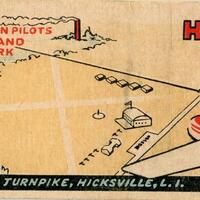
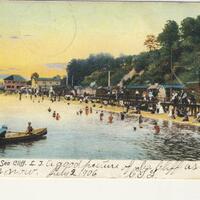
The collection consists of historic postcards depicting various street shots, commercial buildings, railroads, churches, natural scenes, maritime activities, beaches, schools, and many facets of everyday life on Long Island’s South Shore. The bulk of the collection is in black and white and dates from the early 20th Century.
Browse similar collections

Collection Facts
Historical Context
The Stepping Stone is the annual yearbook for Bayport-Blue Point High School in Bayport, New York. The school was constructed in 1927 as an elementary and high school for the Hamlet of Bayport. The high school serves two towns, Bayport and Blue Point, from which it derives its name.
Scope of Collection
The collection consists of over 40 yearbooks from the Bayport-Blue Point High School from the 20th Century.
Browse within this collection
Browse similar collections

Collection Facts
Scope of Collection
The Bayport Fire Department collection contains newspaper clippings, articles, letters and historical photographs of fire department members, local fires, and community events held by the fire department, and the connections between the community and fire department.
Browse within this collection
Browse similar collections

Collection Facts
Historical Context
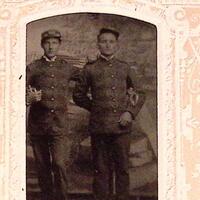
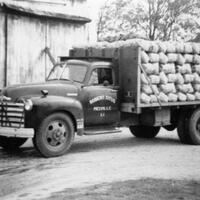
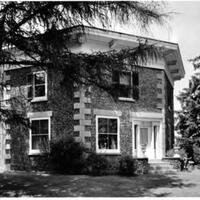
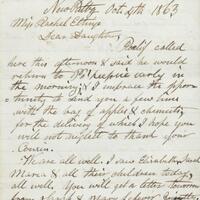
The Thomas R. Bayles Local History Room, located in the Adult Department, is a room full of local history. Most of the books, pamphlets, postcards and photographs were donated by Mr. Bayles in 1976. The collection was dedicated in his honor on October 4, 1980.
Scope of Collection
The collection consists of pamphlets, newspaper clippings, and fliers detailing the early history of various towns and villages in Long Island. Subjects include the history of churches, industry, war, and social life.
Browse within this collection
Browse similar collections

Collection Facts
Historical Context
The waters of the Battenkill, flowing from Vermont through southern Washington County to the Hudson River, are the source of inspiration for the art and artifacts showcased in an exhibition during the first half of 2015. Battenkill Inspired showcased the work of contemporary artists, as well as taking a look at the river’s culture: the covered bridges built to cross, the many industries that once drew power from its flow, the lure of Dionondehowa Falls and its pleasure park and the electricity generated for a trolley system, the world-class trout fishing with its own original fly patterns and personalities, the 1960s-70s decorated rafts for a timed float and competition, and current efforts to preserve this valuable resource.
Scope of Collection
This collection contains images and documents related to the Battenkill River and surrounding area.
Browse within this collection
Browse similar collections


Collection Facts
Historical Context
In 1903, New York State decided it was necessary to enlarge the Erie, Champlain, Oswego, and Cayuga-Seneca Canals, in order to compete against evolving modes of transportation and the growth of railroads. This enlarged system of canals, known as the Barge Canal, was completed in 1918. The enlarged Barge Canal was 12-14 feet deep, 120-200 feet wide, and was able to accommodate larger, self-propelled vessels carrying up to 3,000 tons of cargo.
In the early 1970s the New York State Department of Transportation was cleaning out its Rochester office, preparing to move to a new building. There were several thousand glass and film negatives (along with some original prints) created by the State, documenting the construction and early years of the Barge Canal in the Western Division. These photographs were given to the Erie Canal Museum, and in the 1980s there was a dedicated effort by the museum to rehouse and make archival contact prints of the film negatives. The set of glass negatives were transferred to the State Archives in 1985. This digital collection includes the set of contact prints that remained at the Erie Canal Museum.
Scope of Collection
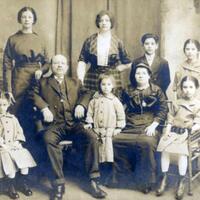
These photographs document construction of the Barge Canal and the first few years of its use, from 1905-1926. Coverage encompasses the entire Western Division of the Barge Canal, from the eastern boundary of Wayne County all the way west to Lake Erie
Browse within this collection
Browse similar collections

Collection Facts
Historical Context
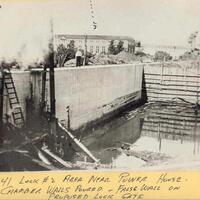
In 1903, New York State decided it was necessary to enlarge the Erie, Champlain, Oswego, and Cayuga-Seneca Canals, in order to compete against evolving modes of transportation and the growth of railroads. This enlarged system of canals, known as the Barge Canal, was completed in 1918. The enlarged Barge Canal was 12-14 feet deep, 120-200 feet wide, and was able to accommodate larger, self-propelled vessels carrying up to 3,000 tons of cargo.
The Canal Society Collection contains a large sub-collection of Barge Canal Construction albums. These albums, which are organized by contract number, were created as official State records documenting construction projects on the Barge Canal as they progressed. It is likely that these albums originated at the Syracuse Weighlock Building (now the Erie Canal Museum) when it was the Middle Division headquarters. The Middle Division of the Erie Canal stretched from Cayuga County to the eastern boundary of Oneida county. The albums were taken by the Canal Society after the New York State Department of Public Works vacated the building in the late 1950s.
Scope of Collection
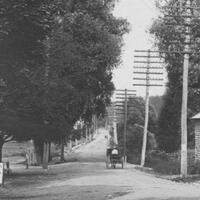
These photographs document construction of the Barge Canal and the first few years of its use, from 1905-1925. Coverage encompasses the entire Middle Division of the Barge Canal, between Cayuga and Oneida counties.
Browse within this collection
Browse similar collections

Collection Facts
Historical Context
In 1942, a student-run volunteer fire department was formed at Bard College. The Bard College Fire Brigade (later called simply the Bard College Fire Department) became a central campus organization when founder George Blackstone returned from military service in 1946. Intended to protect the Bard community and to provide student members with fire fighting skills, the company fought fires as far away as Rhinecliff and Clermont during its active years. As years passed, however, leadership faltered. Suffering from lack of funds and dwindling membership, President Kline closed the department on May 3, 1960.
Scope of Collection
The photographs in this collection document the existence of Bard College's student-run fire department. It includes photographs of students who participated in the fire department and of their equipment.
Browse within this collection
Browse similar collections

Collection Facts
Scope of Collection
This collection includes letters, deeds, and other materials related to the Bard Family. These items, with dates ranging from the mid 18th through the mid 20th centuries, animate our understanding of individual family members, their relationships to each other, and to society at large. They are part of a larger collection of Bard family materials donated to the college in 1938-39 by J.A. Sands, a Bard descendant.
Browse within this collection
Browse similar collections

Collection Facts
Historical Context
The Bard College radio station WXBC was envisioned in 1946 by Elie Shneour '47, and implemented by many hands, including those of John Gillin '47 who wrote his senior project about the technical design and construction of the station. The "X' in its call letters stood for "Experimental," and the 1951 yearbook described the station as the "Voice of the Bard Campus."
Scope of Collection
This collection contains photographs recording the early history of the WXBC Bard college radio station. This includes images of the station's equipment, as well as students working and on-air broadcast guests.