
Collection Facts
Scope of Collection
This collection includes two soft bound books containing pictures and descriptions of the member churches of the Buffalo Council of Churches for 1927 and 1931.
Browse within this collection
Browse similar collections

Collection Facts
Historical Context
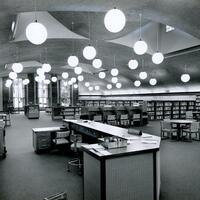
The DeWitt Community Library opened its doors on April 4, 1962 and serves the communities of DeWitt and Jamesvile in Onondaga County.
Scope of Collection
The DeWitt Community Library History collection contains photographs and images related to the history of and events occurring within the library. It includes black & white photographs, color photographs, and images of library cards.
Browse within this collection
Browse similar collections
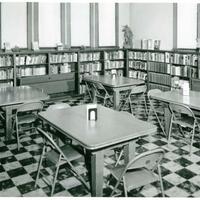
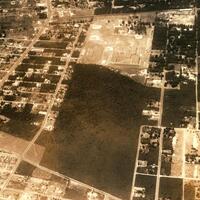
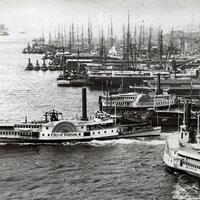
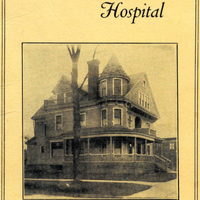

Collection Facts
Historical Context
As part of the “Lincklaen Purchase” DeRuyter was originally named Tromptown by Col. John Lincklaen. However, in 1795, name was changed to honor Adm. DeRuyter of the Dutch Navy. DeRuyter is located in Madison County near the borders of Onondaga, Cortland, and Chenango Counties. Established in a fertile valley with excellent water power, DeRuyter quickly grew into a prosperous farming community with a variety of industries, including sawmills, tanneries, and a soap factory. Many other businesses developed, as well as churches and a school. DeRuyter Academy, affectionately called “The Old Stone Heap,” became a well known educational institution in central New York, attracting students from many other communities in the state. Another attraction bringing visitors to DeRuyter was the Four County Fair. The quarter mile race track was considered the best in central New York, and many fine trotters and pacers demonstrated their speed here. DeRuyter can boast of many famous citizens, including Ezra Cornell.
Scope of Collection
The DeRuyter Town History Postcard Collection is comprised of over 100 postcards with images of old DeRuyter, mainly during the early to mid-20th century, including landscapes, street views, and people.


Collection Facts
Historical Context
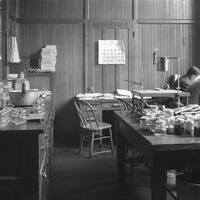
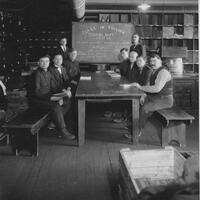
These images, from the University of Rochester's Eastman Dental Center archives, depict the rich history of dentistry in Rochester during the early 20th century, a time when there was a focus on preventive dentistry and advances in dental education. George Eastman, renowned entrepreneur and philanthropist, established the Rochester Dental Dispensary to provide dental care for underserved children, as well as practical education for dentists. In addition, Eastman established the School for Dental Hygiene, which brought forth a new vocation for young women.
Scope of Collection
The collection includes photographs of dentistry’s earliest leaders in Rochester, historical dental equipment and procedures, and dental education and care. There are interior and exterior views of the Rochester Dental Dispensary; views of dentists and hygienists performing procedures on patients; and class photographs from the School for Dental Hygiene. There are a couple text materials including: Rochester Dental Dispensary’s State Board of Charities Approval and patient aftercare instructions. Not all of the materials are dated, but most date from the early to mid 20th century.
Browse within this collection
Browse similar collections

Collection Facts
Historical Context
The Delhi Equal Suffrage Club was founded in 1912 to advocate for women's suffrage in New York State. The club’s creation was spurred by an outdoor meeting for equal suffrage. The club was active from 1912 through 1915 though it still existed to the end of the decade. The remaining club members donated leftover funds from the club for a scholarship at Delaware Academy in 1933.
Scope of Collection
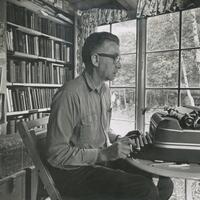
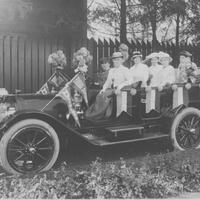
This collection consists primarily of the minute book and treasurer book of the Delhi (NY) Equal Suffrage club. The minutes reflect the mainly monthly meetings from the club’s creation to 1915. Both books contain membership lists. A few letters and couple of flyers and a photograph of Mrs. Jennie Curtis Cannon’s ‘suffrage’ car are included.
Browse similar collections

Collection Facts
Historical Context
From 1813-1814 Sherwood served one term as a Federalist in the U.S. House of Representatives. Samuel Sherwood practiced law in Delhi New York from 1800 to 1830, when he moved to New York City.
Scope of Collection
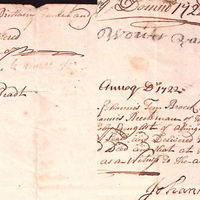
The Sherwood Collection is mainly comprised of letters to and from Samuel Sherwood (1779-1862), his second wife Laura Bostwick Sherwood (1790-1863), and members of their family. In addition to personal letters, the collection includes legal documents, business letters, and part of Laura Sherwood's travel diary kept during a trip through upstate New York in 1823.
Browse within this collection
Browse similar collections

Collection Facts
Historical Context
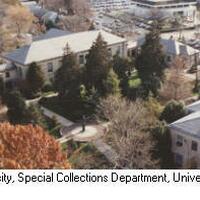
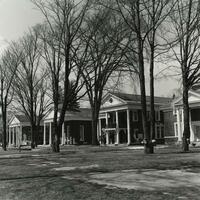
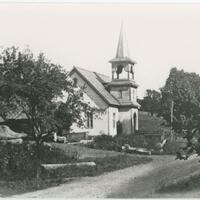
This collection consists of photographs of the Darwin D. Martin family of Buffalo, NY, and photographs of homes designed by Frank Lloyd Wright for the Martins: the Darwin D. Martin House Complex in Buffalo and Graycliff in Derby, NY. The Darwin D. Martin Photograph Collection forms part of the Frank Lloyd Wright/Darwin D. Martin Collection in the University Archives and Special Collections and contains Martin family papers, correspondence between Wright and Martin, and architectural drawings. The images offer a representative sample of several people and structures that helped transform and define Buffalo as a nationally recognized industrial center in the late 19th century into the early 20th century. Buffalo, NY, from the end of the Civil War to the Great Depression, is perhaps one of the best representations of a region exhibiting the supreme tensions existing in America’s growing industrial urban areas: tensions between the push for modern advancement and the pull of traditional agrarian ideals of earlier American lifestyles. The life and times of the Darwin D. Martin family and their associates, including personalities such as Frank Lloyd Wright, present a microcosm of this contrast in American culture moving into the 20th century. Darwin Denice Martin was born in 1865 in Madison County, NY, to Hiram Martin and Anna Eliza McMannis. Darwin Martin’s mother died when he was just six years old. His father was a farmer who spent time in Iowa and Nebraska before finally settling in Buffalo in 1878. At the end of the Civil War, Buffalo was on its way to becoming a boom city. The railroads, as well as the Erie Canal, contributed to establishing the area as a central point in the exchange of raw materials coming from the west and heading to eastern factories and of finished products from those factories in the east heading out to consumers in the west. Buffalo itself was also a great manufacturing center along with the rail and shipping industries for transporting the enormous volume of raw materials and manufactured goods. The influx of immigrants to the region also helped ensure a large and cheap labor force for the area’s industries. By the 1870s, Buffalo’s population had more than doubled from pre–war estimates. It was against this backdrop that the Larkin Company grew into a major manufacturing operation which Martin joined as an office boy at age thirteen. The Larkin Company, begun in Buffalo in 1875 as a small soap manufacturing company by John Durant Larkin, soon burgeoned into a profitable enterprise with innovative sales and marketing strategies, including initiatives developed by Larkin’s brother–in–law, Elbert Hubbard. Company earnings and operations expanded greatly over the next several years, as did the wealth of the Martin family. Martin continued to advance within the company until at age 27 when he became one of the company's directors, a position he held until his retirement in 1925. In 1889, Martin married Isabelle Minnie Reidpath. Their children were Dorothy Reidpath Martin (born 1896) and Darwin Reidpath Martin (born 1900). Dorothy married James Forsyth Foster and had two children, Margaret Reidpath Foster and Darwin Martin Foster. Darwin married three times (Margaret Wende, Margaret Brannell, and Millicent Decker) and had two children by his second wife (Alexander Martin and Patti Martin Arnesto). The heady times of industrial expansion and great wealth also saw corresponding extreme poverty and social turmoil, particularly in newly industrialized urban areas like Buffalo. Many people were unhappy with what they considered the blight of progress and longed for a more bucolic and serene way of life as they envisioned it had been when much of the country was a rural and agricultural society. The robust industrial economy of Buffalo was represented in the success of businesses like the Larkin Company. Both rich and poor fantasized about a "return to nature," which spurred the establishment of several artisan–based movements and communities, including the Roycroft Arts and Crafts movement in East Aurora, NY. The "Roycroft Campus" was ironically formed by John Larkin’s former employee and still brother–in–law, Elbert Hubbard. The rapid urban development also prompted many cities, including Buffalo, to look to landscape architects such as Frederick Law Olmsted to create systems of parks with pastoral settings that could help ameliorate the harsh environs of industrial areas. Frank Lloyd Wright’s architectural style grew out of a similar idea: that American architecture should integrate with the natural environment, rather than try to overcome it, as was more popular in Europe. Darwin Martin’s association with world renowned architect Frank Lloyd Wright began around 1900 when Martin’s brother William, who was residing in Chicago, recommended Wright for construction of a new Larkin building being considered by the company executives. Wright’s first project for Martin was construction of a home for Martin’s sister, Delta Louise Martin, and her husband. The George Barton house was built on Summit Avenue in Buffalo (ca. 1901–1904). Martin also had Wright design and construct a home and outbuildings for his own family at 125 Jewett Parkway (ca. 1903–1906), the street adjacent to the location of the Barton House. The Martin and Barton residences are referred to today as "the Martin Complex" with their ownership and restoration under the auspices of the Martin House Restoration Corporation. At around this time, William R. Heath, a vice president for the Larkin Company met Wright through Martin and had Wright construct his home (at 76 Soldiers Place) in Buffalo 1904–1905. Darwin Martin commissioned Wright to design the Larkin Administration building in 1904, and in 1906 the new five–story, red brick office complex was opened. The building functioned as administrative offices until 1939, when the Larkin retail store moved in. The building was sold in 1943 and demolished in 1950. In 1908, Wright was again commissioned to build a house for another Larkin executive, Walter V. Davidson (at 57 Tillinghast). The final Wright–designed building for the Martin family was Graycliff in Derby, NY, just outside Buffalo. Graycliff was constructed in 1927 and occupied by the Martin family until 1942. The Graycliff structure is more in line with Wright’s "Fallingwater" style than the earlier "Prairie style" reflected in the several Buffalo residential buildings. In 1999 the Graycliff Conservancy bought the property in Derby and continues to restore and maintain it. Wright had also designed Blue Sky Mausoleum in 1928, a Martin family burial plot in Forest Lawn Cemetery, but the structure was never executed by Wright. The memorial was finally constructed in 2004 by Forest Lawn Cemetery as a tribute to the lasting relationship of two men that produced some of the finest architectural treasures in Western New York, which today continue to present the contrasts in the beauty and tranquility of nature against the might and wealth of industry that characterized this region in the late 19th and early 20th centuries. Darwin Martin lost his fortune in the stock market crash of 1929 and subsequent Great Depression of the 1930s. Neither he nor the Larkin Company ever fully recovered. Martin died of a stroke in Buffalo in 1935 at age 70. His wife passed away in Buffalo in 1945, and in 1959, Frank Lloyd Wright died in Phoenix, AZ.
Scope of Collection
Photographs, primarily 1904-1937, kept by the Martin Family, depicting the Darwin D. Martin House in Buffalo, New York, designed by architect Frank Lloyd Wright. These photographs illustrate the exterior, interior, and grounds of the Martin House and the related structures, including the George Barton House. Included is an album showing the construction of the Martin House, July 23, 1904 to May 9, 1905; several views of the Martin House by Chicago photographer Henry Fuermann, some of which were used in an article about the house in the May 1908 Architectural Record; a series of portraits of Martin family members taken by Louise Mueller in 1912, which also show the interior of the house. Also included are photographs of members of the Martin family and a few photographs showing the Martin family summer home "Graycliff" at Derby, New York. Later photographs show the house during the period of occupancy by Buffalo architect Sebastian Tauriello, circa 1954-1965.
There is also a Podcast from the Past audio-video segment related to the Darwin D. Martin Collection, featuring an exchange of correspondence between Darwin D. Martin and Frank Lloyd Wright at: https://youtu.be/ay7sk8kqjgY
Browse within this collection
Additional Information
Browse similar collections

Collection Facts
Historical Context
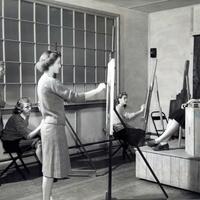
For over 100 years, Niagara Falls has drawn daredevils to brave the rapids. People have gone over Niagara Falls in barrels, swam across the Niagara River, navigated the rapids in a boat and walked over on a tightrope. Women and men have sought fame and fortune; others needed to challenge themselves against the harshest conditions that could be found in nature. What makes Niagara Falls’ daredevils unique is the combination of “people vs. nature” mentality and a circus-like atmosphere that brought tourists from far and wide.
Orrin E. Dunlap (1861-1953) was a photographer and writer based in Niagara Falls who offered a unique perspective on the daredevils of Niagara Falls. Dunlap was also the managing editor for the Niagara Falls Gazette from 1890-1895. This collection includes both his own and other photographer’s images. It consists of 189 photographs and offers a rare view of these daredevils.
The manuscripts digitized in this collection represent only a small portion of the library's holdings. Dunlap’s writings about Niagara Falls daredevils were published in the Niagara Falls Gazette as well as other newspapers, magazines and books.
Scope of Collection
Daredevils of Niagara - Photos & writing from the Orrin E. Dunlap Collection is a collection of photographs and manuscripts. The collection also includes: advertisements, articles, legal documents, ephemera, and a rare book on Monsieur Blondin. The daredevils pictured include: Charles Blondin, Annie Edson Taylor, Bobby Leach, Walter G. Campbell, William Kondrat, Charles Alexander Percy, Clifford Calverly, Charles G. Stephens, William (Red) Hill Sr., and Carlisle Graham, among others. Most of the collection dates to the late 19th century and early 20th century.
Browse within this collection
Browse similar collections

Collection Facts
Historical Context
Daniel Scott Lamont (February 9, 1851 – July 23, 1905) was the United States Secretary of War during Grover Cleveland's second term. Lamont was born on his family’s farm in McGrawville, New York, to son of John B. Lamont and Elizabeth (née Scott) Lamont. He attended from Union College at Schenectady, New York. He was employed as engrossing clerk and assistant journal clerk in the state capitol at Albany, New York, was a clerk on the staff of the Democratic state central committee in 1872, and was chief clerk of the New York department of state from 1875 to 1882. In 1883, through his mentor Daniel Manning, Lamont was assigned to then-New York Governor Grover Cleveland's staff as a political prompter. He became private and military secretary with the honorary rank of colonel on the governor’s staff the same year, and continued in his service after Cleveland became president in 1885. Lamont also held employment with William C. Whitney in his business ventures in 1889. From March 5, 1893 to March 5, 1897, Lamont served as United States Secretary of War in President Cleveland's cabinet. Throughout his tenure, he urged the adoption of a three-battalion infantry regiment as a part of a general modernization and strengthening of the Army. Furthermore, Lamont recommended the construction of a central hall of records to house Army archives, and urged that Congress authorize the marking of important battlefields in the manner adopted for Antietam. He also recommended that lands being used by Apache prisoners at Fort Sill be acquired for their permanent use and their prisoner status be terminated. After his service as Secretary of War, Lamont was vice president of the Northern Pacific Railway Company from 1898 to 1904. He was also a director of numerous banks and corporations. Lamont died in Millbrook, New York, on July 23, 1905, at aged 54. He was buried in Woodlawn Cemetery, in The Bronx, New York City. Daniel S. Lamont was married to Juliette Kinney, daughter of Orson Kinney of McGraw. Daniel and Juliette had four daughters, one of whom was Miss Elizabeth Lamont, who in later years with her Mother conceived the idea of converting the old homestead into a public library. In 1906 Mrs. Lamont purchased 1,000 books and on February 22, 1907 opened the front portion of her home as a library. On August 21, 1945, Miss Elizabeth Lamont deeded the building and grounds to the Village, and it is still being used in that manner.
Scope of Collection
A collection of family photographs and correspondence, directed to or written by Daniel S. Lamont. Also incuded are additional photographs, clippings, and publications related to Lamont and his family.
Browse within this collection
Browse similar collections

Collection Facts
Scope of Collection
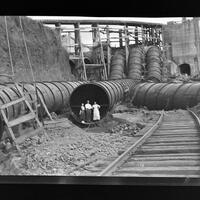
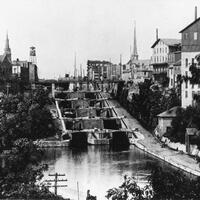
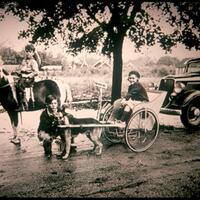
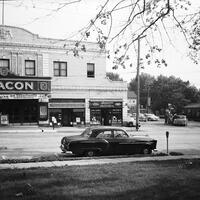
The Daniel Dumych Collection contains over a thousand photographs as well as other documents relating to the history of the hydro-electric power industry in Niagara Falls, NY. Many of the photos are rare, never-before-seen images of the interiors, exteriors and surrounding areas of the power plants, canals and other infrastructure built to generate and deliver electricity in the late 19th and early 20th centuries. This is a representative sample from the collection.