
Collection Facts
Historical Context
On Sunday, June 16th, 1963, Dr. Martin Luther King, Jr. addressed Keuka College graduates in a Baccalaureate speech based on his famous sermon entitled “The Three Dimensions of a Complete Life.” This came amid a tumultuous period in the Civil Rights movement. The Birmingham marches against segregation had begun just two months earlier, resulting in King’s arrest on April 12 (Good Friday). It was during this confinement that he wrote his enduring declaration, “Letter from Birmingham Jail.” Following his address, King was presented with an honorary Doctor of Letters degree from then-College President Dr. William S. Litterick. A little more than two months after his Keuka College address, King would lead the March on Washington, at which he galvanized the nation and the Civil Rights movement with his historic “I Have a Dream” speech.
Scope of Collection
The Dr. Martin Luther King, Jr. Collection consists of photographs, letters, documents, and a recording of the speech he gave at the Keuka College Baccalaureate Ceremony in 1963. The letters are primarily between president William Litterick, Dr. King, and other special guests attending Commencement proceedings that year. Documents contain biographical information about speakers and guests and planning information needed to coordinate commencement events.
Browse within this collection
Additional Information
Keuka College - Lightner Library
Browse similar collections

Collection Facts
Historical Context
Frank Dean was born in Easton, Pennsylvania on October 13, 1891. Little is known of his childhood or early education. Dean became a globetrotter, and earned a "bachelor of medicine" degree from the University of Warsaw prior to World War I. Dean reportedly earned his chiropractic doctorate in 1917 from the Standard School of Chiropractic in New York City. However, the Standard School was not founded until 1919, the same year that Dean reportedly established the Columbia Institute of Chiropractic.
Scope of Collection
This collection includes the awards, photos and accolades belonging to the founder of New York Chiropractic College, Dr. Frank Dean.
Browse similar collections

Collection Facts
Historical Context
David Sherwood Kellogg was born in Essex, Vermont on October 21, 1847. He attended the University of Vermont (UVM), receiving his A.B. degree in 1870 and his M.D. in 1873. He taught at various schools and interned at Hartford Hospital in Connecticut for a brief period before moving to Plattsburgh, New York on April 7, 1874. In 1875, Dr. Kellogg married Elizabeth Stafford Smith of Burlington, Vermont. They raised five children: Robert, Nelson, Elizabeth, David, Jr., and Francis Fellows. In addition, the doctor and his wife inherited guardianship for his sister's three children. Theodora, Helen, and Francis Kellogg Kyle went to live with their "Uncle Wood" after their parents, Fannie and Osceola Kyle both had passed away. From 1874 until his death in 1909, Dr. Kellogg had a prominent medical practice in Plattsburgh, with the delivery of babies constituting the majority of his professional calls. He was a member of the Board of Pension Examiners for local veterans and several times acted as interim Post Surgeon at the Plattsburgh Barracks. In addition to his professional duties, Dr. Kellogg had a wide range of other intellectual interests. He was a well-recognized authority on Native-American and military archaeological sites in the Champlain Valley region. He had a collection of 13,000 artifacts which were sold to Arthur C. James of New York, who donated them to the Gilbert Museum of Indian Relics at Amherst College in Massachusetts. Dr. Kellogg made major discoveries at Cumberland Bay near Scomotion Creek (aka Dead Creek), and his knowledge of local sites was highly regarded by the archaeological experts Parker and Beauchamp. Dr. Kellogg was also interested in other aspects of local history. He interviewed elderly citizens and former soldiers and he wrote essays and gave lectures to historical societies in the region and as far away as Montreal. He was active in several historical and medical societies and was the initiating force behind the establishment of the Plattsburgh Institute.
Scope of Collection
Personal journals; medical and historical notes; archaeological documentation and drawings; interviews with local citizens and veterans; addresses on medical, archaeological, and historical subjects; commemorations of local military events and sites; a scrapbook of local history and Native-American artifacts; family correspondence and genealogical information; and children's stories. 1756-1965, bulk 1865-1909
Browse within this collection
Browse similar collections

Collection Facts
Historical Context
Dr. Daniel Roberts was an immigrant from Wales. He lived in the Remsen-Steuben area from 1812 to his untimely death in 1820. He is often referred to as "the witch doctor of Starr Hill." The title might have been earned from the doctor's studies under Messemer. Several years ago, the Remsen-Steuben Historical Society presented a dinner theater based on the doctor's life. An out-of-print book by Daniel's descendant, Edna Roberts Robb details his life in "Honey Out of the Rock."
Scope of Collection
This collection includes correspondence, property and financial documents, as well as a geneological chart relating to Dr. Daniel Roberts and his decendents. The documents date from the early nineteenth century through 1930, with the bulk dating from the mid-nineteeth century.
Browse within this collection
Browse similar collections

Collection Facts
Historical Context
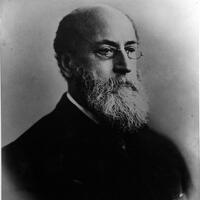
Dr. Austin Flint, Sr. was born in Petersham, Massachusetts on October 20, 1812 to Joseph Henshaw Flint and Hannah Willard Reed. He attended Amherst College and Harvard Medical School, graduating from the latter in 1833.
He moved to Buffalo, NY around 1836 where he practiced medicine for the next 24 years. In the Autumn of 1843, a mysterious fever spread throughout the small village of North Boston, NY. Twenty-eight of the village’s forty-three residents died due to complications from this illness. Dr. Flint led the investigation into its cause and ultimately concluded that the outbreak was typhoid fever.
In 1846, Dr. Flint, along with 2 colleagues, Drs. James Platt White and Frank Hasting Hamilton, founded the Buffalo Medical School, now the University at Buffalo. He also established the Buffalo Medical Journal in 1846. Dr. Flint was widely known as an excellent diagnostician, teacher, and researcher.
In 1860, Dr. Flint moved downstate to New York City where he helped establish the Bellevue Hospital Medical College (in 1861). He died suddenly of a cerebral hemorrhage on March 16, 1886, in his home in Manhattan, New York City.
Scope of Collection
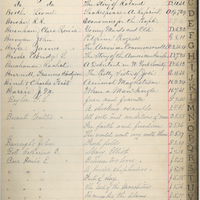
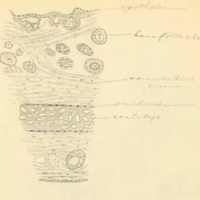
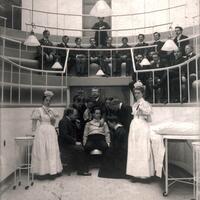
Meeting Minutes, Circulars, Reports, Journal Articles, Illustrations, Photographs, Artifacts related to Dr. Austin Flint, Sr. and his tenure at the Medical Department of the University of Buffalo.
Browse within this collection
Browse similar collections

Collection Facts
Historical Context
The Gilded Age, the American Country House Movement, and life on the South Shore of Long Island dominate the themes in this collection. The "country house" is an archetypal British phenomenon that prevailed until the Great War. With money found in the new world, many prominent families in New York emulated this style by building lavish estates in rural areas neigboring major cities.
Scope of Collection
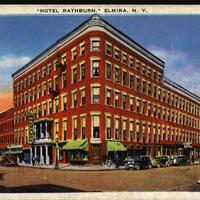
The collection consists of over 70 historic postcards depicting various streets and buildings in Oakdale, Long Island. The collection spans from the Progressive Era to the Great Depression.
Browse within this collection
Browse similar collections


Collection Facts
Historical Context
The Douglass' Monthly was the successor to Frederick Douglass’ earlier abolitionist papers: The North Star and the Frederick Douglass' Paper. This monthly publication was also devoted to the abolitionist movement and social reform.
Scope of Collection
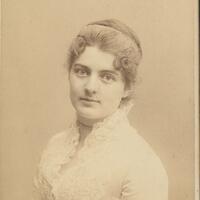
This collection contains seven issues of the Douglass' Monthly from 1860 through 1862. The contents of the issues include anti-slavery and social reform editorials.
Browse similar collections

Collection Facts
Historical Context
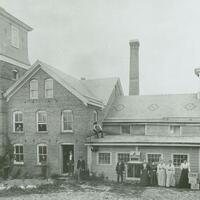
The Doughty family came from Brooklyn in the 1890’s to purchase the Ketcham and Jagger Cider Mill. Benjamin George was an amateur photographer and invented a method for producing sparkling champagne cider. His son, George Bodine continued to operate the Mill until 1938 when it was sold to George Zulkofske. It is still in operation today.
Scope of Collection
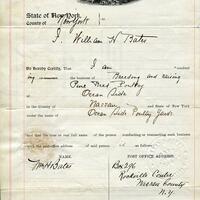
Images from members of the Doughty family of Jericho, NY
Browse within this collection
Browse similar collections

Collection Facts
Historical Context
Donald Smythe Childs (1888-1960) was one of the earliest radiologists in New York State and graduated from the Syracuse University College of Medicine in 1909. He interned at St. Joseph’s Hospital from 1908 to 1910 before becoming a physician at Waterloo in 1910. In 1914, he returned to SU to become a Professor of Radiology, a position he held until 1948. In addition, he was an Instructor and subsequently a Professor of Osteology at SU for 28 years. During World War I, he served in the Medical Corps as a Captain from 1917 to 1919. In 1915, he married Amy Murray Edwards, with whom he had two sons: Donald S. Childs Jr., who also became a renowned radiologist, and Eleaser Edwards Childs. He assisted with radiology at many local institutions, including St. Mary's Maternity Hospital, Marcy State Hospital, the Syracuse Free Dispensary, the Syracuse Psychopathic Hospital, St. Joseph's Hospital, Elmcrest Children’s Center, and the House of Providence. He was the secretary-treasurer of the Radiological Society of North America from 1931 until his death and the business manager of its scientific journal, Radiology. Among his many public service positions, he was most notably a Trustee of the American Board of Radiology from 1940 until 1958, Chancellor of the American College of Radiology beginning in 1949, chairman of the Section of Radiology of the American Medical Association in 1956 to 1957, President of the Syracuse Academy of Medicine, and President of the American Board of Radiology, which was the official examining and certifying body for his medical specialty. Dr. Childs was a member of the American Roentgen Ray Society, Century Club Syracuse, and Innominate Club Syracuse and a Fellow of the American College of Radiology. He was awarded the Gold Medal Award of the Radiological Society of North America in 1949 and died in 1960 at the age of 72.
Scope of Collection
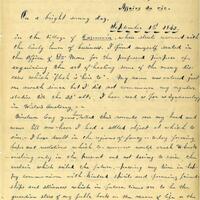
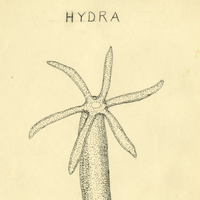
This collection contains two student notebooks from Donald S. Childs, who graduated from the Syracuse University College of Medicine in 1909 and was a radiologist.
Browse within this collection
Additional Information
Browse similar collections

Collection Facts
Scope of Collection
This collection consists of a large number of both partial and complete children's' dolls. Most are constructed of porcelain china and plastic with cloth clothing and painted faces.