
Collection Facts
Historical Context
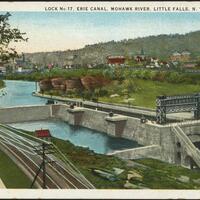
The Village of Canastota is located in Madison County, New York. It was originally inhabited by the Oneida Nation and later settled by Europeans. Captain Reuben Perkins was the original founder in 1810, and the village was formally established in 1835. A portion of the Erie Canal ran through Canastota and had a major impact on the village's development. The Erie Canal, part of the New York State Canal System, officially opened in 1825. It connected all areas of New York State, including New York City to areas in Upstate New York and to the Atlantic Ocean. It was a major source of travel and trade in the nineteenth century. Because of its location on the Erie Canal, Canastota became a prosperous area for trading, commerce and agriculture during the mid-nineteenth century. Early businesses in Canastota included The Canastota Bee Journal (1889 - 1921), Canastota Savings and Loan Association, glass manufacturing factories, hotels, and barbershops.
Scope of Collection
The Early Canastota Business Collection contains documents and newspaper clippings about the first businesses in Canastota.
Browse within this collection
Browse similar collections

Collection Facts
Historical Context
Earlville Cemetery was established in 1976, reportedly after Thomas Kershaw began permitting his neighbors to bury their deceased relatives in his meadow. The oldest surviving memorial stone dates to 1801. The cemetery is located on Main Street in the village of Earlville, New York.
Scope of Collection
The Earlville Cemetery collection contains documents about people who were buried there from its creation through the mid-twentieth century.
Browse similar collections

Collection Facts
Scope of Collection
This collection documents the history of Dutchess Community College (DCC). It includes historic photographs of DCC events, as well as candid photos of students, faculty, and staff. It also contains digitized programs and ephemera from events, as well as a copy of the school's original mission statement.
Browse within this collection
Browse similar collections

Collection Facts
Historical Context
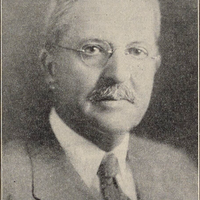
Arthur W. Dutcher was a well-known civic and business leader in Haverstraw, New York, from the late 1880’s until his passing in 1939. A lifelong Haverstraw resident, Mr. Dutcher was born on February 29, 1856 (leap year), and had attended both public and private Haverstraw schools. Employment in the family livery and stage line business with his father, Jacob, prepared him for his own commercial ventures. Arthur purchased a furniture business from Leonard Cooper, for whom he had worked. This purchase led Arthur into another service that he would best be known for—Funeral Director. While overseeing the funeral operations, A.W. Dutcher still found time to participate in civic duties. Active in local politics, Arthur was elected coroner while also serving as Justice of the Peace. From the funeral home on Lincoln Street, other generations of the Dutcher family served Rockland County. Arthur’s two sons became involved with the firm. George B. Dutcher became its licensed director, with his brother, Leonard C., assisting him. Like his father, George was active in fraternal and civic organizations, and was elected coroner. Succeeding George was Leonard’s son, Leonard C. Dutcher, Jr. with his son, Leonard R. Dutcher, as his assistant.
Scope of Collection
This collection includes images of the Dutcher Family generously donated by Leonard R. Dutcher.
Browse within this collection
Browse similar collections

Collection Facts
Historical Context
What we know today as Dunham Public Library began life as the family home of Reverend Moses Dunham, the father of George Earl Dunham, the namesake of our library.
The Moses Dunham residence is first listed in the Atlas of Oneida County, NY, published in 1874. The Dunham home is believed to have been constructed between 1864-1874. Dunham Public Library has two copies of this 1874 atlas in its collection.
During the history of the building, two additions were built on the original Dunham home. One was added to the back of the house shortly before 1907. The second addition was the front entrance to the library added after Mrs. Dunham’s death in 1945. An attempt was made to match the architectural style of the original house and this was built for the purpose of having a new entrance for the library. The roof of the 1945 addition has a copper roof instead of slate. It was paid for with part of her $30,000 donation to the library. The Dunham house also had a circular driveway in 1907.
Upon the death of George Earl Dunham on October 29, 1922, his will stipulated that the home of his late father, Reverend Dr. Moses Earl Dunham and the sum of $7500, would be donated to the Union Free School District of Whitesboro for the establishment of a library. The money and property was to be used for the purpose of a public library or transferred into a trust for Hamilton College. With the help of his wife, Helen, it was decided to open a library. The plan became a reality on July 25, 1927.
On October 28, 1926, Dunham Public Library was chartered and incorporated as a free public library serving the Union Free School District of Whitesboro. Dunham Public Library officially opened on August 8, 1927. Helen Dunham worked hard and donated time to prepare the library for its opening on July 25, 1927. Mrs. Dunham died in 1945 and left furniture, her personal library and $30,000 to the library.
In 1937, Dunham Public Library was rechartered as a public library serving the geographical area of the Whitesboro School District, a service area encompassing Deerfield, Marcy, Schuyler, Whitesboro and Yorkville.
Scope of Collection
This collection includes board minutes from Dunham Public Library in Whitesboro, New York, spanning from the formation of the library until 2015.
Browse similar collections

Collection Facts
Historical Context
George Earl Dunham was a local newspaper editor and civic-minded citizen. He was born in Clayville in 1859, and was best known as editor and publisher of the Utica Daily Press. He also taught at the Whitesboro Seminary, and later taught Americanization classes to immigrants. He received national recognition for a popular book on the subject. He married his wife, Helen, during the late nineteenth century. Mr. Dunham was instrumental in the establishment of the Utica Chamber of Commerce and became its first president in 1898. Upon his death, he designated his father’s estate to be used as a public library. In 1927, Dunham Public Library was chartered and incorporated as a free public library serving the Union Free School District of Whitesboro. In 1937, Dunham Public Library was rechartered as a public library serving the geographical area of the Whitesboro Central School District, a service area encompassing Deerfield, Marcy, Schuyler, Whitesboro and Yorkville.
Scope of Collection
The Dunham Family History collection contains portraits, photographs, and various documents saved by the Dunham family. The documents include invitations to events, holiday memorabilia, and personal items. The portraits and photographs are of members of the Dunham family.
Browse within this collection
Browse similar collections

Collection Facts
Historical Context
The Dudley Observatory, named after Charles Dudley, was chartered in 1852. Originally, it was located in Albany but then its location changed to Schenectady. During World War II era, Dudley Observatory was used as a place for the United States to study traveling to space during the space race time. It is used by local colleges presently and is considered the oldest non-academic institution of astronomical research in the United States.
Scope of Collection
The collection surrounds the founding period of Dudley’s history (ca. 1850 – ca. 1860), the tenure of Lewis Boss (1876-1911), during which time the General Catalog was completed, and the tenure of Curtis Hemenway (1956-1976) during which time the Observatory studied micrometeorites, operated a radio telescope, and assisted the US Space Program.
Much of this collection was transferred to the New York State Library in 2019.
Browse within this collection
Browse similar collections

Collection Facts
Historical Context
For over a century, the Dudley Observatory was a functioning observatory focused on both public and technical astronomy. During this period the Dudley saw many transitions, from the introduction of photo-astronomy to the rise of computers, and many pieces of its equipment still exist in the collection. These range from the work-horse of the Observatory, the Olcott Meridan Circle telescope, to various pieces of surveying and measuring equipment, to a small but useful collection of meteorites.
Scope of Collection
This collection contains images of artifacts and people related to the Dudley Observatory.
Browse within this collection
Browse similar collections

Collection Facts
Historical Context
The Town of Middleburgh is located in Schoharie County and is one of the original towns within the county. The town was established at the end of the eighteenth century, after it survived many raids by the British during the Revolutionary War. Middleburgh grew in the area of industry and takes pride in the businesses within the town, including its pharmaceutical advancements.
Scope of Collection
This collection contains documents relating to prescription drugs and Dr. Best.
Browse within this collection
Browse similar collections


Collection Facts
Historical Context
Begun in 1950, Hofstra University’s Annual Shakespeare Festival is the longest continuously running college festival of its kind in the United States. The Festival’s earliest plays featured professional actors, but performances have long since featured students from the University’s Drama and Dance Department. Many Festival programs have been staged on a five-sixth reproduction of London’s Globe Theatre, the construction of which was based on a model of the Globe created by John Cranford Adams, President of Hofstra University from 1944 to 1964 and a noted Shakespeare scholar. A number of Festival performers have gone on to successful careers in television and on Broadway.
Scope of Collection
The collection consists of digitized photographs and slides featuring scenes from performances dating back to the Festival’s first performance, Julius Caesar, in 1950.