
Collection Facts
Browse within this collection
Browse similar collections

Collection Facts
Historical Context
The mission of the Historical Society of the Massapequas is to preserve the local history of Massapequa and Massapequa Park, and to educate people about the richness of their local heritage.
Scope of Collection
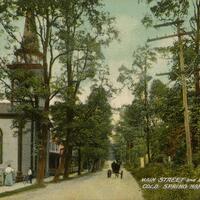
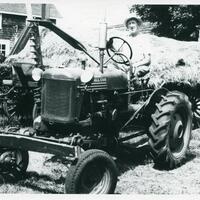
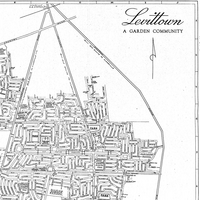
This collection focuses on the history of the Massapequas from its founding up until the present day. It consists of photographs, slides, postcards, books, magazines, annuals, pamphlets and other miscellany. Most of the materials in this collection are from the Historical Society of the Massapequas
Browse within this collection
Browse similar collections

Collection Facts
Historical Context
East Rockaway, an early community on the south shore of Long Island, first appeared as Neare Rockaway in 1665. The Town of Hempstead, at a town meeting held December 28, 1688, granted Joseph Haviland the right to construct a grist mill within one year. The Haviland Grist Mill was built in 1689 and became the center of the social, economic and political life of the area. East Rockaway prospered as a seaport with packet boats carrying oyster and farm produce to New York City and lumber and grain farther north. It also developed an early but short lived trans-Atlantic trade. East Rockaway had several churches, schools and an early post office and library. East Rockaway was incorporated in 1900.
Lynbrook is an incorporated village of about 19,000 residents in southern Nassau County. It lies just a mile from Hewlett Bay. It was settled around 1790 when the first church was constructed, and it remained a small, isolated, farming and fishing community until the mid-1800s when a corduroy road and later a railroad line were extended through the sleepy hamlet. By 1890, a downtown of about twenty businesses had developed along Atlantic Avenue near the Five Corners. In 1911, the hamlet became an incorporated village. In the 1920s, many of Lynbrook’s farms were subdivided into residential lots, and it became the fastest growing village in Nassau County. Today it is a bedroom suburb of New York City, with a 35-minute railroad commute. It has a reasonably vibrant downtown of about 150 stores and restaurants along with some light industry, particularly financial services.
These selected images of early local homes, schools, churches, businesses and community events provide a historical perspective of village life.
Scope of Collection
This collection contains historic photographs and memorabilia of life in the communities of East Rockaway and Lynbrook, New York. Topics include residents, homes, schools, churches, businesses, community events, maritime activities, beaches and facets of everyday life.
Browse similar collections

Collection Facts
Historical Context
Tompkins County is in the west central part of New York State, south of Syracuse and northwest of Binghamton. It is usually geographically grouped with the Finger Lakes region, but some locals consider themselves to be part of Central New York or the Southern Tier. The city of Ithaca is the county seat. The county is also home to Cornell University, Ithaca College and Tompkins Cortland Community College.
Scope of Collection
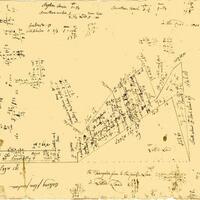
The original collection contains three maps of the city of Ithaca: An 1872 map of the incorporated city which includes the names of property owners and ward boundaries, an 1889 map of the city produced from actual land surveys and records, and an 1836 woodcut map of the city with ornate borders and corner rosettes which features two former hotels in the downtown area.
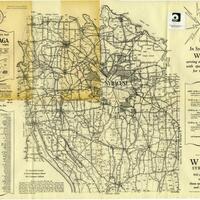
In 2022, a collection of eight Clock System maps were added to the digital collection. These Clock System maps were an innovative way to display locations of farmhouses in rural countryside. A directory was built into each map to help identify locations.
Browse within this collection
Browse similar collections

Collection Facts
Historical Context
The collection contains images from the 19th and 20th Centuries showing historic views of Forest Lawn. These images are digitized from original glass plate negatives, photographic prints, lithographic drawings, stereoscopic views and commercial postcards. The earliest images of Forest Lawn document newly erected family lots and were intended to help illustrate the beauty of the landscape as well as drive sales in an era when buying pre-need burial space was a foreign concept. Glass plate negatives come from the McDonnell & Sons Monument Company and show the construction and completion of many monuments found throughout the grounds. Later photographs come from various commercial photographers and from the Papers of Vernon L. Thompson collection. Vernon L. Thompson was the Vice President of Forest Lawn in the mid-20th Century and his meticulous record keeping produced a wealth of documentary evidence of the daily course of business. Postcards were commercially produced images which were largely sold as souvenirs. The golden era for postcards seems to have been from the Turn of the Century to around WWI and typically featured picturesque scenes and architectural landmarks.
Browse within this collection
Browse similar collections

Collection Facts
Historical Context
The historic Rockville Centre telephone directories in this collection were saved by RVCPL librarians over the years and accessioned into our Archives when it was established in 1997.
Scope of Collection
This collection consists of local telephone directories from 1923—1957 with gaps. Early directories contained people’s professions, spouse’s name, and whether they rented or owned their home. Many include business directories as well as street directories, allowing the user to search by address.
Browse similar collections

Collection Facts
Historical Context
Frank Seipp has lived and volunteered in Rockville Centre for over fifty years. Included in a lengthy resume of community service, he has served as President of the Phillips House Museum for over twenty-five years.
Scope of Collection
Early 20th century postcards of historic buildings, homes, landscapes, street scenes, and houses of worship. Some have been colorized. Many have handwritten text with postmarks.
Browse within this collection
Browse similar collections

Collection Facts
Scope of Collection
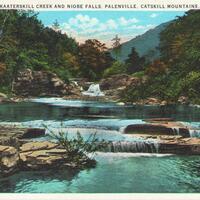
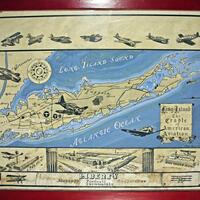
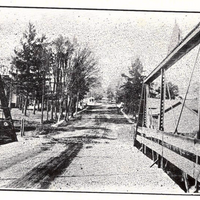
This collection consists of historic postcards depicting landscapes, architecture, and landmarks throughout Ulster County.
Browse within this collection
Browse similar collections

Collection Facts
Historical Context
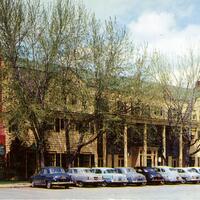
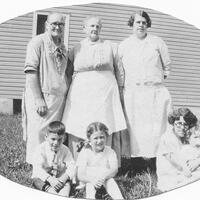
Roslyn is an incorporated village in Nassau County, New York situated at the head of Hempstead Harbor on the north shore of Long Island. The Greater Roslyn area includes the incorporated villages of Roslyn Harbor, Roslyn Estates, East Hills, and Flower Hill as well as the unincorporated areas of Roslyn Heights and Greenvale. Settled in 1643, the community was known as Hempstead Harbor until 1844, when the name was changed to Roslyn to avoid postal confusion with all the other communities on Long Island with "Hempstead" in their name. The Bryant Library, named for William Cullen Bryant, serves the Roslyn community and is the oldest continuing library in Nassau County.
Scope of Collection
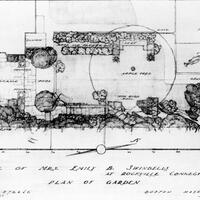
The collection consists of over 300 historic postcards of Roslyn depicting its inhabitants, businesses, places of worship, various buildings, and natural features. The bulk of the postcards are black and white with some being hand colored, the collection dates from the early 20th Century.
Browse within this collection
Browse similar collections

Collection Facts
Scope of Collection
The postcards from this collection, approximately 950, date from the late 1800's through 1970, with most representing the period known as the Golden Age of Postcards, 1907-1915. Depicting many aspects of life in New Rochelle, they document the development of downtown New Rochelle, waterfront, and select neighborhoods; giving us a glimpse of New Rochelle coming into its own identity as one of America’s premier suburban communities. Most items are from the Dominick Bruzzese and Karen S. Allen Collections with the majority of the Fort Slocum images being a gift of an anonymous donor. Additional materials to the collection are via gift or purchase.