

Collection Facts
Historical Context
The Hudson River is over three hundred miles long and travels mainly through eastern New York. It was a great source of travel for steamboats, which increased trade and expansion of populations and visitors.
Scope of Collection
The Hudson River Voyage collection contains still images of steamboats that went up and down the the Hudson River between 1937 and 1939.
Browse within this collection
Additional Information
The local history collection contains materials on Watervliet, Troy, and selected materials on Albany County. It includes town histories and a vertical file of published materials, clippings, and other materials dealing with the Town of Watervliet. The vertical file also contains a History of Watervliet by Florence Service, 1902 (manuscript); and unpublished Watervliet histories by various authors (1980s through 1996).
Browse similar collections

Collection Facts
Historical Context
From their earliest days, Hudson River steamboats ran at night as well as during the day. Although not a numerous as their daytime counterparts, night boats quickly became popular, especially with businessmen who wanted to travel between New York and Albany without missing daylight working hours. Smaller night boats carried cargo—mostly food products, including milk—to New York City from upriver ports as well as transporting some passengers.
By the 1860s, night boats had become large, elegant vessels favored by wealthy New Yorkers. They featured crystal chandeliers, gilded woodwork, elegant dining rooms with fine cuisine, live music, and beautifully decorated staterooms. Saratoga, an elegant spa town, attracted passengers who took night boats to Albany, then traveled to Saratoga by train. Taking the night boat had become the fashionable way to travel between New York City and Albany. Honeymooners regularly chose the Albany Night Boat, a practice that continued to the end of the night boat era.
In the twentieth century, the Hudson River night boats fell into a steep decline. By the 1930s, neglect, the Great Depression, and changing transportation options caused the night boats to lose not only their previous wealthy passengers but also their glamorous reputation. The last Albany Night Boat made its roundtrip voyage from Manhattan in January 1941.
Scope of Collection
This collection consists of images of the Hudson River night boats.
Browse similar collections


Collection Facts
Historical Context
The Hudson River Day Line was the most famous of the Hudson River steamboat lines carrying millions of passengers over the decades on excursion trips from New York to Albany and points in between on fast, beautifully appointed steamers. The photos and ephemera presented here are part of the extensive Donald Ringwald Collection at the Hudson River Maritime Museum. Ringwald was the leading expert on the Hudson River Day Line and the author of the book, “Hudson River Day Line,” as well as numerous articles and two other Hudson River maritime books, “The Mary Powell” and “Steamboats for Rondout.”
Scope of Collection
The Hudson River Day Line Collection is an extensive archive of photographs, objects, ephemera and printed materials dating from the 1860s through 1971. Included in this digital collection are images of the steamboats Armenia, Daniel Drew, Chauncey Vibbard, Albany, New York, Hendrick Hudson, Robert Fulton, Washington Irving, DeWitt Clinton, Peter Stuyvesant, Alexander Hamilton and Chauncey M. Depew.
For more information and images, visit the online exhibition The Hudson River Day Line, 1863-1971.
Browse within this collection
Browse similar collections

Collection Facts
Historical Context
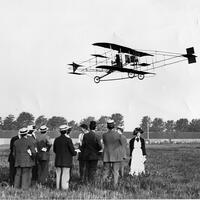
The Hudson-Fulton Celebration was held from September 25 through October 9, 1909 to commemorate the 300th anniversary of the discovery of the Hudson River and the 100th anniversary of Robert Fulton's invention of the steamboat. Cities and towns along the Hudson River participated in the celebration.
Scope of Collection
This collection contains images and ephemera from the 1909 celebration.
Browse within this collection
Browse similar collections


Collection Facts
Historical Context
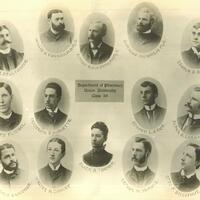
This Syracuse hospital was known by three different names. When it was founded in 1872 it was known as House of the Good Shepherd. After its move to the corner of Marshall Street and University Ave in 1875, it was called Hospital of the Good Shepherd and later as University Hospital of the Good Shepherd. After Upstate Medical University opened its own medical center facility as a University Hospital, the Good Shepherd was closed. The religious metaphor of "Good Shepherd" reflects the original founding by Bishop Frederic D. Huntington of the Episcopal Diocese of Central New York. The building on the corner of Marshall and University is now called Huntington Hall in his honor. It houses the School of Education of Syracuse University.
Scope of Collection
This collection contains numerous images of the exterior and interior of the Good Shepherd Hospital. Some interior images include the operating and waiting rooms, as well as other hospital features. The exterior images reflect historical periods of the horse and buggy to vintage cars parked in front from the early 1960s.
Browse within this collection
Additional Information
Browse similar collections

Collection Facts
Historical Context
Horton and Morrison Hall is the architectural centerpiece of the College. The mansion was built between 1902 and 1907 as a family residence by Webb Horton, a successful tanner and industrialist. Horton’s son, Eugene, bequeathed the mansion and surrounding property to his cousin John Horton Morrison. In 1950, Morrison’s spouse, Christine, donated the mansion and 16-acre estate to house Orange County Community College.
Scope of Collection
This collection includes portraits of the Horton family, as well as photographs of the mansion’s construction.
Browse within this collection
Browse similar collections

Collection Facts
Historical Context
The Town of Red Hook has been home to two societies organized to apprehend horse thieves. The oldest, The Upper Red Hook Society for the Apprehension and Detention of Horse Thieves, was founded in 1796, to protect what was then the most valuable critical possession of the farmer – the horse. Sixty-three local farmers formed the society at the Upper Red Hook Inn of Stephen Holmes on October 10, 1796. Riders were appointed to be on call to pursue any thief that stole a member’s horse and the roster changed every year at the annual meeting, set for the second Tuesday in October, when dues were paid. The Society was a ‘male only’ organization until 1956. Annual meetings are held to this day, featuring a dinner, reports on any stolen horses, and horse-related talk by a guest speaker.
Scope of Collection
This collection contains three minute books. One from the Independent Society for the Detection of Horse Thieves in the Lower Village of Red Hook and two from the Upper Red Hook Society for the Detection and Apprehension of Horse Thieves. The ledgers include minutes from annual meetings, bylaws, finances, memberships and appointment of officers.
Browse within this collection
Browse similar collections

Collection Facts
Historical Context
Potsdam is located in St. Lawrence County, New York and was founded in 1806 and was the site of both the St. Lawrence Academy (Now SUNY Potsdam) and Clarkson University. It is famous as the exporter of Potsdam sandstone.
Scope of Collection
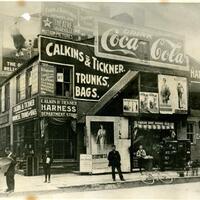
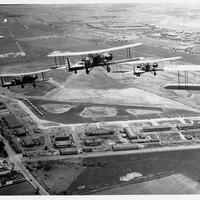
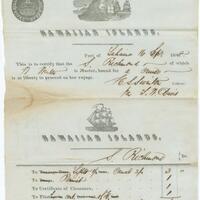
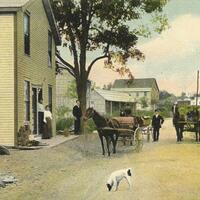
This collection consists of photographs, taken mostly between 1905 and 1915, which mostly depict horses and horse drawn carts and wagons in the town of Potsdam, New York. Included also in these photographs are depictions of storefronts, homes, roads, and other structures in and around Potsdam.
Browse similar collections

Collection Facts
Historical Context
Construction of the Panama Canal by the United States was completed between 1904 and 1914. The Panama Canal Zone was an unincorporated territory of the United States from 1903 to 1979. The Zone consisted of the canal itself, and an area extending approximately five miles on both sides of the canal, excluding Panama City and Colón. The workers who built the canal lived and worked in the Canal Zone.
Rollin Peter Burns (1877-1942) of Rochester, NY, reported for duty within the Engineering Department on the Isthmus on November 17, 1907. He began his time in Panama as a Trainman in the Culebra Division, was later promoted to Conductor in the Central Division, and eventually ended up under the division of the Chief Engineer. Burns was employed there through October 24, 1913, near the end of construction on the Panama Canal. He and his wife, Alice, departed Panama on the USMSS Cristobal the very next day, sailing from Cristobal, C.Z. (Canal Zone) for New York, Oct. 25, 1913.
The Horne Collection was donated to the Canal Society by Mary Horne, the niece of Rollin Burns, who inherited his collection of Panama Canal photographs.
Scope of Collection
These photographs were taken from 1904-1914, during construction of the Panama Canal, in locations throughout and beyond the Canal Zone. The collection documents construction of the canal, cities and towns, daily life for workers and their families, and the surrounding landscape of Panama.
Browse within this collection
Browse similar collections

Collection Facts
Historical Context
The St. Lawrence-Lewis School Library System collection consists of high school yearbooks from area high schools. The Crusader is the annual yearbook of Holy Family High School.
Scope of Collection
This collection consists of issues of the Crusader dating between 1964 and 1975.