

Collection Facts
Historical Context
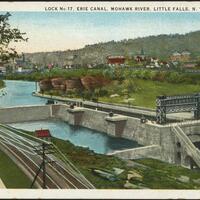
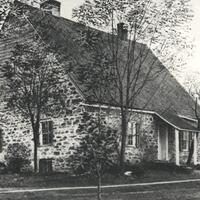
East Rockaway, an early community on the south shore of Long Island, first appeared as Neare Rockaway in 1665. The Town of Hempstead, at a town meeting held December 28, 1688, granted Joseph Haviland the right to construct a grist mill within one year. If said mill shall be ‘uncapable’ to grind in one year, then ‘streame and Land is to reterne to ye towne againe.’ The Haviland Grist Mill was built in 1689 and became the center of the social, economic and political life of the area. East Rockaway prospered as a seaport with packet boats carrying oyster and farm produce to New York City and lumber and grain farther north. It also developed an early but short lived trans-Atlantic trade. East Rockaway had several churches, schools and an early post office and library.
Near Rockaway at one time included East Rockaway, Lynbrook and Oceanside but that changed when East Rockaway was incorporated in 1900 by village fathers who maintained an anathema to taxation and who controlled all aspects of the village from the fire department, grain and shipping industries, religion and education.
Scope of Collection
This collection consists of postcards that depict the village of East Rockaway, N.Y. with its main streets, businesses, schools, churches, municipal buildings, homes, maritime activities and village life. Most of the postcards are in black and white and date from the early part of the twentieth century.
Browse within this collection
Browse similar collections

Collection Facts
Historical Context
Since it was founded in 1821, the town of Sardinia, NY, has remained a small, tightly knit rural community containing a mix of family farms and commuting laborers. Although rural, Sardinians have never been reluctant to adopt popular trends that often originated in the more populated cities. From the years 1900 to 1920, people across America witnessed a stunning advance in technology and improvements in quality of life. It was also a relatively prosperous time, and people were slowly learning how to have some fun and enjoy life. Taking pictures of those enjoyable and important things in life seemed to be the perfect way to capture and remember them. Turning those pictures into postcards allowed them to share their memories with friends and family who lived far away. Sardinia was no different, and this collection of postcard images carried a significant importance to not only the people who created them, but also to those who live there now and those who may be seeking a link to their ancestors who lived there long ago.
Postcards made from photographs were very popular in the early 1900s. They were relatively cheap to have made and durable enough to store nicely in albums or send through the mail. Postcards also offered a convenient way to have multiple copies of a favorite image made up and distributed to family and friends. Deciding which picture to make into a postcard was a careful process. Someone actually took the time to select the perfect picture, take it to Ed Miller's store in Sardinia Village, pay him to package it, and mail it to Germany to be reproduced onto a durable postcard. Often the subject in the photo was not very interesting or colorful to the uninformed or unrelated, but did represent something important to the person who took it and wanted it copied. Views of store fronts, main streets, churches, trains, parades, automobiles, the circus, people in groups, houses, family members, kids, etc., tell us these things held some value and were a big part of life in tiny Sardinia at the turn of the 20th century.
Back then, picking a photo important enough to be turned into a postcard would be similar to today's practice of posting a favorite picture to social media. You don't just pick any old picture—it's a careful selection process which says the owner is proud of this image, and it means something to him or her. Pride in town, pride in family, pride in modernity, pride in religion, pride in worldliness, were and are uniquely human traits that shine through, whether in the black and white flatness of yesterday or the brilliant three-dimensional colors of today. Perhaps this quaint collection of historic postcards from Sardinia helps in a small way to portray and preserve that fundamental pride of place for which everyone longs.
Scope of Collection
This collection of black-and-white photographic postcards dates to the early 20th century. They depict prominent buildings in Sardinia, including churches, storefronts, schools, and businesses. There are also families and notable individuals pictured, including a World War I soldier. Images of community events and parades are also included in this collection.
Browse within this collection
Browse similar collections

Collection Facts
Scope of Collection
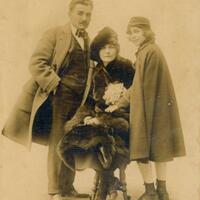
The photographs in this collection, approximately 10,000, date from 1850 to present and chronicle the changing face of New Rochelle. Included are rare photographs of historic houses and daily life from the 19th century, the emergence of the downtown business district from dirt lanes to a bustling commercial district, scenes of people enjoying the waterfront and observing with pride the 225th and 250th anniversaries of the city. In addition to historic views there are images of prominent writers, actors, and musicians who lived here, as well as Veterans of WW I. Most of the items come from the collections of Dominick Bruzzese, the Huguenot and New Rochelle Historical Association, and the New Rochelle Tricentennial Commission.
Browse within this collection
Browse similar collections

Collection Facts
Historical Context
Exhibition "Historic Paintings Unwrapped:" The History Center has over 200 paintings in its collection. Most have not been seen in a very, very long time and are stored in crates and other containers. In October 2009, the History Center brought the crates, a few at a time, into the gallery, to open them up and exhibit the pictures for all to see. Each painting was on display for about a month, and the entire exhibition lasted until the end of April 2010. As we hangDuring The exhibtion was also an oppotunity to evaluate each piece; they were assessed for condition, retention, future storage, and improved record-keeping.
Scope of Collection
An eclectic mix of landscapes and portraits, oils,watercolors, lithographs, and prints; it’s a rich, colorful portrayal by mostly local artists of thelocal people and places.
Browse within this collection
Browse similar collections

Collection Facts
Scope of Collection
The collection features selected images of people and places in New Paltz, New York, and the surrounding region drawn from the Historic Huguenot Street Permanent Collection and Archives. The collection includes photographs, paintings, drawings, and other works dating mostly from the 19th and early 20th centuries. Items include formal studio portraits and group images, as well as local events, architecture, and landscapes. This digitized collection is only a small portion of Historic Huguenot Street’s full holdings. A full list of photographic holdings can be found here on the Historic Huguenot Street website.
Browse within this collection
Browse similar collections

Collection Facts
Historical Context
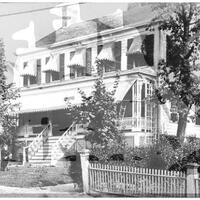
Hempstead is a village located in the town of Hempstead, Nassau County, NY. In the spring of 1644, thirty to forty families left Stamford, Connecticut, crossed Long Island Sound, landed in Hempstead Harbor and eventually made their way to the present site of the village of Hempstead where they began their English settlement within Dutch-controlled New Netherland. During the American Revolution, Hempstead was a center of British sympathizers. In the 19th century Hempstead became increasingly important as a trading center for Long Island. Early Long Islanders made their living in agriculture or from the sea. Hempstead, with its central location, became the marketplace for the outlying rural farming communities.
Scope of Collection
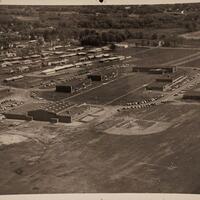
The collection consists of over 500 historic photographs of the village of Hempstead, NY, covering a wide array of subjects. Included in the collection are residences, businesses, places of worship, railroads, schools, civic events, people, libraries, firehouses, and cemeteries.
Browse within this collection
Browse similar collections


Collection Facts
Historical Context
Hiram S. Wilson was born in 1815 to Henry and Nancy Wilson. He married Elizabeth Wickes in 1839 in Sandy Hill (now Hudson Falls), New York. They had seven children. Before the outbreak of the Civil War, the Wilson family moved to Bolton, NY where Wilson was the proprietor of the Mohican House, the oldest hotel in the town. He enlisted in the United Sates Military on November 1, 1861 and was commissioned as captain in Company H of the 93rd New York Voluntary Infantry. His regiment was present at the Peninsula Campaign, Antietam, Fredericksburg, Wilderness Campaign, and Cold Harbor. Wilson died suddenly on March 24, 1864 of erysipelas while stationed in New York City. At the time, he was in command of a detachment of troops who were responsible for escorting new conscripts to the seat of war. He was buried in the Oakwood Cemetery in Troy, NY.
Scope of Collection
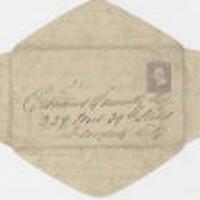
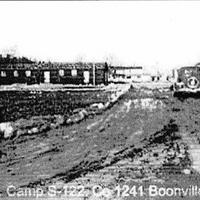
This collection contains letters written by Hiram S. Wilson to his wife, Elizabeth, from 1861 to 1864 with the majority of the letters dating between 1862 and 1863. While most letters were addressed to his wife, there are a few letters written to other family members including his daughter, Stella. Most of the letters were written while he was stationed at various army camps in Virginia and Maryland. He writes about family and home issues but also talks about military activities. Wilson expresses confidence about the army’s abilities and writes about his trust in General McClellan and other Generals. He includes discussions about camp life, troop movement, and general war news. For instance, several letters discuss the passage by Congress of the Militia Act of 1862 and the Confiscation Act of 1862 that allowed the enlistment of African Americans. Additionally, Wilson frequently discusses the weather and his health. He often asks his wife and children to write him more letters. On one occasion, he offers to buy his daughter a new dress if she would write to him.
Browse within this collection
Browse similar collections

Collection Facts
Historical Context
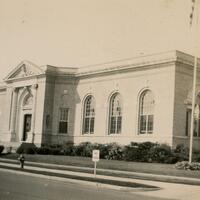
In Highland Hospital 1889-1940, turn of the century photographs and postcards reflect the sense of the Rochester community and the advancement of healthcare in the late nineteenth and early twentieth centuries. Highland Hospital first opened in 1889 as Hahnemann Hospital, one of the first homeopathic hospitals in the United States. The Hospital officially became known as Highland Hospital in 1921. The hospital has continued to grow to meet the needs of the Rochester community and offer state-of-the-art medical care.
Scope of Collection
The collection consists primarily of black and white photographs depicting the hospital and its staff and nursing students during the late 19th and early 20th centuries. There are also photographic postcards of the Hospital.
Browse within this collection
Browse similar collections

Collection Facts
Historical Context
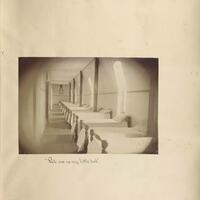
During the 1920's, many of the nursing students at Highland Hospital School of Nursing in Rochester, N.Y. created scrapbooks. Several of these scrapbooks were donated to the Highland Hospital Archives and we've digitized three of them to make them accessible to the public. Highland Hospital School of Nursing Scrapbooks gives a delightful glimpse into the lives of these students and their personal experiences at Highland.
Scope of Collection
This collection of scrapbooks contains photographs of Highland Hospital, the doctors, nurses, and the nursing students during the 1920s. Many of the photographs are labelled with names and dates.
Browse similar collections

Collection Facts
Historical Context
Mostly formal and often posed, these black and white images offer a taste of hospital life during that decade. It was hospital business as usual, with the addition of new wartime measures. Day-to-day scenes such as a doctor reviewing x-ray films with a Dictaphone, and nurses assisting a patient in an oxygen tent are juxtaposed with the then-familiar sight of an Air Raid Warden's Post furnished with fire-fighting equipment.
Scope of Collection
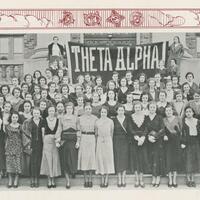
The collection consists of black and white photographs from the 1940s. There are several class photographs from the School of Nursing, as well as photographs depicting medical machinery and its use.