

Collection Facts
Historical Context
The mission of the Heermance Memorial Library is to inspire lifelong learning and to support and enhance the cultural and recreational needs of our community. In her 1907 will, Eleanor Heermance bequeathed her home to establish a library for the town of Coxsackie. To this day, her library provides not only books, but movies, music, audio and e-books, computer and Internet access, programs, and friendly staff.
Scope of Collection
This collection includes historical maps of towns located in Greene County, NY. The maps provide details such as land ownership, businesses, schools, churches, cemeteries, and bodies of water.
Address:1 Ely Street
Coxsackie, NY 12051
Phone: 518-731-8084
Browse within this collection
Browse similar collections

Collection Facts
Scope of Collection
This collection consists of historic images and documents related to New Paltz. This includes photographs of architecture, local families, and events.
Browse within this collection
Browse similar collections

Collection Facts
Scope of Collection
This collection includes postcards, as well as photographic images of houses, local businesses, and community events in the Village of Haverstraw, New York.
Browse within this collection
Browse similar collections

Collection Facts
Historical Context
Harvey Fite was a student at St. Stephen's College until 1930. He returned as a professor, teaching classes in drama and sculpture at Bard College from 1934-1969. Harvey Fite was a vital force in the Bard community, and he helped to shape the college even while he worked to create the monumental landscape work which became Opus 40.
Scope of Collection
This collection includes historic photographs of Fite and his works. Many of the photos included here were given to Bard by his family in 1996 at the presentation of the self portrait sculpture which stands in the Kellogg Library.
Browse within this collection
Browse similar collections

Collection Facts
Historical Context
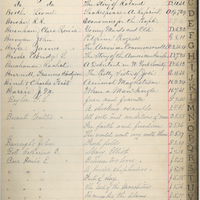
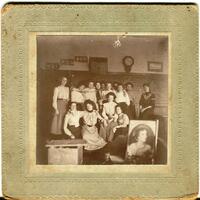
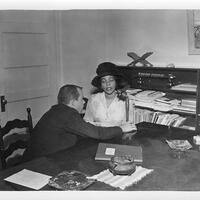
Hartwick Seminary, the first Lutheran Seminary in America, was founded in September 1797. Dr. John Christopher Kunze was named director and taught theology at his home in New York City, Rev. Anthony Braun taught sciences and languages at Albany, and Rev. John Frederick Ernst taught elementary school on the Hartwick Patent.The first seminary building was established on the Hartwick Patent in 1815, and Rev. Ernest Lewis Hazelius became the first principal. The seminary offered an academy and a theological department. In 1816 it was incorporated with 12 trustees appointed, the majority of whom were to be Lutheran clergymen. During the first 20 years the school averaged between 60 and 70 students. The enrollment dropped nearly in half in the late 1830's and 1840's. Women were admitted for the first time in 1851 bringing the enrollment to 89 and in the 1880's it was over 100. In 1888 the Classical Department introduced the Freshman year of a Collegiate Course and in 1927 it expanded to a 4-year college and was moved to Oneonta, New York. The Theological Department took the name Hartwick Seminary when it moved to Brooklyn, New York in 1930. The Seminary closed in the spring of 1940 and consolidated with Hartwick College in 1947. The Academy remained on the original location until 1934 when classes ceased.
Scope of Collection
The documents in this record group span the years 1739 through 1940. The records were not received in a specific order and many were accessioned at different times. Thus, they have been arranged to best reflect the organization and history of the seminary. They are divided into eleven series: Dudde Collection, HC Collection, Day Collection, Yale Collection, Board of Trustees, Course Records, Societies, Publications, Memorabilia, Hartwick Academy, Photographs, Maps, Graphics. The first four series contain related letters and land deeds during John Christopher Hartwick's years in America and the establishment of the institution after his death, with the bulk of the material dating between 1796 and 1878. The remaining series document life at the seminary.
Browse within this collection
Additional Information
Browse similar collections

Collection Facts
Historical Context
Hartwick College was founded in 1797, under the provisions of the will of John Christoper Hartwick, as the first Lutheran Seminary in America. The first Seminary building was erected in 1815 on the Hartwick Patent in upstate New York. In 1888 the Classical Department introduced the freshmen year of a collegiate course and in 1928 it expanded to a four-year liberal arts college and was moved to Oneonta, New York. Today, Hartwick College is an independent, liberal arts and sciences college of about 1400 students and 150 faculty. The College Archives was officially established in 1973 and exists primarily to collect and preserve materials that reflect the biography of John Christopher Hartwick and the educational institutions bearing his name – Hartwick Seminary, Hartwick Academy and Hartwick College.
Scope of Collection
The documents in this record group span the years 1928 to the present. They are divided into five series: Office Files - Publications - Bibliographical and Historical - Photos, Maps, Graphics, Audiovisual - Memorabilia, News Articles, Artifacts. Although there are some gaps in the publications series, there is a strong representation of student, faculty and alumni publications over the years. The biographical and historical series includes publications by or about faculty, staff, students, alumni, or the College itself. The photos, maps, graphics and audio-visual series is very extensive. The audiovisual in particular contains an impressive number of recordings of famous and critical speakers who visited the campus. The news article collection is the strongest aspect of the Memorabilia Series. The articles were compiled in scrapbooks but are available on microfilm. Overall, the collection is a good foundation for a recorded history of the College.
Browse within this collection
Browse similar collections

Collection Facts
Historical Context
Harry Bruno (1893-1978) led a dynamic, fascinating life. When he wasn’t creating history himself, he was directly touched by it. (Bruno’s parents died on the Lusitania; Harry pulled Captain Ernst Lehmann from the blazing Hindenburg in 1937.)
From an early age, Harry was hooked on aircraft, engines and machines. He built a glider when he was 17 and flew in the Canadian Royal Flying Corp during World War I. His knowledge about airplanes and their construction resulted in Bruno becoming the nation’s leading aviation advertiser.
Promotion came naturally to Harry. Along with a friend, Richard Blythe, Harry created the advertising agency Bruno & Blythe. The firm carried a client list that read like a Who’s Who of American innovation: Igor Sikorsky, William Bendix, Standard Oil, Packard Motor Car Company.
Nydia de Sosnowska (d. 1970), a musical comedy star (Nydia D’Arnell), won Harry’s heart. They married in 1930 and moved to Montauk. (Carl Fisher had hired Bruno to promote interest in Montauk as a resort playground.)
Harry and Nydia were sportsmen who loved fishing and hunting. Nydia, an accomplished surfcaster, set several records. Entertaining in “Green Chimneys,” their large, rambling stucco, the Brunos’ home was also affectionately known to their friends as “Bruno’s Bistro.”
The photographs in this collection speak of a happy life well lived. Green Chimneys had exalted views of the Atlantic Ocean, Block Island Sound, and the Brunos’ extensive gardens. It was bucolic, beautiful, and serene.
Scope of Collection
Harry and Nydia Bruno moved to Montauk in 1930. They enjoyed the sportsman’s life, and were known for entertaining. These images span the years 1930 through the 1960s.
Browse within this collection
Browse similar collections

Collection Facts
Historical Context
The St. Lawrence-Lewis School Library System collection consists of high school yearbooks from area high schools. The Pirate’s Log is the annual yearbook of the Harrisville Central School.
Scope of Collection
This collection consists of issues of the Pirate’s Log dating between 1954 and 2010.
Browse within this collection
Browse similar collections

Collection Facts
Historical Context
Harriet Martin (1868-1949) was a niece of Edward Martin (1811-1893), a wealthy Red Hook farmer and railroad pioneer. Edward purchased land in Illinois from the railroad companies and made his fortune in real estate. Harriet, born in Illinois, traveled between there and Red Hook and, using dry plate photography, documented her visits to various sites in Chicago and in Red Hook. She married Marvin Hull Dey, of Iowa City, in 1907 and is buried there. The original donation of her glass plate negatives to the Red Hook-Tivoli Bicentennial Committee was arranged by Sylvester Pulver and Louise Pulver Breazzano, descendants of the Pulvers who worked for the Martins. Clara Losee later donated the slides to the Egbert Benson Historical Society, predecessor to Historic Red Hook.
Scope of Collection
Selected images of Red Hook and the Hudson Valley by Harriet Martin Dey, most photographed between 1899 and 1900. They depict local structures (houses, mills, hotels, churches), Hudson River scenes, and family activities. The collection consists of 167 glass plate negatives and prints made from the negatives.
Browse within this collection
Browse similar collections

Collection Facts
Historical Context
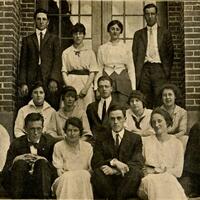
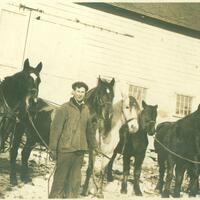
The Town of Amherst, located in Erie County, New York, is a 54-square mile suburban community north of the City of Buffalo. Today Amherst includes the Village of Williamsville and the hamlets of Eggertsville, Getzville, Snyder, Swormville, and East Amherst. The Jacob Hardy farm was located at 2050 North French Road in Amherst, NY, across the street from the Dettmer farm. The Philip Hardy farm was on Campbell Boulevard, near Schoelles. While only a handful of working farms remain in operation in Amherst today, the northern section of the town was once entirely agricultural. These photographs are from an album belonging to the donor, Marguerite Hardy. Mrs. Hardy allowed Amherst Museum to scan the album contents and then to accession the digital scans.
Scope of Collection
The time period for the photo collection is roughly 1913-1947, with the bulk of the photos taken in the 1940s. The black-and-white images show seasonal views of people, structures, machines, animals, and landscapes commonly associated with agriculture and farming of the period. There are also images of several family members who served in the U.S. Armed Services in WWII and of an elementary school class of roughly the same period.