
Collection Facts
Historical Context
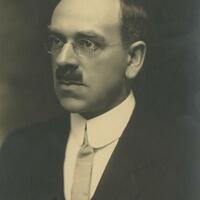
Norman Luther Woodford (1898-1985) was born in Marcellus and served in World War I before graduating from Syracuse University with a BS in 1919 and MD in 1921. His internship was at the Hospital of the Good Shepherd in Syracuse and, in 1922, he established a private practice at Union Springs and married Helen E. Welsh, with whom he had four daughters: Sarah Jean, Claire Marian, Norma Agnes, and Mary Elizabeth. After 1924, he was the Health Officer for several towns in Cayuga County, including Aurelius, Sennett, Fleming, Springport, and Union Springs. From 1944 to 1968, he served as the coroner for Cayuga County and was a member of the staffs of Mercy Hospital and Auburn City Hospital. Dr. Woodford was the Union Springs School doctor from 1930 to 1968 and was a member of the Union Springs Board of Education from 1931 to 1955. His memberships included the American Medical Association, the New York State Medical Society, and the Cayuga County Medical Society, Past Vice President.
Scope of Collection
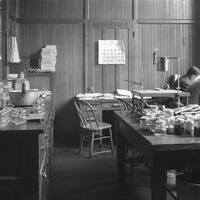
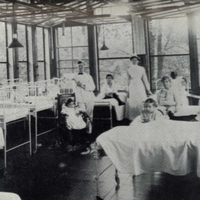
This collection contains documents on the influenza epidemic of 1918 from Norman L. Woodford, who graduated from Syracuse University College of Medicine in 1921 and was a Health Officer and Coroner of Cayuga County.
Browse within this collection
Additional Information
Browse similar collections

Collection Facts
Historical Context
These photographs were taken by surveyor Norman Stewart Foote.
Scope of Collection
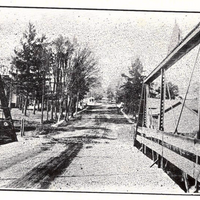
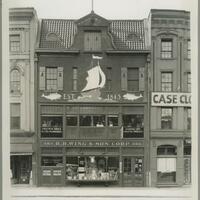
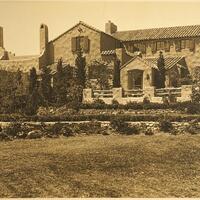
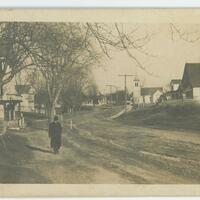
This collection of photographs was taken in the Adirondacks from 1908 to 1930. The images depict various locations, including Boreas River, Branch River, Clear Pond, Elk Lake, Long Lake, among many others. Besides nature scenes, there are also images of cabins, taverns, clubhouses, and a main street. Also included is a photograph of Norman Foote.
Browse within this collection
Browse similar collections

Collection Facts
Historical Context
Holy Trinity Monastery is a Russian Orthodox men’s monastery located in Herkimer County in central New York State. Two Russian monks, Father Panteleimon (Nizhnik) and Father Iosif (Kolos) founded Holy Trinity Monastery in 1930. They were joined in 1946 by a group of Russian monks led by Bishop Serafim (Ivanov). That year, the brotherhood of the monastery began construction of a cathedral dedicated to the Holy Trinity on the site of the monastery. In 1948, Holy Trinity Seminary was opened with the mission of training young men to serve as clergy and future leaders in the Russian Orthodox Church. The first Dean of the Seminary, Nikolai Nikolaevich Aleksandrov, was instrumental in the development of Holy Trinity Seminary’s academic tradition, and was also involved in the planning and execution of the construction of Holy Trinity Cathedral. Aleksanrov also served as an early chronicler of the history of Holy Trinity Monastery and Seminary.
Scope of Collection
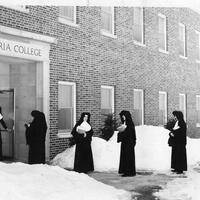
This collection consists of a selection of historical photographs compiled by Aleksandrov and pertains to the early years of Holy Trinity Monastery and Seminary. These pictures chronicle the daily life of the monks and seminarians, while also capturing the traditional religious services of the Russian Orthodox Church. The photographs in this collection are primarily shot in black and white film, though color film is used more frequently in the more recent photographs.
Browse within this collection
Browse similar collections

Collection Facts
Historical Context
Nickell Snake Oil Collection
Although snake oil has become synonymous with medical quackery in today's parlance, not many are aware of how it came to be so. This digital collection from the Center for Inquiry Libraries' Dr. Joe Nickell Collection features 27 items relating to the sale of these "patent medicines," including bottles of snake oil, other cure-all liniments, various advertisements, and even a taxidermic rattlesnake.
The latter half of the 19th century saw an influx of Chinese immigrants bound for work on the railroads. Some of them brought the oil of the Chinese water snake with them, a remedy that had been used as a liniment for aches and pains for centuries in China. The oil of the Chinese water snake was "rich in the omega-3 acids that help reduce inflammation" and was thought to be quite effective. Some Americans, most notably Clark Stanley, capitalized on this Chinese remedy by offering an Americanized version purportedly made with rattlesnake oil. However, rattlesnake oil does not have the same levels of omega-3 acids in it as the oil of the Chinese water snake (Source: Gandhi, 2013).
The efficacy of rattlesnake oil is not how snake oil became associated with quackery. Rather, the advent of the Pure Food and Drug Act of 1906 spelled the end of snake oil and other "patent medicines" because it aimed at "preventing the manufacture, sale, or transportation of adulterated or misbranded or poisonous or deleterious foods, drugs, medicines, and liquors, and for regulating traffic therein, and for other purposes" (Source: History of Medicine Division, 2004). Federal investigators later discovered that Stanley's snake oil did not in fact contain any snake oil upon seizing one of his shipments (Source: Gandhi, 2013).
This collection is a representation of the origins of a cultural phenomenon that falls in line with the mission statement of the Center for Inquiry: to objectively observe and state facts about a believed-to-be significant object. The main stakeholders for the organization and digitization of this collection are researchers who are interested in the origins of cure-alls and quackery. Snake oil is not only representative of the cure-all phenomenon, but it is also flamboyant and eye catching. While there have been plenty of cure-alls before and since, snake oil is significant because it is the one that is so well remembered. Because it was one of the first cure-alls to be widely advertised and later debunked, it became a cultural icon for sham medicine and false advertising.
Additional Resources
Gandhi, L. (2013, August 26). A history of 'Snake Oil Salesmen'. [Web log message].
Hagley Museum and Library. (n.d.). History of Patent Medicine.
History of Medicine Division. (2004). Pure food and drug act (1906). United States statutes at large (59th Cong., Sess. I, Chp. 3915, p. 768-772; cited as 34 U.S. Stats. 768). In Michael North (Ed.)Medicine in the Americas: Historical Works [Internet]. Bethesda, MD: National Library of Medicine.
National Network of Libraries of Medicine. (n.d.). From Snake Oil to Penicillin: Evaluating Consumer Health Information on the Internet.
Nickell, J. (1998, December). Investigative files: Peddling snake oil. Skeptical Inquirer, 8(4).
Scope of Collection
The collection includes many advertisements and medicine bottles with packaging, some still containing original contents. There are also photographs and ephemera relating to the snake oil industry from the late 1800s to early 1900s.
The physical items in this collection are currently being held at the Buffalo Museum of Science. For inquiries, please contact the museum.
Browse within this collection
Browse similar collections

Collection Facts
Historical Context
Nickell Collection of Dr. R.V. Pierce Medical Artifacts
It was in Buffalo where Pierce really began his ascendency to fame as a leading seller of mail-order patent medicines, including "Dr. Pierce's Golden Medical Discovery Pills," "Dr. Pierce's Favorite Prescription Tablets," and "Dr. Pierce's Pleasant Pellets." Many of Pierce's cures were aimed at addressing "female illnesses." Pierce's medicines, like several other remedies available at the time, would often include alcohol and opium.
The enormous demand created for Pierce's remedies led to his building of the World's Dispensary Building (664 Washington Street), from where his numerous cures were manufactured, packaged, and distributed to people around the world. Pierce went on to establish Pierce's Palace Hotel in 1878 to accommodate the many patients who came flocking to seek his apparent curative skills. The building burned down in 1881 and was replaced with the Invalids Hotel and Surgical Institute (at 663 Main Street). Pierce also had a facility in London, England. Pierce incorporated his entire medical "empire" under the name World's Dispensary Medical Association in 1883. Later, the company became "Pierce's Proprietaries" and continued under the supervision of his son, Dr. Valentine Mott Pierce, until the late 1940s.
Perhaps the most significant accomplishment of Dr. Pierce was his ability to market and sell his medicines more successfully than almost any other physician at a time when availability of home remedies and nostrum cures were at their height. His descriptions of illnesses and their symptoms, with just the right amount of medical terminology and human pathos for cures, made them seem authentic and scientifically possible. Pierce was a master of the media, using newspapers, broadsides, and later billboards, to saturate the country with word of his success. Many of the original signs painted on barns and other buildings can still be seen along the roads and highways throughout the U.S.
Another marketing skill employed by Pierce was that of the testimonial. His advertising, which includes his book, The People's Common Sense Medical Adviser (essentially an advertisement for his various products), sold millions of copies, and included testimonials from patients whose claims of near-miraculous cures convinced millions of people to try the remedies of Dr. Pierce. In some ways, the media-savvy skills of Pierce and the resounding public response to his bold assurances of cures sound remarkably like today's media campaigns waged by various pharmaceutical companies.
Pierce was a strong proponent of free enterprise, and took a lead in the fight against the Pure Food and Drug Act of 1906. He also was involved in a lawsuit against The Ladies Home Journal, which tested "Dr. Pierce's Favorite Prescription" and reportedly found traces of opium, digitalis, and alcohol (Pierce actually won the case).
Pierce also served as a New York State Senator from 1878-1879 and then as a Republican representative for the 32nd Congressional District of New York in the U.S. House of Representatives from 1879-1880, when he resigned due to ill health.
Pierce spent his last years in his winter home in St. Vincent, Florida, where he passed away in 1914. He is buried in Forest Lawn Cemetery in Buffalo, NY.
Related Resources
Dr. Pierce biography and information on architectural buildings
The People's Common Sense Medical Adviser in Plain English by R.V. Pierce, MD, 1895
History of Patent Medicine
Secret Nostrums and Systems of Medicines: A Book of Formulas, compiled by Charles W. Oleson, MD, 1903
Eclectic Medical College (Cincinnati, Ohio)
Origins and History of the FDA
Dr. Pierce's Golden Medical Discovery, Sonoma Valley barn with Pierce advertisement
Scope of Collection
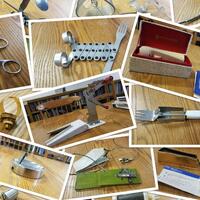
The collection includes prescription bottles and packaging, advertisements,and a book of medical advice by R.V. Pierce. Many of the materials are undated. The rest date between 1885 -1890 and 1928 -1938.
Browse within this collection
Browse similar collections

Collection Facts
Scope of Collection
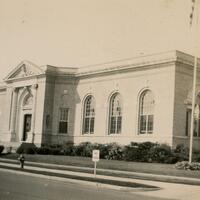
Directories in this collection range from 1886-1923 and include all of the directories for Niagara Falls up to the current copyright date.
Browse similar collections

Collection Facts
Historical Context
Niagara County Community College's Entricy Yearbook was first published in 1965, coinciding with the College's first graduating class. The name Entricy, pronounced: N-Tri-C, is a play on the College's nickname NCCC or N-Triple-C.
Scope of Collection
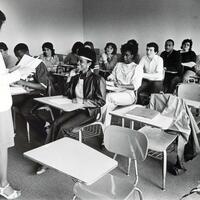
The yearbooks are a graphic resource documenting student life at NCCC: including academics, clubs, athletics, arts, theatre, and recreational events.
Browse within this collection
Browse similar collections

Collection Facts
Scope of Collection
These newsletters chronicle the history of the Cary Institute, including our inception as the Cary Arboretum of the New York Botanical Garden and establishment of the Institute of Ecosystem Studies (IES).
Browse within this collection
Browse similar collections

Collection Facts
Historical Context
As Newburgh Parish grew into a village and town, churches became central to the community’s stability and welfare. Although Newburgh began as a Lutheran parish, within a century Reformed Protestant churches gained strength and their records tell a tale of social charity and power. The volunteer Fire Department, chartered back in 1797, remained an independent civic organization through the first decades of the 20th Century.
Scope of Collection
This collection contains late 18th century Fire Company records and 19th century Church records from Newburgh, NY.
Browse similar collections

Collection Facts
Historical Context
The Palatines arrived in 1709, having been granted a patent by Queen Anne in 1708. In subsequent land divisions in 1715, a central area was set aside to support school and church through land leases in a European Glebe. While no records exist for Newburgh’s life as a parish (1709-1796), the fire brigades were granted a charter from New York State to operate officially in 1797. Three years later, particularly because of the need for administering the water supply, residents were granted a village charter. Essential to the survival of these early communities were the census and the assessment. Newburgh’s growth soon required the organization of citizens into oversight boards.
Scope of Collection
This collection contains municipal records from Newburgh, New York dating from the late 18th century through the early 20th century. Included are Alms House records, Glebe records, Parks Commissioner records, Water Commissioner records, Town/Village records and Slave records.