
Collection Facts
Scope of Collection
The NCCC Annual Reports collection summarizes each academic year at Niagara County Community College, including financial statements, enrollment numbers, curriculum statistics, current research activities, faculty awards, and community events. The collection includes NCCC's first annual report published in 1964, through to the 2014-2015 academic year. Facility upgrades such as the Niagara Falls Culinary Institute and Village Housing Suites are documented. Faculty promotions, as well as retirements, are listed. Alumni news is another frequent feature.
Browse within this collection
Browse similar collections

Collection Facts
Historical Context
National Freedman's Relief Association was an organization dedicated to improving the lives of African Americans after the Civil War.
Scope of Collection
The collection includes an issue of the National Freedman newspaper, Volume 1, Issue 3, published by the National Freedman's Relief Association in 1865. The contents relate to the anti-slavery movement and assistance to newly freed slaves.
Browse similar collections

Collection Facts
Historical Context
The National Anti-Slavery Society published the National Anti-Slavery Standard as a weekly newspaper from 1840 through 1870 in Philadelphia and New York City.
Scope of Collection
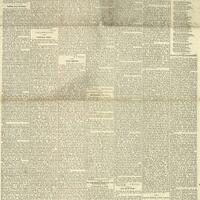
The collection contains 144 issues of the abolitionist newspaper, National Anti-Slavery Standard.
The bulk of the issues date from 1855-1859. The writings pertain to abolitionism, suffrage, and equality for all.
Browse similar collections

Collection Facts
Scope of Collection
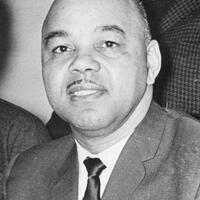
This collection includes images from the archive of the Nathan S. Kline Institute. They show former Institute directors, as well as some State and local politicians, and other notable mental health figures. The images date from the mid-1960s to the mid-1980s.
Browse within this collection
Browse similar collections

Collection Facts
Historical Context
The area that is now Rensselaer County was under British control until after the American revolution. The area became part of the Albany area in the 1790s and was named after the duke of the area, Nassau, in 1808. The Rensselaer County Agricultural and Liberal Arts Society leased land to operate a yearly fair in 1892 which led to the creation of the Nassau Fair. This annual event continued until 1944.
Scope of Collection
This collection contains material from 1896 - 1910 related to the Rensselaer County Fair.
Browse within this collection
Additional Information
Browse similar collections

Collection Facts
Scope of Collection
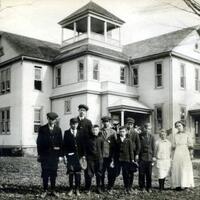
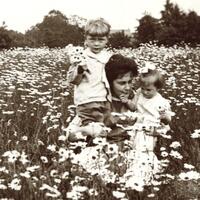
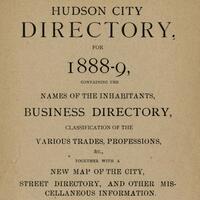
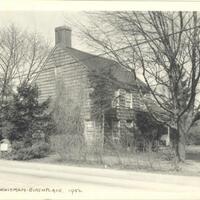
This collection consists of documents, images, and postcards relating to the history of Nanuet, New York. It includes newspaper clippings from events and historical images of local landmarks, businesses, and organizations, such as the Nanuet Fire Department.
Browse within this collection
Browse similar collections

Collection Facts
Historical Context
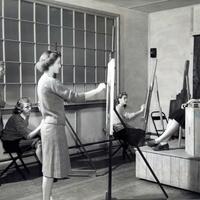
Life has been a wonderful panorama, according to Nancy Skeele Edwards. Growing up during World War II as an “Army Air Corps Brat,” she moved from one military base to another with her family, attending twelve different school systems prior to the seventh grade. At one location Nancy’s neighbor was a portrait artist. She was seven years old and modeled for his drawing classes. Nancy’s interest in drawing and painting continued to grow. By the time she was in the eighth grade, a very talented, unique and gifted artist, Gordon Muck, started his teaching career at her school in DeRuyter, New York. “Because of his encouragement and guidance,” Nancy received a full tuition art scholarship to Syracuse University. At different times, Gordon and Nancy were both art instructors in the Fayetteville-Manlius School District.
Nancy has always enjoyed working with people and especially children. She has tirelessly worked as a teacher, community activist, historical advocate, arts organizer and exhibitor, library volunteer, religious educator, as well as for countless other causes near and dear to her very big heart. She shared a long and successful marriage with local TV personality and past Chair of the Broadcast Journalism Department at Syracuse University’s Newhouse school Don Edwards, as well as raise two bright and independent children. In 1990 she retired from the Fabius-Pompey School District, after 30 years of teaching art in several surrounding public school districts. Now in retirement, she hopes there is time to paint. At this time watercolor is the medium Nancy finds most satisfying. Living in Central New York State, having the opportunity to travel, is a never-ending source of painting inspiration.
The last two paragraphs of Nancy’s autobiography, written in 1953 as a high school senior, encapsulates Nancy Skeele Edwards’ attitude towards life and her personality extremely well. She writes in her own words, “Nancy is very proud of her family and she hopes someday to repay her marvelous parents for all of their love, kindness, understanding and help through all the years…...most of all Nancy wants to make her place in this world, helping in some way to establish a better and peaceful universe by unity.”
No one could say it any better than Nancy herself.
This short biography was created from “Nancy Skeele Edwards, 2006, Artist’s Statement”, as well as her 1994 resume and 1953 autobiography.
Scope of Collection
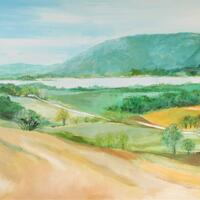
This collection contains paintings by Nancy Edwards, mostly done in watercolor or acrylic. Subjects include local and regional landscapes, portraits, and still life objects.
Browse similar collections

Collection Facts
Scope of Collection
N-Triple-Scene first aired in September 1990 and was produced monthly during the academic year until October 2002. Each episode is about 30 minutes long and features campus and community news. Guest speakers such as Robert F. Kennedy, Jr. and Ralph Nader are interviewed. Several community events are featured such as Niagara Falls’ Festival of Lights, Lockport’s Farm & Home Days, Newfane’s Harvest Festival, and Lewiston’s Peach Festival. There are interviews with College employees about new programs and services. The end of each show, called N-Trip’s Clips, contains snippets of the month’s activities, such as theatre performances, poetry readings, gallery openings, community service, and sporting events.
Browse within this collection
Browse similar collections

Collection Facts
Scope of Collection
This collection contains historical artifacts handpicked from over 27,000 to showcase the diversity of Museum Village’s collection. This includes antique clothing and tools, as well as our mastodon skeleton, a Corliss steam engine, and a Loeb respirator.
Browse within this collection
Browse similar collections

Collection Facts
Historical Context
Ever since the invention of moveable type in the mid-1400s, the public’s appetite for tales of shocking murders —“true crime” —has been an enduring aspect of the market for printed material. For more than five centuries, murder pamphlets have been hawked on street corners, town squares, taverns, coffeehouses, news stands, and book shops. Typically, a local printer would put together a pamphlet that claimed to be a true account of a murder, consisting of a narrative, trial transcript, and/or written confession of the murderer before his or her execution. Pamphlets varied in length, from eight pages to over two hundred, were printed on cheap paper, and usually sold for a low price.
Scope of Collection
This collection is comprised of the covers of 124 pamphlets.