
Collection Facts
Historical Context
The Oneonta State Normal School, fondly known as “Old Main” in later years, was first built in 1889. The construction began in July of 1888 and was finished by September 4, 1889 when it was dedicated as the Oneonta State Normal School. On February 15, 1894, less than five years later, the building was destroyed by a fire. The fire spread from a storage room adjoining the furnace room and quickly consumed the entire structure. The school was rebuilt in that same year under the leadership of Dr. James M. Milne. The second Old Main was built slightly larger than the original. It was in use until the early 1970s. With the new campus, the building was no longer being used for classes. The college couldn’t maintain the building and it was offered to the city of Oneonta. The city did not have a use for it and it was put up for sale. It was sold twice and both times the owners intended to turn the building into apartments, but the plans were not possible. The building was demolished in 1977.
Scope of Collection
This collection contains historical information about the Oneonta Normal School, also known as Old Main. Included in this collection are newspaper articles (1894 - 1987), photographs (1889 - 1977), and memorabilia items (1889-1984) related to the school.
Browse within this collection
Additional Information
Browse similar collections

Collection Facts
Scope of Collection
This collection contains newspaper clippings of Watertown (NY) Daily Times articles from 1941 - 1956 written by David F. Lane of old houses in the North Country.
Browse within this collection
Browse similar collections

Collection Facts
Historical Context
The St. Lawrence-Lewis School Library System collection consists of high school yearbooks from area high schools. The Devilog is the annual high school yearbook of the Ogdensburg City School District.
Scope of Collection
This collection consists of issues of the Devilog dating between 1946 and 2020.
Browse within this collection
Browse similar collections

Collection Facts
Historical Context
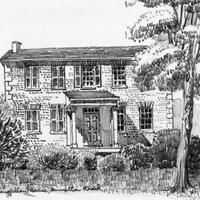
The octagon building can be found in use throughout history. One of the earliest known octagonal structures is the Tower of Winds, 100-50 B.C., in Athens, Greece. At 42 feet high by 26 feet in diameter, this marble octagonal building, still standing, was constructed for the purpose of measuring time. The main period of construction of octagon houses in the United States occurred in the 1850s and 1860s. These buildings could be found in more than twenty states and Canada with the largest numbers being in New York State. The Dutch settlers that came to New York were familiar with this type of structure, having seen many octagonal churches in use in Holland. Subsequently, several small octagonal churches were built in New York and New Jersey in the late 17th and early 18th centuries. In 1854, Orson Fowler published "A Home for All," expounding upon the virtues of the octagon house with regard to the ease and expense of construction, as well as the resultant safety in utilization of specific building materials and increased efficiency of usable space and temperature regulation. This, coupled with changing styles of home construction in form and technique, led to a surge of production of eight-sided homes in the United States at that time.
Octagon houses are characterized by an octagonal (eight-sided) plan, and often feature a flat roof and a veranda all round. Their unusual shape and appearance, quite different from the ornate pitched-roof houses typical of the period, can generally be traced to the influence of one man, amateur architect and lifestyle pundit Orson Squire Fowler. Although there are other octagonal houses worldwide, the term octagon house usually refers specifically to octagonal houses built in North America during this period, and up to the early 1900s.
Scope of Collection
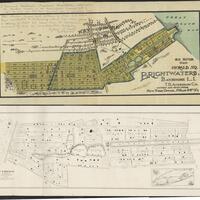
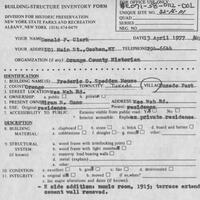
This collection comprises primarily photographic images of octagon houses from locations in the United States, over half of them from New York State. The information and photographs for the compilation were supplied by Stephen R. Leonard, Sr. Additional photographs and research came from Mrs. K.R.J. Edholm and Bertha Guptill.
Browse within this collection
Additional Information
Browse similar collections

Collection Facts
Historical Context
In the summer of 1976, Oceanside celebrated the United States' 200th anniversary alongside the rest of the country. Local festivities included a parade, re-enactments, musical performances, dances, and the creation of a community quilt.
Scope of Collection
Digital collection includes photographs from 1976-1977.
Browse within this collection
Browse similar collections

Collection Facts
Scope of Collection
In 2011, the Oceanside Historical Society disbanded. Most of their collection was donated to the Long Island Studies Institute at Hofstra University. Materials pertaining to the history of the Oceanside Library were given to the library. The Oceanside Library Historical Collection consists primarily of scrapbooks created by Marion Sager, who was Oceanside Library’s first librarian. The collection also contains photographs, correspondence, news clippings, brochures and ephemera, all related to the library’s board, staff, patrons and events dating from 1937 to the present day.
Browse within this collection
Browse similar collections

Collection Facts
Historical Context
In 1833, Oceanside, then called Christian Hook, became School District #11 in the Town of Hempstead, N.Y. In 1889, it became a Union Free School District. In June 1903, the first High School Commencement was held. Oceanside’s Senior High School class of 1931 was the first class to produce a yearbook.
Scope of Collection
This digital collection includes yearbooks published by the students of the Oceanside High School, Oceanside N.Y. The following yearbooks are missing from the digital collection: 1934-1940. Additionally, the most recent yearbooks are not uploaded to the digital collection.
Browse within this collection
Browse similar collections

Collection Facts
Historical Context
The land that is now Oceanside was originally inhabited by the Lekawe (Rockaway) and Munsee Lenape Native Americans, followed by the Dutch, and then the English. Around 1682, the area became known as Christian Hook. Later, it was renamed Oceanville in 1864, Ocean Side 1890, and finally Oceanside 1918.
Scope of Collection
This collection includes 20th century photographs, postcards, letters depicting Oceanside community life, residents, homes, landscapes, businesses, houses of worship, and streets.
Browse within this collection
Browse similar collections


Collection Facts
Scope of Collection
This collection contains historical documents related to the creation and maintenance of the Nyack Turnpike, which connected Nyack to Suffern. It includes, among other items, the original petition to create the Turnpike, work contracts for its construction, toll markers, and maps.
Browse within this collection
Browse similar collections


Collection Facts
Scope of Collection
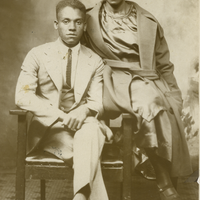
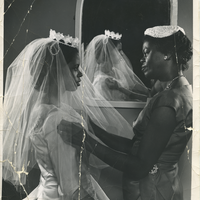
The Nyack Record Shop Project was a 2018 collaboration between the Historical Society of the Nyacks and the Edward Hopper House to gather the stories of Nyack's African-American residents.