
Collection Facts
Historical Context
The Pan-American Exposition was a World’s Fair held in Buffalo, New York in 1901. Buffalo was one of the largest American cities at the time and was chosen as a World’s Fair site in part due to its proximity to major railways. The Exposition showcased many exhibits, most notably the use of electricity. Hydroelectric power generated by the Niagara River powered the Exposition grounds and buildings. President William McKinley was assassinated while attending the Exposition.
Scope of Collection
The collection contains 24 scrapbooks of newspaper clippings from 1897 through 1904 that chronicle preparation for the 1901 Pan American Exposition, the event itself, the assassination of President McKinley, and the Exposition's impact on Buffalo, New York. It is believed that these were the first scrapbooks compiled at the Buffalo & Erie County Public Library.
Browse similar collections

Collection Facts
Historical Context
The Pan-American Exposition (Pan-Am), which took place in Buffalo, NY from May 1 to November 1, 1901, was a World’s Fair designed to recognize the independence and growth of the nations of the Western Hemisphere and to celebrate the technological advances of the 19th century. Dozens of temporary buildings, made from wood and plaster, were constructed in the year and a half before the Exposition opened. Painted according to an intricate color scheme, the buildings were brightly-colored and inspired the nickname “Rainbow City.” Their ornate features blended classical architecture with Spanish influences from Latin America. Inside, visitors enjoyed cultural, artistic and technological exhibits. Other attractions on the Pan-Am grounds included a vibrant Midway, sporting events and concerts.
Unfortunately, the Pan-Am’s legacy was marred by the assassination of President William McKinley at the fair’s Temple of Music, which resulted in Theodore Roosevelt’s inauguration as president of the United States in the Site’s library on September 14, 1901.
Scope of Collection
This collection consists of many three-dimensional objects including spoons, paperweights, glasses, and pins as well as a rich paper-based collection of booklets, daily programs, tickets, and postcards. While the bulk of the Site’s collections consists of souvenir material, there are many rare items in the collection including a waiter’s jacket from the Streets of Mexico restaurant on the Pan-Am’s Midway and a visitor’s sign-in book from the private retreat of the Pan-Am’s Board of Directors.
Browse within this collection
Additional Information
Browse similar collections

Collection Facts
Scope of Collection
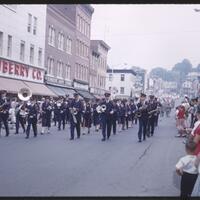
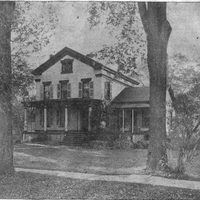
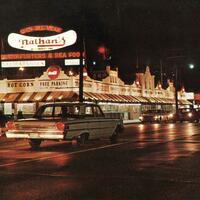
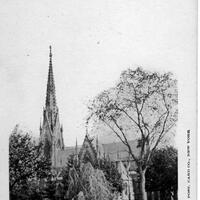
This collection consists of historical postcards, documents, and images relating to Palisades, New York.
Browse within this collection
Browse similar collections

Collection Facts
Historical Context
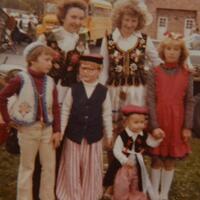
Methodist Committee for Overseas Relief - The MCOR was founded in 1940 in response to the humanitarian disaster of World War II. One of the primary objectives of the MCOR following the war was to find homes for the refugees displaced by the war. In Elmira, Harvey O. Hutchinson, member of the Hedding Methodist Church and retired Superintendent of Elmira City Schools, worked as the local liaison arranging homes and jobs for displaced persons from Eastern Europe resettled in the Twin Tiers.
Scope of Collection
The Overseas Relief Papers include case files for displaced persons placed in the Twin Tiers, and assorted administrative papers and correspondence, 1949-1951.
Browse within this collection
Additional Information
Chemung County Historical Society
Browse similar collections

Collection Facts
Historical Context
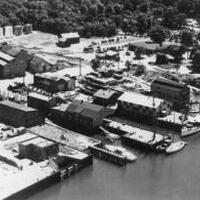
The Otsego Lake Historical Collection is a selection of primary resources from the Library’s collection that illustrate the landscape and historic importance of Otsego Lake in Cooperstown, NY. This digital gallery was created to accompany an extensive bibliography of secondary sources and Museum objects published by NYSHA Research Library and Fenimore Art Museum. Digitization and creation of the Otsego Lake Historical Collection & Bibliography was made possible by the Gladys Krieble Delmas Foundation.
Scope of Collection
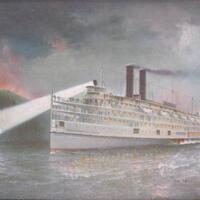
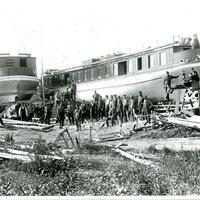
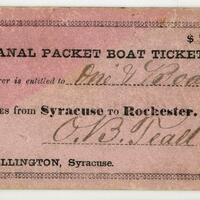
The collection includes postcard and map images of the lake and historic markers, ephemera illustrating lake-related transportation during the 19th and 20th centuries, manuscripts relating to the Sullivan-Clinton Expedition during the American Revolution, and a publication created by former NYSHA librarians with annotations on how Otsego Lake figured into the novels of James Fenimore Cooper.
Browse within this collection
Additional Information
Fenimore Art Museum
Browse similar collections

Collection Facts
Historical Context
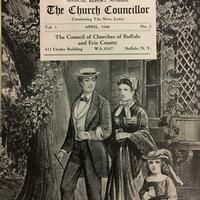
The Woman’s Christian Temperance Union (WCTU) is an American organization that was founded in 1874. The WCTU was one of the largest and most influential women’s groups of the 19th century. Among the many causes the WCTU has supported as an organization are abstinence of alcohol, the protection of women and children at home and work, and women’s right to vote. There were chapters throughout the United States that fought at the local and state level to promote these causes.
Scope of Collection
This collection of 9 items, includes 1916 and 1917 annual reports of the Woman's Christian Temperance Union of the State of New York; Minutes and convention reports of the Otsego County chapter from 1904 to 1943; and other local WCTU records, particularly of Unadilla from 1927 to 1954.
Browse within this collection
Additional Information
Huntington Memorial Library
Browse similar collections

Collection Facts
Historical Context
Oswego is a port city on Lake Ontario in Upstate New York. The region has deep ties to the Iroquois and is named after an Iroquoian word which means a “pouring out place” referring to its location at a rivermouth of Oswego River. The area was established as a trading post by the British in the early 18th century. Oswego County was formally incorporated in 1816. Oswego was a main hub for transportation not only as a port-city, but also through canals and railways.
Scope of Collection
The collection includes mid-18th to early 20th-century city directories for Oswego. The directories contain listings for businesses and residences in Oswego and neighboring areas.
View Oswego City Directories 1852-1981 from the Oswego County Historical Society. This includes those not found in the Oswego Public Library's collection.
Browse within this collection
Browse similar collections

Collection Facts
Scope of Collection
This collection includes historical photographs of Orange County Community College (SUNY Orange), including several aerial landscape shots of the campus. It also contains oral history interviews about the founding of the College and a short video from the 1960s showing the Sunken Gardens, the tennis court and the outside of various campus buildings (Hudson, Orange, Sarah Wells).
Browse within this collection
Browse similar collections

Collection Facts
Scope of Collection
This collection includes the F.W. Beers County Atlas of Orange County from 1875 and the A.H. Muller Atlas of Orange County, New York from 1903. The atlases include intricate maps of towns and villages in Orange County, including details such as land ownership, schools, bodies of water, churches, business and land divisions.
Browse within this collection
Browse similar collections



Collection Facts
Historical Context
Tompkins County is in the west central part of New York State, south of Syracuse and northwest of Binghamton. It is usually geographically grouped with the Finger Lakes region, but some locals consider themselves to be part of Central New York or the Southern Tier. The city of Ithaca is the county seat. The county is also home to Cornell University, Ithaca College and Tompkins Cortland Community College. The Cayuga people, part of the Haudenosaunee, call this land home.
Scope of Collection
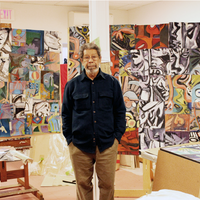
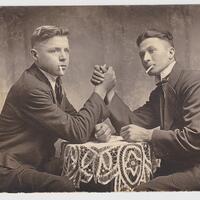
The History Center in Tompkins County understands that we all have a history, a story to share, and are part of the community’s collective history. The Oral History of Tompkins County Collection aims to amplify this collective history. The collection contains audio recordings that were conducted beginning in 2015. The people interviewed reside and/or work in Tompkins County. Many of the interviews are conducted by young people in the community – either high school students or students at one of the colleges. The interviews are accompanied by a photo of the interviewee and the transcript of the interview.
Browse within this collection
Additional Information
History Center in Tompkins County