
Collection Facts
Historical Context
The Pioneer was the annual yearbook of first the Potsdam Normal School and then of SUNY Potsdam after the SUNY school system was established in 1948.
Scope of Collection
This collection contains issues of the Pioneer dating between 1897 and 2012
Browse similar collections

Collection Facts
Historical Context
Angelo Solimino was born in Orange, NJ. His family moved to Queens when he was only one. He stayed in Queens until he was drafted into the Army. Mr. Solimino attended St. Joseph's Parochial Elementary School and later went to Bryant High School. Upon graduation he began work at a steel plant in the area.
Mr. Solimino was then drafted into the US Army at the age of twenty-one. Upon his discharge from the military, he obtained work at Astoria Federal Bank as a teller. Over Mr. Solimino's career at the bank, he was able to work himself up to VP of Mortgage Department. He worked for Astoria Federal Bank for over 36 years.
Mr. Solimino married his first wife, Lorretta, when he was in his twenties. They had five children together, one girl and four boys. His wife died Sept. 21, 1974.
Five years latter he met Rita at the bank; they fell in love and were married not long after. Mr. and Mrs. Solimino currently live in Syosset.
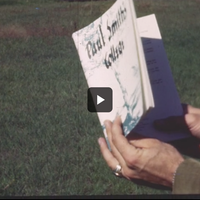
While in service to the Army, Mr. Solimino was sent with the 805 Tank Destroyers Co. C to North Africa. General Rommel only had four known places to supply in the desert. As the Allies tried to push Rommel up from the south, the 805th was put in Rommel's way to try to slow him down. They were capture by Rommel's troops in North Algeria on February 17th 1943. The 805th was sent to a transit camp via Italy and the Brennan Pass. After being capture one of Mr. Solimino's officers changed his pay book to make it appear that Mr. Solimino was an officer. This allowed him to go to a POW for officers opposed to a work camp for the enlisted men. While in the POW camp for 2 years, 2 month and five days, Mr. Solimino created this log to help keep his sanity. Upon being liberated by the Russians, on April 22, 1945; Mr. Solimino left the log behind. Someone picked it up and later returned it to Mr. Solimino.
Scope of Collection
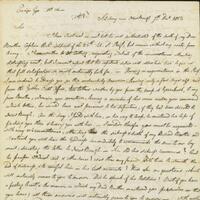
The collection consists of a digital version of a journal kept by Angelo Solimino during his service in World War II. The journal was later published by the War Prisoners Aid of the YMCA in Geneva, Switzerland in 2008 and deeded to the Pierson Middle School where Mr. Solimino transferred the Intellectual Property Rights to Susan Duff and then to Sag Harbor School District.
Browse within this collection
Browse similar collections

Collection Facts
Scope of Collection
This collection includes a variety of materials related to the village of Piermont, New York. It includes several documents relaying the village’s history, as well as maps, postcards, images of local landmarks, and ephemera documenting community events.
Browse within this collection
Browse similar collections

Collection Facts
Historical Context
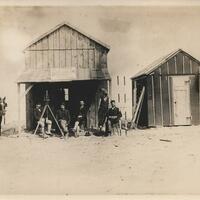
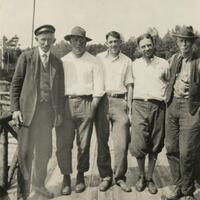
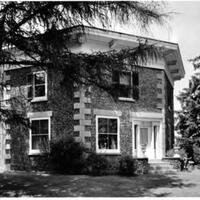
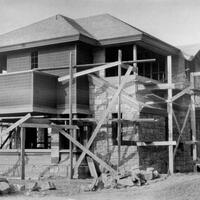
The images in this collection depict Sonnenberg, the summer residence of Frederick Ferris Thompson and Mary Clark Thompson in Canandaigua, New York. Compiled in Mary Clark Thompson's 1907 scrapbook, the photographs capture Sonnenberg's gardens, walkways, ponds, and architecture. At the time these photographs were taken, the historic property was at the height of its grandeur. Mary Clark Thompson continued to renovate and maintain the gardens as tribute to her late husband until her death in 1923.
Scope of Collection
This collection is comprised of black and white photographs of the Sonnenberg Estate taken in 1907. The photographs were taken by Nathan R. Graves and John Dick, and were compiled in a scrapbook by Mary Clark Thompson. The images show many views of the gardens and their features.
Browse within this collection
Browse similar collections

Collection Facts
Historical Context
Mary Flagler Cary (1901–1967) was the daughter of Harry Harkness Flagler, and granddaughter of Henry Morrison Flagler, one of the founders of Standard Oil. She married Melbert Cary in 1923, and they lived in New York City and Millbrook, NY. Melbert Cary died in 1941, and after his death Mary continued to divide her time between New York City and Millbrook. Mary built a collection of trees on her large estate in Millbrook, and using her Polaroid camera, documented her landscaping efforts and tree plantings. Upon her death in 1967, Mary left her 2,000 acre Millbrook estate to a charitable organization “engaged in the conservation, maintenance, and preservation of natural resources”. In 1971, the Mary Flagler Charitable Trust accepted a proposal from the New York Botanical Garden to establish an arboretum devoted to research and educational activities. The arboretum is now part of the Cary Institute of Ecosystem Studies.
Scope of Collection
Selected Polaroid images of landscaping, tree plantings, employees and buildings around Mary Flagler Cary's Millbrook estate as well as her family's estate, Edgewood. Most photographs were taken by Mary between 1935 and 1963. Several photos are undated, and there are many unidentified workers in the landscaping photos. This collection also includes the original photo album covers, and descriptive notes that accompanied some photos.
Browse within this collection
Browse similar collections

Collection Facts
Historical Context
Bob Wyer started his photography career in the late 1930s when a local newspaper asked him to start taking photographs. He quickly discovered his love for photography and over the next 40 years took over 150,000 photographs. With his wife, Billie Wyer, his successful photo studio took many portraits and photographed a wide range of community activities, including parades, crime and accident scenes and the everyday minutiae of life in the Catskills.. In the 1960s, Mrs. Wyer founded Bob Wyer Poscards. The Wyer’s spent much of that decade traveling around the country photographing college campuses. The Wyers retired in 1978.
Scope of Collection
This is a collection of black and white photographs pertaining to two milk strikes in the Delaware County area of New York, the strikes of 1939 and 1940. The strikes took place as an effort to increase the money farmers were getting for their milk. The 1939 strike includes images of some of the confrontations between local farmers and milk transporters. The 1941 strike images include several of milk being dumped.
Browse within this collection
Browse similar collections

Collection Facts
Historical Context
Phillip Winchester was a division engineer for the New York Central Railroad based in Syracuse. His job required inspections and design work for the NYC throughout Central New York State. This often meant photographing new construction, repairs, rolling stock, locomotives, and derailments as documentation in his territory. His father, Robert H. Winchester, was apparently employed by the NYC subsidiary Rome, Watertown & Ogdensburg (RW&O) Railroad, and took extensive photos of winter snow clearing operations in Northern New York.
Scope of Collection
These photographs provide historic views of 1930s and 1940s railroading on the NYC that included a new station and grade elimination in Syracuse, and of snow clearing operations in Northern New York State between 1904 and 1912. Both Phillip and Robert Winchester's negatives were donated to the Central New York Chapter of the National Railway Historical Society, which maintains the collection.
Browse within this collection
Browse similar collections

Collection Facts
Historical Context
Phillip Trypuc was a resident of Center Moriches and photographer who took many pictures of local community businesses, events and people during the 1950s.
Scope of Collection
The collection consists of over 400 black and white photographs documenting local businesses, events, and people of the tri-hamlet community in the 1950s.
Browse within this collection
Browse similar collections

Collection Facts
Scope of Collection
This collection represents selected photographs of students and campus life at Bard taken by photographer Peter Aaron, '68 between the years 1964-1971. The original photographs were loaned to the archives by Mr. Aaron, scanned by Bard Archives staff, and subsequently returned to him. Included here are two aerial shots, some posed portraits, and a variety of candid images of students hanging out and having fun. Dark glasses and sideburns notwithstanding, together they offer a snapshot of Bard in the 1960s that, in many instances, might have been taken yesterday.
Browse within this collection
Browse similar collections

Collection Facts
Scope of Collection
In the relatively short time that human beings have been flying, many have become well known to the general public for their exploits in the sky, while most were obscure and largely lost to history. The core of the Cradle of Aviation’s aviation personality collection were photographed at Roosevelt Field, which during the ‘Golden Age’ of aviation in the 1920’s and 30’s, was the center of the aviation world. Fliers, including the greatest names in aviation history, came from all over the country, indeed the world, just to fly or be seen here. By far the majority of aviators here however, never became famous and are now unknown. Only faded images survive showing that they were once part of the aviation world. Nonetheless, they each contributed to the advance of aviation by learning to fly, purchasing an airplane, or simply by making aviation a part of their lives.