
Collection Facts
Scope of Collection
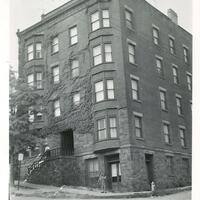
This collection features photographs and illustrations of churches, convents, parish houses, and other religious buildings in the city of Albany. The buildings span many architectural styles and religious denominations, and many photographs show the interiors of these remarkable buildings, some of which no longer exist. In many cases, the ornate interiors of the buildings are visible. Although not all the photographs are dated, they appear to be from the late 19th and early 20th century.
Browse within this collection
Browse similar collections

Collection Facts
Historical Context
The city of Rome, New York, began as a village named after its first Irish settler, Dominick Lynch, around 1796 near Fort Stanwix and along the Oneida Carrying Place, a Native American portage path which connected the Mohawk River to Wood Creek and Lake Ontario. Residents voted to rename "Lynchville" to Rome in 1819, and the New York State Legislature converted Rome to a city on 23 February 1870. Construction on the Erie Canal began in Rome on 4 July 1817, Jesse Williams erected the first U.S. cheese factory in 1851, and Revere Copper Products, Inc., was headquartered in Rome in 1928-29. Rome is home to the Griffiss Air Force Base, which hosted the Woodstock music festival in 1999.
Scope of Collection
The Reid Gallery of Prominent Citizens at the Jervis Public Library in Rome, New York, contains "photographic portraits of prominent men who have in some way been connected with the history of Rome, or its vicinity, who have been born in Rome or have lived in Rome and who have attained prominence in the city of Rome or elsewhere," along with a "historical or biographical sketch" of the respective subject. The gallery was established by a bequeathment unto the Jervis Library Association by the will Christopher Columbus Reid on 19 March 1912. The portraits were obtained in 1936 and hung in an attic room of the old Jervis home, then relocated to the hallways of the first and second floors of the Jervis home.
Browse within this collection
Browse similar collections


Collection Facts
Historical Context
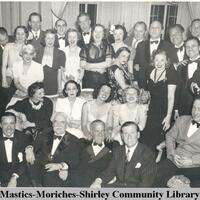
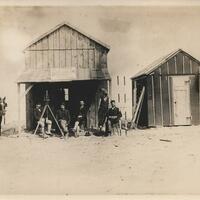
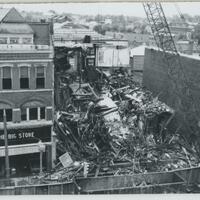
In 1907, Ade Reher, a Russian-Jewish immigrant, purchased the buildings at 99-101 Broadway in Kingston, NY. Her large family operated a kosher bakery downstairs while living upstairs. Each Reher sibling played a different role in keeping the business running. The family ran the bakery from 1908 until 1980.
Scope of Collection
This collection includes objects and documents that were left behind by the Reher family in their home and business dating from 1900-2004 as well as artifacts that were recovered from the building’s courtyard during a 2013 archeological dig. This selection of digitized artifacts includes handwritten recipe books, family photographs, and business-related ephemera.
Browse within this collection
Browse similar collections



Collection Facts
Historical Context
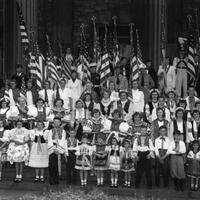
Over the past four years, Dr. Kathryn Stam, Faculty at SUNY Poly, has been gathering media and multimedia chronicling the lives of Refugees who have settled in Utica NY. This work has been gathered as Refugees Starting Over, which has hosted events, and provides a web presence featuring many images and videos. We are attempting to meaningfully describe and curate the collection so that materials can lead to further understanding of the culture and customs.
Scope of Collection
The collection represents an important part of the Utica NY and the Mohawk Valley region’s history over the past decade. The images, curated by SUNY Poly's Dr. Kathryn Stam, come from friends' social media pages. They represent the cultures of the refugee community resettling in Utica, and the important work she is doing in the refugee community in Utica NY and Central NY.
For more information about the Refugees Starting Over project, visit their website.
Browse within this collection
Browse similar collections

Collection Facts
Scope of Collection
The Maria College “Reflections” Yearbook Collection prevailed from 1967-1976 and 1980.
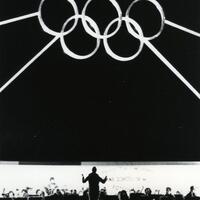
The Yearbooks contain photographs of of Maria College clubs, student senate, and student activities. Local government officials and religious leaders such as Mayor Erastus Corning II and Bishop Scully, and advertisements from local vendors are also included in the photographs. Some of the yearbooks contain poetry or sayings as a “Reflection” of the students’ memories made at Maria College. For example, in the 1980 issue of the yearbook, it details the adoption of the Maria College Logo, and its history and representation. In this issue, there are illustrations of the activities of Maria College such as: the Maria Olympics, raffles, holidays, the gift of life, and ale.
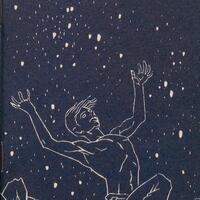
The most entertaining yearbook of the collection is the 1975 issue. It deals with astrology. The yearbook staff researched all students, faculty and staff members’ astrological signs. Each astrological sign is introduced by the yearbook staff with a letter of personal characteristics of the zodiac. The students had a bit of fun by sharing photographs of celebrities, government officials and famous actors and actresses of the who’s who of the zodiac.

Collection Facts
Historical Context
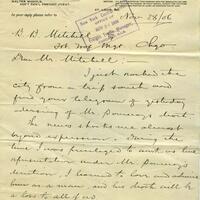
The Town of Red Hook’s earliest Board Minutes record business matters such as the elections of officials, monies to be raised for the poor, and votes on roads, bridges and school districts. Beginning in 1813, the year after Red Hook separated from the Rhinebeck Precinct and became its own Township, meetings were held annually, the first Tuesday in April, at private homes or inns. The minutes begin April 6, 1813, with the first item of business noted as the establishment of regulations to control stray livestock. That same year, eight school districts were established, with families in each school district named. Entries run through Sept 1866, after the end of the Civil War.
Scope of Collection
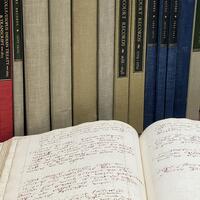
Volume 1 of Red Hook’s Town Board Minutes consists of 331 handwritten pages that were microfilmed in the 1970s and recently digitized from the microfilm. A useful series description precedes the minutes. Some pages are difficult to decipher but the records offer valuable information on the people, highways, schools and social conditions in Red Hook’s earliest days. A typed (and searchable) transcript is also included in the collection.
NOTE: The documents in this collection may take a minute to open because of their large size.
Browse similar collections

Collection Facts
Historical Context
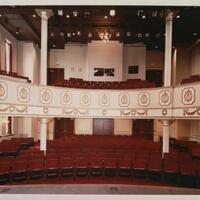
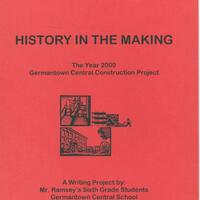
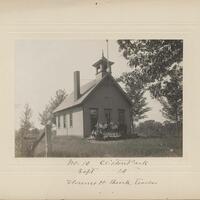
When the Town of Red Hook split from Rhinebeck in 1812, it established eight public school districts, each with its own small schoolhouse serving first through eighth-grade ‘scholars,’ as students were then called. For those wishing to go beyond eighth-grade, there were only a few small private schools, such as the reputable Mountain View Academy in Upper Red Hook. In 1905, the Union Free School in Red Hook Village (District #4) was renamed the Red Hook High School and expanded to accommodate all the students from every district who wanted to go beyond the eighth grade. Students came from near and far, by train and wagon, and some even boarded with Village families for the winter term.
On April 2, 1936, the High School burned to the ground. Rather than rebuild it on the same site, the Red Hook School Board proposed centralizing all the district schools. By late 1937, voters in eleven school districts, including ten in Red Hook and Milan, and one in Clermont, Columbia County, overwhelmingly approved the plan. The Union Free School in the Village of Tivoli chose not to centralize. Its students were finally absorbed into the Red Hook Central School system in 1965.
On September 6, 1939, the handsome red brick building on Linden Avenue (known today as the Red Hook Middle School) was dedicated. Built with a grant from the Works Progress Administration, the new school was “designed to meet the requirements of the State Department of Education and provide a maximum of 969 pupil stations… sufficient to provide adequately for the needs of the district for many years to come.” President Franklin D. Roosevelt had been scheduled to give the dedication address but on September 1, 1939 the Nazis invaded Poland, touching off World War II. Roosevelt stayed in Washington, D.C.
Scope of Collection
This collection includes 40 original photographs and postcards showing teachers, students and their ‘one-room’ schoolhouses throughout the Town of Red Hook before 1939 when the small school districts were consolidated and a new Central School was built. It also includes a searchable 20-page special supplement to the Red Hook Advertiser, published on August 31, 1939, in anticipation of the new school’s dedication, celebrating the “new era in education” and memorializing each “country schoolhouse” that had “bowed to educational progress.”
Browse within this collection
Browse similar collections

Collection Facts
Scope of Collection
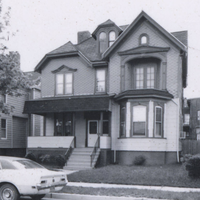
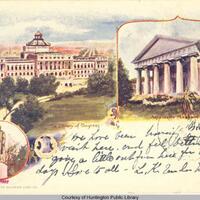
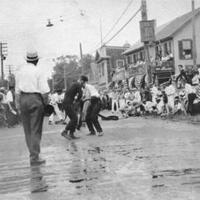
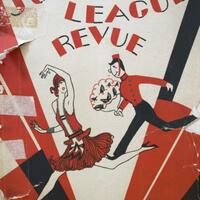
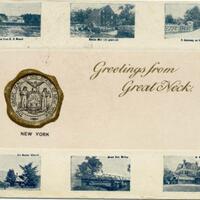
Selected images from a postcard collection of scenes in the Town of Red Hook, including commercial businesses, private houses, churches and public buildings. The collection includes 120 original postcards, most from the early 20th century.

Collection Facts
Historical Context
Russell Sage College was founded in Troy, New York, in 1916 by Margaret Olivia Slocum Sage and named in honor of her late husband, who had left her his considerable fortune. With Eliza Kellas, head of the Emma Willard School, Mrs. Sage was active in the women's suffrage movement; in founding the new College, they proposed to offer women the means of independence through the combination of broad education in the liberal arts with preparation for specific professional careers. In 1949, an Albany Division was opened, offering two-year, four-year and graduate degrees under the charter of Russell Sage College and extending the College's mission to include the education of men on the second campus. The Sage Junior College of Albany received its own degree-granting powers in 1957.
Scope of Collection
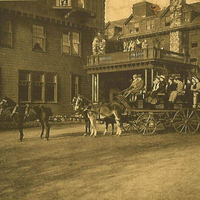
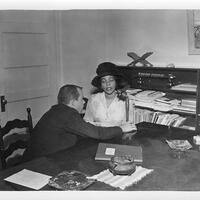
This collection features photographs of the Sage College of Albany. It contains images of students, faculty, campus buildings, classes, and events held on campus. The majority of items in the collection date to the 1970s when it was the Sage Junior College of Albany.
Browse within this collection
Additional Information
Browse similar collections

Collection Facts
Historical Context
The Rambler Newsletter, formally known as The Aggazette, changed its name in 1948 and is the current student newsletter for Farmingdale State College students. It shared stories about the students, the college’s history, and stories about alumni. The school expanded its education to include various technology and science programs. The school, itself, was still changing its name multiple times, with it officially being named Farmingdale State College in 2006.
Scope of Collection
The Rambler Newsletter is published by Farmingdale State College students and contains historical information about the college and alumni.