
Collection Facts
Historical Context
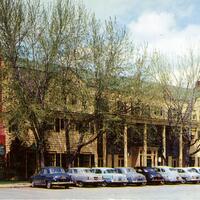
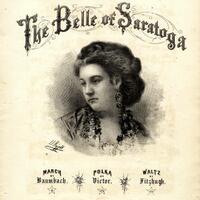
The Robert Joki Stereoview collection at the Saratoga Springs Public Library illustrates the rich upbringing of Saratoga Springs, NY, from the tapping of the natural spring system, the development of Broadway in the 19th century, and the ravaging fires that shaped Saratoga's cityscape.
Through a simple trick of the mind, stereoview presents two offset photographs with use of a stereogram to create 3D depth from 2D images. Stereoviews were increasingly popular in the mid-1800s and captured anything from mundane life to beautiful environments lost with time.
With 1,435 stereoscopic images in the collection, the Saratoga Springs Public Library holds the largest public collection of stereoviews of Saratoga Springs in the world and was acquired by the Friends of the Library in 2013 from the late Robert Joki.
Scope of Collection
A history buff and avid collector, Robert Joki collected stereoscopic images of scenes from Saratoga's past. These images bring to life the grand hotels, the elaborate mineral spring pavilions, and amusements that entertained the worldly guests of Spa City.
This online collection contains stereoscopic images from The Robert Joki Collection (one side of the stereoview card), highlighting important landmarks in the Spa City.
The Robert Joki Stereoview collection is open to the public in the Saratoga Room at the Saratoga Springs Public Library.
Browse within this collection
Browse similar collections

Collection Facts
Historical Context
Dr. Robert E. Hager (1916 - 2005) was an artist who created works of art about the Erie Canal. He had a passion for studying boats and the canals and was also known drawing diagrams of canal boats for the canal.
Scope of Collection
The Robert E. Hager Canal Boat Diagrams collection includes drawings of construction plans of canal boats used on the Erie Canal throughout the nineteenth century. These drawings were based on his extensive research on boat building techniques. Some diagrams, such as those of the “Lady Carrington II,” were used to build scale models of boats for institutions across New York State. The drawings were made on mylar and paper depicting various perspectives of boat exteriors, interiors, and hull construction. These images serve as a small sample of the prolific research and documentation produced by Dr. Hager all of which is preserved in the Chittenango Landing Canal Boat Museum library and archives.
Browse within this collection
Additional Information
Additional drawings by Hager are available in the museum library.
Browse similar collections



Collection Facts
Scope of Collection
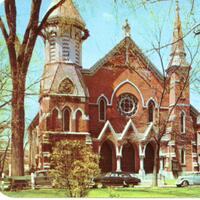
This collection contains postcards depicting historic ecclesiastical buildings in Nyack. The postcards are drawn from local enthusiast Robert Courtwright's extensive local history collection.
Browse similar collections

Collection Facts
Historical Context
"The 1849 wreck of the Ship Richmond led to a court case over the ownership of her salvaged cargo that reached the United States Supreme Court. The decision, that a salvor is entitled to a reasonable fee according to circumstance rather than a fixed proportion, is still in place today.
Captain Philander Winters took the Richmond on her second whaling voyage for the Cold Spring Whaling Company with a crew of 32 men on July 21, 1846. The ship made various ports between 1846 and 1848, including Bahia, Brazil, Lahaina, Hawai’i. The Richmond left her final port, Honolulu, in the company of the Sag Harbor whaler Elizabeth Frith, captained by Philander’s brother, Jonas Winters. The two ships spent the season together in the Japan Sea and then separated.
On July 29th, 1849 the Richmond was sailing up the Bering Strait and Captain Winters needed one final whale to fill the ship. On August 2nd in heavy fog the ship struck a reef, disabling the rudder, and ran aground about a mile later. The crew was forced to leave the ship and took what provisions they had a few miles north to a beach accessible by whaleboat. They were stranded in Siberia, on the tip of Chukchi Peninsula roughly 1,000 miles away from the nearest town, less than a month before the Bering Strait typically iced over for the season.
The situation could have been worse; the entire crew evacuated safely and the area was well known among whalers so that it was very likely that another ship would come along once the fog lifted. On August 5th the crew set off in several whaleboats to search for nearby ships. Captain Winters and the first mate of the Richmond spotted the Elizabeth Frith and made contact, while the first mate encountered the New Bedford whaler Junior, captained by Silas Tinkham, that was also nearby. A third whaler, the Panama of Sag Harbor captained by Frederick Hallock, arrived on August 6th and the four captains agreed that the Richmond and its cargo would be put up for auction on August 8, 1849.
When she was wrecked, the Richmond was carrying approximately 3,600 barrels of oil and 24,000 pounds of whalebone. On shore, a barrel of oil could be expected to sell for $12.60, but during the auction, the Richmond’s barrels went for between $1 and 75¢. The hull was sold for $5 and the ship’s furniture and equipment were also auctioned off. After filling their holds, the Elizabeth Frith, the Junior, and the Panama divided the crew members between them, and set off for Honolulu.
Captain Philander Winters became very ill during the voyage to Hawai’i and died on September 13th from what appears to have been a stroke. The Richmond’s remaining officers: first mate, Charles Reeves; second mate, William Sayre; and third mate William Cherry all returned to the United States between March and April, 1850. John H Jones, the agent of the Cold Spring Whaling Company, listened to each mate’s version of the wreck and ultimately decided to sue to recover the Richmond’s goods. The original suit asserted that the sale of the cargo by Captain Philander Winters was invalid and that instead the three ships had acted as salvors and were entitled only to the standard salvage rates.
The case reached the United States Supreme Court in 1856. On January 28, 1857 the Court affirmed a captain’s right to sell both his ship and cargo in cases of absolute necessity but stated that this rule did not apply to the wreck of the Richmond because “the contrivance of an auction sale under such circumstances … where there is no market, no money, no competition… is a transaction which had no characteristic of a valid contract.”
The Richmond collection was purchased by the Whaling Museum in 2012.
Scope of Collection
The collection is made up of the records of the Ship Richmond’s final voyage from 1846-1849. Some of the later documents relate to the loss of the ship and the subsequent court case. The collection contains financial records and business correspondence between 1845 - 1856.
Browse within this collection
Browse similar collections

Collection Facts
Historical Context
This collection documents Richard T. Gilmartin’s contributions as an avid historian, and a popular sports fisherman, a spokesperson for the handicapped, and an engaged civic leader. He served as East Hampton Town Clerk from 1931 to 1940; Commissioner of Welfare, Suffolk County from 1941 to 1949 and Supervisor East Hampton Town from 1958 to 1959.
Born in 1904 in East Hampton, New York to Thomas Daly Gilmartin and Emma Julia Maran, Richard Timothy Gilmartin grew up on a 20-acre farm on Acabonac Road, not far from Holy Trinity Church Cemetery where he is buried.
Upon graduation from Fordham University in 1925, he became Secretary of the Pierson Construction Co. in Montauk. In 1927, he married Winifred O’Brien. In 1930 he opened the Richard Gilmartin Insurance Agency, specializing in Commercial Real Estate, which he maintained until his death. It was located in an annex of the “office tower” built by Carl Fisher.
When an auto accident left him crippled in 1944, Mr. Gilmartin spent two years rehabilitating himself at New York Institute for Crippled and Disabled. He went on to become a founding trustee of President Eisenhower’s Commission on the Handicapped and lead the way for Skills Unlimited, which opened in Islip in 1955. He worked hard to support employment for the disabled.
Richard T. Gilmartin had a great passion for history. During his tenure as East Hampton Town Clerk he implemented preservation, indexing and cataloging of leather-bound East Hampton Trustees journals from 1648-1955 that remain a popular resource for researchers. In his role as the first President of the newly formed Montauk Historical Society in 1963, Mr. Gilmartin initiated house tours of architecturally important buildings in Montauk, and mentored a History Group for young people. Some of those History Group members are still alive today, and have been as actively involved in preserving Montauk’s history as Gilmartin was in own his lifetime. Their dedication is Mr. Gilmartin’s legacy.
Scope of Collection
The collection, donated by Gilmartin’s daughter Barbara Sullivan and son Timothy Gilmartin, is one of the largest in the Montauk Library, numbering well over 1,000 items.
Very briefly, its contents comprise personal photographs, as well as photographs of political campaigns, community ceremonies and celebrations, and photographs of Montauk’s military history, including World War I dirigibles and biographical information about General Norman T. Kirk.
Business correspondence includes papers from the Richard T. Gilmartin Insurance Agency, the office of East Hampton Town Supervisor, and the Office of the Commissioner of Welfare.
A stunning postcard collection of early Montauk views, as well as many rare advertising booklets and pamphlets, are part of the donation.
Gilmartin’s notes for a history of Montauk he was writing when he died in 1964 are also important.
So far, the photographs and postcards have been scanned. The scanning of the remainder of the collection will recommence in 2022.
Browse within this collection
Browse similar collections


Collection Facts
Historical Context
This collection is a result of a project commissioned by the Adirondack Museum to have Richard Linke photograph historic and significant sites in the Adirondack Park from 1973 to 1974. These sites include both man-made and natural areas that played significant roles in the exploration of the park from 1820 to 1900. Richard Linke is a photographer and was Professor of Photography at Skidmore College for 35 years.
Scope of Collection
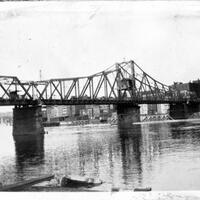
The collection consists of black-and-white photographs depicting Adirondack Park in the early 1970s. The subjects of these photographs include nature preserves, special interest scenic and geological areas, historic areas and structures, and historic routes and trails.
Browse within this collection
Browse similar collections


Collection Facts
Historical Context
Richard Hockman Handley (1848-1914) was a wealthy businessman who lived with his family in neighboring Hauppauge. Mr. Handley dedicated much of his time and money to one of his greatest interests-- the collection of rare materials related to the local history of Long Island and the surrounding regions. With the help of various associates and dealers, Mr. Handley amassed a truly remarkable collection of books, documents, manuscripts, maps, atlases and ephemera.
Scope of Collection
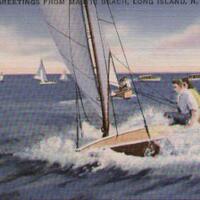
The Richard H. Handley collection contains photographs and still images that share the history of Long Island, New York.
Browse within this collection
Additional Information
The Richard H. Handley Collection of Long Island Americana (more commonly referred to as the Long Island Room) is recognized as one of the most important local history collections on Long Island and its staff regularly welcomes researchers of all kinds. Over the years the collection has continued to grow, mostly through the donations of other local individuals, families and organizations.
Browse similar collections

Collection Facts
Scope of Collection
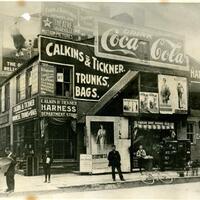
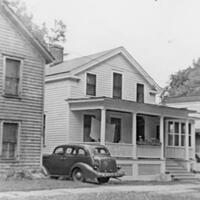
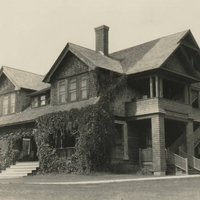
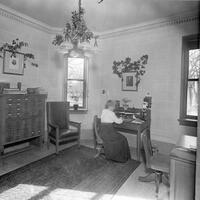
This collection is composed of photos and illustrations of streets of Albany residences, from small apartment buildings and mansions to single family houses in the newer parts of Albany, New York. Houses made of brick, stone, or wood and in various architectural styles are represented here, as are the street scenes that surrounded them. Sometimes the sign on the front door tells us who lived there or an advertisement on a nearby sign gives us a view of what the people who lived in these locations saw on an average day. Automobiles, trolleys, and people show up in many of the photographs, and zooming in on these subjects can reveal details otherwise missed. The majority of the images date from between the late 19th century and the mid-20th century.
Browse within this collection
Browse similar collections

Collection Facts
Scope of Collection
Out of Republic’s ‘thunder factory’ came some of the most adventurous and successful warplane designs in the history of flight. From the outstanding P-47 of World War Two, through the Thunderjet and Thunderceptor to the F-105 Thunderchief which saw vigorous action in Vietnam and today’s A-10 Thunderbolt, the ‘titanium tankbuster’, the Republic Aviation Corporation, in its various guises, has been at the forefront of technological advance. To study its output is to track the history of military aviation itself.
Browse similar collections

Collection Facts
Historical Context
North Collins, founded in 1852, is a rural town located south of Buffalo, New York. "Reminiscent History of North Collins (Erie County, New York)" is a handwritten diary written by a Mrs. Emily Stewart in 1914 and contains many names and events from the early history of North Collins, including businesses, organizations, doctors, churches, and schools. It is 40 pages long, and this copy was created in 1914. Dates in the diary range from 1809 to 1889.
Scope of Collection
The collection is comprised of the handwritten diary by Emily Stewart describing the history of North Collins. The diary was written in 1914, but the content relates to the 19th century.
The Reminiscent History of North Collins (Erie County, NY) digital collection was created by the University at Buffalo's LIS 563 (Digital Libraries) Class, Spring 2011, in cooperation with the Western New York Library Resources Council and the Western New York Genealogical Society.