
Collection Facts
Historical Context
Railroads were first introduced in New York State with construction of the Mohawk and Hudson Railroad in 1826. This mechanized travel arrived less than 10 years after construction of the Erie Canal began in 1817. Railroads would forever change the face of travel in the 19th Century just as the automobile and NYS Thruway changed travel in the 20th Century. While the Erie Canal spearheaded westward development in the state and nation, it was the railroads that brought the biggest shift of people and goods westward in the years that followed. Other early New York State railroads, including the Syracuse and Auburn Railroad built in 1837, broadened the impact of rail transport on the region.
Scope of Collection
The collection provides pictorial information showing locomotives and rolling stock of railroads that once served New York State and adjacent states and provinces. Historians will find images of communities served by railroads through the years, giving context to how those communities and their structures changed over time, as well as images of locomotives and rolling stock.
Browse by theme:
- Arcade & Attica
- Adirondack RR
- American Freedom Train
- Amtrak
- Boston & Maine
- Baltimore & Ohio
- Bath & Hammondsport
- Boston & Maine
- Canadian National
- Canadian Pacific Railway
- Central New York
- Cortland
- Conrail
- CSX
- Delaware & Hudson
- Delaware, Lackawanna & Western
- Cooperstown & Charlotte Valley and Delaware Otsego Corporation
- Erie Railroad
- Erie Lackawanna
- Finger Lakes Railway
- Genesee & Wyoming
- GO Transit-Toronto
- Interurbans
- Livonia, Avon & Lakeville
- Lowville & Beaver River
- Lehigh & Hudson River
- Long Island
- Lehigh & New England
- LeHigh Valley
- Mohawk, Adirondack & Northern
- Marcellus & Otisco Lake
- Metro North Railroad
- Maintenance of Way
- Norfolk & Western
- New Haven
- New Jersey Transit
- Nickel Plate Road
- Northern New York railroads
- New York Central
- New York, Ontario & Western Railroad
- New York, Susquehanna & Western Railroad
- Ontario Midland RR
- Province of Ontario
- Guilford-Pan Am Railway
- Penn Central
- Pennsylvania Railroad
- Province of Quebec
- Rutland RR
- Skaneateles Short Line Railroad
- Steamtown USA in Bellow Falls, VT;
- Steamtown National Historic Site in Scranton, PA
- Syracuse
- Toronto, Hamilton & Buffalo Railway
- Utica
- Unadilla Valley RR
- VIA Rail Canada
- State of Vermont
- Vermont Railway
- Wabash Railroad
- Wellsville, Addison & Galeton Railroad
- Western New York railroads
- 1933 visit of “Royal Scot” train to Chicago World’s Fair
- Train used in movie “Hello Dolly"
Browse within this collection
Browse similar collections

Collection Facts
Scope of Collection
This collection contains 17 issues of Radical Abolitionist published by the Central Abolition Committee from 1855 through 1858. The contents relate to many issues surrounding the abolition movement in the United States.
Browse similar collections

Collection Facts
Scope of Collection
This collection includes a selection of quilts drawn from the permanent collection at Historic Huguenot Street.
Browse within this collection
Browse similar collections

Collection Facts
Historical Context
Virginia Beauchamp was a graduate of the University of Michigan. After teaching for 20 years in Colorado, she returned home and became the Director of the Syracuse Home Association and the Onondaga Historical Society, Secretary of the Visiting Nurses’ Association, on the Executive Council of the South Side Library Association, and a member of the Syracuse Botanical Society. Virginia died on February 22, 1923. Virginia’s quilt patterns were donated to the library by her sister, Grace B. Lodder in November, 1945.
Scope of Collection
This collection consists of patterns drawn to scale and finished with watercolor paints in order to imitate the colors of the actual quilts upon which the representations are based. Although the patterns were completed from 1919-1923, many were based on quilts made before 1850 and are thus an important record of domestic life from that time. This collection consists of all of the original patterns donated to the library.
Additional Information
Browse similar collections


Collection Facts
Scope of Collection
Residents of the Town of Bethlehem (Albany County) were welcome to submit their personal memories of early 2020, when COVID-19 quickly changed from being a distant threat to a health emergency affecting every aspect of normal life in the local community. Contributors were encouraged to send their recollections to Bethlehem Public Library in the form of texts, photographs, video, and/or audio, to a dedicated email address.
Browse within this collection
Browse similar collections


Collection Facts
Historical Context
The Putnam County Historian's Office (PCHO) is located in Brewster, New York, in the lower Hudson River Valley region. Our local government office preserves, interprets, and promotes the history of Putnam County dating back to its separation from Dutchess County in 1812. The Historian’s Office has been collecting historical records, maps, books, photographs, and periodicals since 1953 to support these efforts and assist researchers with genealogical, commercial, agricultural, recreational and cultural history. PCHO provides digital and on-site access to many of their records and is open for public research Monday – Wednesday, 10 am – 2 pm, by appointment.
Scope of Collection
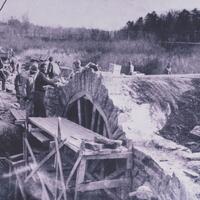
This collection contains historic images, postcards, and documents from across Putnam County. This includes images of the factory workers of the Borden Condensed Milk factory in Brewster, gorgeous tourist photos from the late 1800s of Lake Mahopac hotels, pictures of the “Old Put” railroad line, snapshots of the Oscawana Lake community in Putnam Valley, and images from the 1895 Aqueduct Commission’s construction of Croton Watershed reservoirs, channels and dams.
Address:
68 Marvin Avenue
Brewster, N.Y. 10509
Phone: 845-808-1420
Website: https://www.putnamcountyny.gov/county-historian
Browse within this collection
Browse similar collections

Collection Facts
Historical Context
The Holland Patent Public Square has been a focus and symbol of the village for the two hundred years of its existence. The location of the public square determined the orientation and land use development of the patent, and the character of this plot of land well drained, level and incorporating a segment of the main road leading cast to Barneveld and west to Floyd and Fort Stanwix --befit it for the public ground upon which the community institutions of schools and meetinghouses would stand.
Public Square was established by a June 30, 1798 deed, that reserved 7.5 acres as a public square for the inhabitants of the Holland Patent. The boundaries of the square remains as established, with Main Sreet lying along the northern boundary, Park Avenue situated on the eastern boundary, Park Street located on the southern line with the western boundary lying about halfway down the hill that slopes toward Williard's Creek behind the Presbyterian Church. Before any permanent structures were built, the public square attracted roaming farm animals that created such a nuisance as to cause a fine to be levied on offenders. At a public meeting in April 1801, it was voted to spend $15.00 to build a pound near the public square. The first structure to be constructed on the square was a schoolhouse, which in 1806 stood on the northeast quadrant. This was followed by other meeting houses until 1842 - 1843 when the community organized to reform the design of the square into the open space which exists today. In August 1847, thirty men signed a subscription "to pay... for the the purpose of enclosing a Park on the Public Square... in materials or labor at cash price." In 1991, the area surrounding the public square was listed on the Nartional Register of Historic Places as the Holland Patent Stone Churches Historic District.
Scope of Collection
This collection includes photographs of the public square, documents relating to the creation of the public square and other park improvements
Browse within this collection
Browse similar collections

Collection Facts
Historical Context
While no Revolutionary War battles took place in the village of New Paltz, the fight against the British drastically altered the life of one person: Roelof Josiah Eltinge. Eltingue was born in New Paltz on January 7, 1737. He married Maria Louq in 1760 and fathered eleven children.
His troubles began in 1776, when he refused to accept Continental currency in his storefront at the house we now call Bevier-Elting. According to resolutions passed by the New York Provincial Congress in 1775, those who refused currency issued by either the Continental or Provincial Congress were to be imprisoned and treated as enemies. Eltinge was thus brought before the Ulster County Committee of Safety (charged by the Provincial Congress with suppressing Tories), which imprisoned and then exiled him from Ulster County until the end of the war in 1783.
Scope of Collection
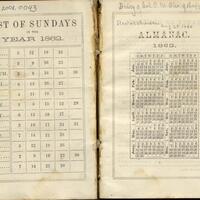
This collection includes documents related to Roelof Josiah Eltinge’s legal troubles after being an accused loyalist during the Revolutionary War. It includes, among other items, his parole orders after being released from jail, the order exiling him from New Paltz, and his petition to the New York State Legislature to return home.
Browse within this collection
Browse similar collections

Collection Facts
Scope of Collection
The Proceedings provide a record of land disposed or acquired by the State of New York, including lands for New York’s canal system. In some instances, the Proceedings may be the only record, or single source of truth, of a land transaction involving the canals. The New York State Canal Corporation uses the Proceedings as an authoritative resource to help answer questions posed by the public, local governments, or other state agencies.
Browse within this collection
Browse similar collections

Collection Facts
Historical Context
The Print Club of Rochester, still active today, was founded as an initiative of members of the Memorial Art Gallery Board’s Library and Print Committee in 1930.
Scope of Collection
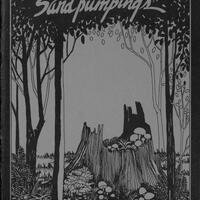
The selected materials in this collection include: exhibition announcements, meeting announcements, programs, and membership forms. Many of the documents contain original prints and drawings. Some prints are colored. The inclusive dates are 1930 through 1948.