
Collection Facts
Historical Context
Seneca Ray Stoddard, (b.1844 d.1917) was an american painter and photographer who produced numerous images of the adirondack landscape, both illustrated and photographic. He also produced and published numerous maps of the region and created guides to the area for tourists.
Scope of Collection
This collection contains photographs, many of them stereoview images, of the Aridondack park, as well as some images of Stoddard and his family. Included are images of the American Canoeing Association, as well as numerous other Adirondack landmarks.
Browse within this collection
Browse similar collections


Collection Facts
Scope of Collection
This collection includes items from the archival collections at Senate House State Historic Site, including a sampling of documents from the Colonial period and Revolutionary War.
Browse within this collection
Browse similar collections

Collection Facts
Scope of Collection
The proceedings of a conference held at Lake Mohonk in June, 1891, the second annual conference of two. Attendees included statesmen, leaders in education and leaders in the ministry. The focus of the conference was on the current situation of the African-American population and the means through which improvement in that situation might be achieved. Much of the discussion revolved around the need for education to be provided for all people, with particular emphasis on training as teachers and ministers.
Browse within this collection
Browse similar collections

Collection Facts
Historical Context
Scrimshaw is an uniquely American craft originating in the late 18th century and continuing well into the 20th rising and falling with the whaling industry. A wide variety of objects were created using whale teeth, whale bone, walrus tusks, and porpoise bone. Scrimshaw and whale ivory elements were used to embellish household objects such as pen handles, canes, and sewing implements or as decorative objects in their own right.
The Scrimshaw and Baleen objects in this collection were assembled through various donations during the Museum’s 80-year history. Major donations include:
The first major scrimshaw donation in the Museum’s history came from one of the Museum’s founders, Mary J Holmes. Her collection of scrimshaw teeth and jagging wheels formed the basis of the objects on exhibit in the 1940’s.
Several of the Museum’s finest examples of scrimshaw teeth and tusks were donated to the Museum in 1954 by Captain Marion Eppley.
The bulk of the Museum’s whalebone and baleen busks were donated in 1965 by Weston Howland. He also collected various functional scrimshaw objects including clothespins, jagging wheels, and bodkins.
Scope of Collection
The collection consists of 19th and early 20th century objects that include whale bone, whale teeth, baleen or intricately carved surfaces such as coconut and walrus tusk. Much of the material dates to the mid-18th century with some more modern pieces. It was assembled to give context to represent the wide variety of objects that utilized scrimshaw in the 19th century.
Browse within this collection
Browse similar collections

Collection Facts
Scope of Collection
A scrapbook of Ablett Mill, with interior and exterior photographs of the wool mill in Whitesboro.
Browse similar collections

Collection Facts
Historical Context
Liverpool is a lakeside village located in Onondaga County, just outside of Syracuse, New York. The village is named after the city of Liverpool in England. Liverpool was also a fitting name because both Liverpools became well-known for their salt production. After the salt production era came to a close, Liverpool willow baskets became the village's main export. The Syracuse Northern Railroad opened in 1871, giving Liverpool greater opportunities for trade. At the close of the nineteenth century, Liverpool also became a cigar manufacturing hub. The Oswego Canal closed its waterways in 1918, and in 1931 the Onondaga Lake Park was created where a good portion of the canal laid. The Onondaga Lake Park has the Salt Museum and East Shore Recreation Trail within its borders.
Located nearly one hundred miles from Liverpool, in northeastern New York State, the wilderness area encapulated by the Adirondack Mountains has served as a region of military, industrial and recreational significance. During the 1700s, the Adirondacks became a popular place for European settlers to live and military posts to be built. The area is home to well-known forts, including Fort Ticonderoga, and battles that took place during the French and Indian War (1754-1763). In 1892, Adirondack State Park was officially established--in part to preserve the region as an important water source for the Erie Canal. The park became a major tourist and recreational destination in the 1900s and continues to be a popular place to visit today.
Scope of Collection
This photograph collection is comprised of pictures taken in the immediate Liverpool area and in the Adirondacks. Many of the photographs record the Village of Liverpool during the early 1920s and others document Liverpool's salt industry and willow industry. There are also photographs of the areas surrounding Onondaga Lake, the Oswego Canal, Mud Lock, and the projects undertaken by the Work Relief Bureau under the leadership of Liverpool banker, Crandall Melvin Sr.
Browse within this collection
Browse similar collections

Collection Facts
Historical Context
Rachel Eltinge, born in 1847 in New Paltz, NY, began attending the New Paltz Female Academy in 1863. During her stay at the Academy she wrote numerous letters to her friends and family. Rachel wrote about day to day experiences that could be easily contextualized in a modern setting: she requested money for food and clothes, asked her parents to pick up her laundry and to take her home on weekends, and argued with her father over the pettiness and stern policies of a school administrator. On a broader scope, however, Rachel’s letters paint a schematic of the socio-political life of a small town and family in the midst of a period of turbulent change in American history. The Civil War, issues of draft payments and military fundraising, the status and expectations of women’s education, and the ever-present morbid reality of seasonal sickness were frequent topics of discussion and consideration.
Scope of Collection
This collection contains Rachel's letters to her parents, sisters, and friends, describing everything from mundane daily tasks to important local events. The collection also includes family photographs and genealogical information.
Browse within this collection
Browse similar collections

Collection Facts
Historical Context
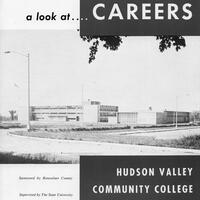
Schenectady County Community College (SCCC), located in upstate New York, is a two-year college and was established in 1967. The college is part of the State University of New York (SUNY) school system. SCCC is well-known for its School of Music and its culinary arts department which is accredited by the American Culinary Federation.
Scope of Collection
This collection contains material on the development and history of Schenectady County Community College. Some of the material contained here are commemorative, anniversary, and commencement booklets along with booklets on the local needs of the community and the involvement and influence of community organizations that helped development the Schenectady Community College.
Browse within this collection
Browse similar collections

Collection Facts
Historical Context
Union College, located in Schenectady, New York, is a private liberal arts college. It was founded in 1795 and was originally an all-men’s college. In 1970, Union College became co-educational. The college offers a variety of undergraduate programs for its students and offers a substantial amount of extracurricular activities as well, including sports, clubs, fraternities and sororities for students to join.
Scope of Collection
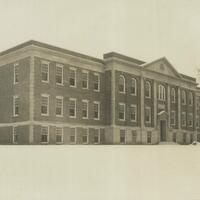
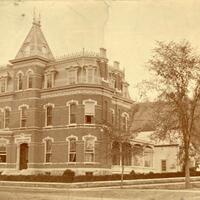
This collection includes postcards of the campus, its vicinity, artifacts, individuals, events, activities, and sites and scenes associated with the College, Schenectady, and surrounding areas.
Browse within this collection
Browse similar collections

Collection Facts
Historical Context
Schenectady County Community College (SCCC), located in upstate New York, is a two-year college and was established in 1967. The college is part of the State University of New York (SUNY) school system. SCCC is well-known for its School of Music and its culinary arts department which is accredited by the American Culinary Federation. Elston Hall, formerly known as Hotel Van Curler, is a building on the campus and listed on the United States National Register of Historic Places. Elston Hall is located near the Western Gateway Bridge.
Scope of Collection
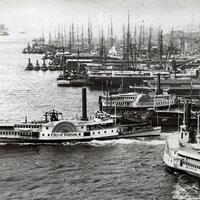
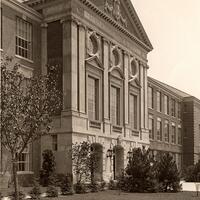
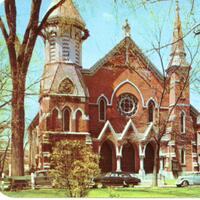
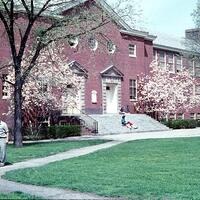
This collection contains images of postcards of Elston Hall, Hotel Van Curler, and the Western Gateway Bridge and surrounding area.