
Collection Facts
Historical Context
The SUNY Biomedical Communication Network (BCN) was the first online bibliographic network in the world for accessing medical literature. Operating from 1968-1977, the network also experimented with access to the shared cataloging of monographs as well as serials records. The BCN was hosted in the Health Sciences Library at what was then called Upstate Medical Center in Syracuse. Irwin Pizer (1934-1991), as Director of the Health Sciences Library, was also the Director of the BCN. There were nine original medical libraries in the network. Over the years membership grew to 32 institutions. For a number of reasons, the project began to suffer difficulties. In response, some of the leadership staff of BCN founded Bibliographic Retrieval Services, Inc. (BRS), a commercial vendor in Latham, NY. BRS was eventually purchased by OVID Technologies, a Walters-Kluwer Company.
Scope of Collection
The collection includes photographs of network mainframe computers, terminals, and other equipment. Other views include: BCN staff, Upstate faculty and staff, network advisory committees. There are documents, directories, and news clippings which describe the SUNY BCN in greater detail.
Browse within this collection
Additional Information
Browse similar collections

Collection Facts
Historical Context
Daemen College was originally founded as Rosary Hill College in 1947 by the Sisters of St. Francis of Penance and Christian Charity in Amherst, New York. By 1976, the College had gradually evolved from a liberal arts college for women to an independent, non-sectarian, co-educational institution. To reflect this new identity, the name was changed from Rosary Hill to Daemen, with the new name honoring Mother Magdalen Daemen, founder of the Sisters of Saint Francis of Penance and Christian Charity. An annual yearbook, named the Summit, was published yearly beginning in 1952 (the first graduating class) and running until 2012. Daemen College Library's collection of Summit yearbooks was digitized in the summer of 2018.
Scope of Collection
This collection consists of Summit yearbooks dating between 1952 and 2008.
Browse within this collection

Collection Facts
Historical Context
The New York State Federation of Women’s Clubs was established in 1894. As outlined in the certificate of incorporation, the objective of the organization was to, “bring into relationship of mutual helpfulness the various clubs of women throughout the state and to make combined action possible when deemed expedient. (Subgroup III: 1:1:2).” The favorable response to the mission of the Club spurned a rapid growth in membership, by the second annual convention in 1896, 186 clubs within the state were represented.
Education, industrial conditions, forestry, welfare work, prison reform, philanthropy, household economics and club ethics were major initiatives of the Club in the first decades of the 20th Century. By the start of World War I the Club had expanded to 461 clubs and 300,000 federated women.
A growing response to the suffrage question was evidenced in the committee structure of the Federation during the presidency of Miss Mary Garrett Hay, 1910-1912. The establishment of the Suffrage and the Anti-Suffrage Committees exemplify the differing views of the role of women by women during the culturally shifting era of World War I (Subgroup I: 8:1:1-2). A report of the Bureau of Reciprocity and Information states, “The communications regarding this subject of Suffrage have been most explicit and the expressed desires for material on both sides of this questions have been so broad, it proves that club life creates a well-balanced, self-reliant woman (Subgroup I:9:1:1).”
After the suffrage amendment passed on November 6, 1917, Anna Brown, in her Presidential report made the following unifying message:
“For the first time in our history, we come together as citizens of this great Republic with all the privileges and responsibilities which that citizenship implies. Prior to November 6, there were suffragists and anti-suffragists among our members. The people of this state, by the action of a vast majority of its voters have declared that it is their will that the women of New York shall participate in the choice of public officials determined at the polls. It is not now a question as to whether we believe or do not believe in equal suffrage. It is no longer a matter for discussion, and it is for us to see that the trust imposed on us by the Constitution of the State shall be intelligently, unselfishly and loyally discharged (Subgroup VII:1:1:5)”
Scope of Collection
The suffrage documents from the New York State Federation of Women’s Clubs collection, though limited, demonstrate the complexity of the suffrage issue. Reports of the anti-suffrage and suffrage committees of the New York State Federation of Women’s Clubs, an address from New York City mayor, William J. Gaynor, in opposition to the suffrage amendment and correspondence concerning the possible resignation of a chairman following the Club’s resolution to “endorse” women’s suffrage are examples of the complex perspectives found in the collection.
The collection also includes an article from the Prison Association of New York about the jailing of suffragist picketers. The Year Book from 1918 contains the President’s Report that aims at unifying the NYSFWC after the passage of women’s suffrage, ending years of dissension over the issue.
Together the records in the collection offer a varied perspective that confronted Club women surrounding the suffrage question in the early 20th Century.
Browse within this collection
Additional Information
Elmira College Archives, Gannett-Tripp Library
Browse similar collections

Collection Facts
Scope of Collection
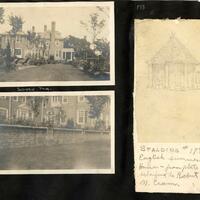
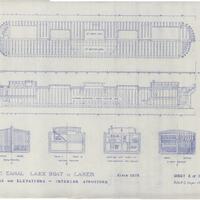
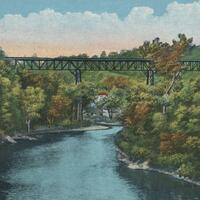
This collection contains images, postcards, and documents related to the history of Suffern, New York. Among other items, it includes photographic images of local houses, landscapes, and community members, as well as materials documenting the Flood of 1903.
Browse within this collection
Browse similar collections

Collection Facts
Scope of Collection
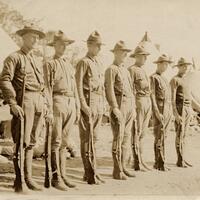
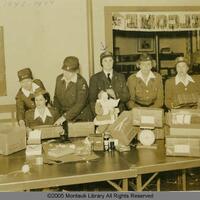
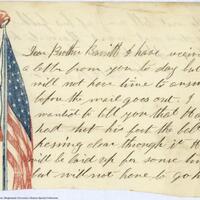
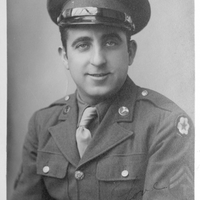
This collection focuses on the activities of Henry Eglinton Montgomery Suckley (HEMS) during World War I. He was a member of the American Ambulance Field Service that supported the French Army before the United States became a participant in the war. Three weeks before the United States declared war on Germany, Henry was killed by a bomb dropped from a German plane on March 19, 1917. He was serving as a volunteer ambulance driver in Albania and is buried there. The letters, diaries, photographs, maps, magazines, printed materials, and postcards in this collection record a personal journey but also represent the experiences of American volunteers, civilians, and soldiers during the period of 1915 - 1917. These records provide a first hand account of the war to end all wars.
Browse within this collection
Browse similar collections

Collection Facts
Historical Context
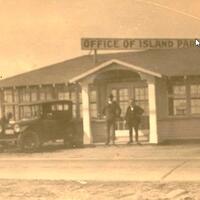
The Syracuse University College of Law was founded in 1895 as part of Syracuse University in Upstate New York. The College is a charter member of the Association of American Law Schools, having received accreditation in 1900. It has also been accredited by the American Bar Association since 1923. The College grants Juris Doctor degrees with a variety of specializations. Dineen Hall is Syracuse University College of Law’s new, state-of-the-art building. Previously the College was located in MacNaughton Hall.
Scope of Collection
The collection includes photographs, documents, and other items representing major events, places, and people associated with the history of the Syracuse University College of Law, beginning in 1895 when the college was founded to present day.
Browse within this collection
Browse similar collections

Collection Facts
Historical Context
Stony Brook University, widely regarded as a State University of New York (SUNY) flagship, opened in 1957 as a college for the preparation of secondary school teachers of mathematics and science. The first, temporary campus was located in Oyster Bay on the grounds of Planting Fields, a Gold Coast estate. The State University College of Long Island at Oyster Bay opened on September 16, 1957 with 144 first-year students and 14 faculty members.
The preparation of the Stony Brook campus began in 1959, when the SUNY embarked on a $150 million building program on acreage of woodlands in Stony Brook donated by Ward Melville. The construction coincided with issuance of the 1960 Heald Report, a study of New York State's higher education programs commissioned by Governor Nelson A. Rockefeller. This report recommended that a major new university center be established on Long Island. On April 8, 1960, Governor Rockefeller, Ward Melville, and Frank C. Moore, Chairman of the SUNY Board of Trustees, participated in the formal groundbreaking ceremony in Stony Brook. The new campus was designated a university center on June 6, 1960 and subsequently renamed the State University of New York, Long Island Center. Just a few years later, the mission of the university expanded, and the Stony Brook campus opened on September 16, 1962 with 780 students enrolled in its programs.
In the past six decades, the university has grown tremendously and is now recognized as one of the nation’s important centers of learning and scholarship. The combined efforts of its dedicated students, faculty, and staff have led to the fulfillment of the mandate given by the State Board of Regents in 1960 to become a university that would “stand with the finest in the country.”
Scope of Collection
The Stony Brook University Archives Digital Collection consists of primary source materials from the University Archives that documents the history of Stony Brook University.
Browse within this collection
Additional Information
The University Archives, a division of Stony Brook University Libraries, acquire, preserve, and provide access to collections that document the history of Stony Brook University. The collections supplement official records created and maintained by administrative and academic units.
Browse similar collections

Collection Facts
Scope of Collection
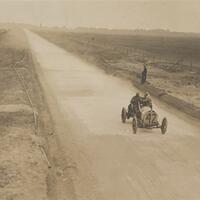
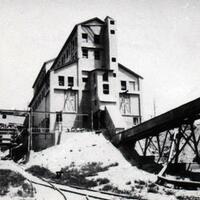
This collection contains photographs of the mines built by the Sterling Mines Company during the 1920s. Scenes include machinery, digs and other industry-related images, as well as images of the workers and their families.
Browse within this collection
Browse similar collections

Collection Facts
Scope of Collection
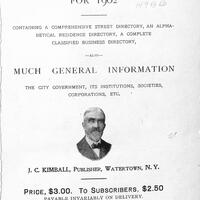
This collection includes approximately 300 pages of correspondence sent to the Sterling Iron & Rail Co. during the years 1865 and 1874. Many of the letters are related to the procurement and disbursement of supplies.
Browse within this collection
Browse similar collections

Collection Facts
Historical Context
Stephen Bastable (c. 1916-2000) received a BA from Syracuse University in 1937 and a MD from the Syracuse University College of Medicine in 1941. During World War II, he served in the US Army, and in 1944, he married Geraldine Gerry H. Bastable with whom he had two children. His medical specialty was orthopedics, and he co-founded the Orthopedic Residency at SUNY Upstate Medical University before his death in 2000.
Scope of Collection
This collection contains a student notebook from Stephen Bastable, who graduated from the Syracuse University College of Medicine in 1941 and was an orthopedic surgeon.