

Collection Facts
Historical Context
The legacy of Love Canal serves a myriad of research interests. It is an important event in "the transformation of the American environmental movement into a social movement" (Silveira, 2001, p. 497). Scholars trace the environmental movement "from its origins as an upper-class movement with a wilderness-centered ideology to its transformation into a richer, more diverse membership and an ideology inclusive of the urban environment" (from: Silveira, S. (2001).The American Environmental Movement: Surviving Through Diversity. Boston College Environmental Affairs Law Review 28(2), 497-532). Love Canal is perhaps the best known and most documented event of that time period. The vast collection of materials in Special Collections at the University at Buffalo Libraries includes both government and non-government, corporate and private materials that all contribute to the telling of this unfortunate and chilling story. Check the University at Buffalo's Love Canal website for information about the Love Canal collections available for use by students and other researchers.Historical Background In early 1893, William T. Love, a former executive with the Western Railway Corporation, was pursuing his plan to gain New York State legislative approval for a municipal corporation bill to establish Model City in the Niagara region of upstate New York. Love envisioned an incorporation of stock holders that could buy and sell real estate to acquire the necessary land for creating a city that would also build and own manufacturing plants. This "model" city would also build, equip, and operate its own street railways, gas works, telephone exchange, electric light plant and water plant, and build and control the steam railroad tracks running through the city. All of these services were to be furnished to residents at cost, using the power generated from Niagara Falls. A proposed canal that could move the waters between the Upper and Lower Niagara Rivers was already being excavated (from: "A Model Industrial City: Mr. William T. Love Proposes to Establish It in Niagara County," New York Times, 1893, May 31). By 1910, Love’s vision had disintegrated. Tesla’s innovation of alternating current (AC), made it less compelling for large industries to locate so close to hydro power sources. The national and state economies would no longer support his plans, and so the project was abandoned. The deep gash in the ground where digging for the canal had begun was left open and vacant. Industries did move into the area—lots of them. Still, the draw of unlimited, inexpensive hydro power lured many new corporations to the area. Westinghouse, General Electric, and the Niagara Falls Hydroelectric Plant (Schoellkopf Plant) all harnessed the power of the falls to supply electric energy to interested manufacturers. Industrial wastes were routinely dumped from about the 1920s on. At this time, the human and environmental implications of dumping industrial wastes were largely unregulated and virtually ignored. In 1942, Hooker Chemical and Plastics Corporation began disposing chemical waste in the former Love Canal site. In 1947, Hooker Chemicals became the owner and sole user of the land and continued to dispose of chemical waste there until it reached capacity in 1952. It has been estimated that between 1942 and 1972 the chemical giant dumped over 199,900 tons of chemical waste in four landfill areas of Niagara Falls, including 21,000 tons at the former canal site over approximately a 10-year period. In 1953, Hooker Chemicals sold the Love Canal site to the City of Niagara Falls for $1 under the city’s power of eminent domain. The land was used to construct an elementary school and eventually about 100 middle-class residential homes. As New York’s industrial jobs left in the 1970s and 1980s, it would soon be discovered that these industries left the state with a multi-billion dollar cleanup project. "On August 10, 1977, Niagara Falls Gazette reporter Michael Brown published the first front-page story about this working-class neighborhood. Brown, who won a Pulitzer Prize for his efforts, drew the world’s attention to the slimy black ooze from an abandoned dump that was coming back to the surface" (from: New York State Archives, "Environmental Affairs in New York State: An Historical Overview"). By 1978 the corroding containers of toxic wastes were leaching into the surrounding soil and water and bubbling up into basements and lawns of area residents. The high level of medical illnesses and birth defects among resident families were finally linked to the more than 82 toxins that were in the air, water, and soil. A medical emergency for the entire Love Canal area was declared by the federal government, and legal actions were underway to make Hooker Chemical—and the many other companies that had dumped their wastes indiscriminately—accountable for their actions. Grassroots citizen protest groups and formal legal actions combined to put pressure on both the government and eventually the private companies to clean up the area and try to compensate the residents for their losses of homes, health, and lives. "Four pieces of federal legislation set the rules for New York’s contentious cleanup. In 1976, The Toxic Substances Control Act required manufacturers to report to the EPA on the hazardous effect of their chemicals and mixtures and authorized the EPA to restrict the use of these substances. Also in 1976, The Resource Conservation and Recovery Act established a federal hazardous waste management program allowing states to take over the problem once they set up their own agencies. New York enacted its hazardous waste control program in 1978, just as the storm was breaking at Love Canal. The third major piece of toxic waste legislation was Superfund, or the Comprehensive Environmental Response, Compensation and Liability Act. This was passed in 1980 to provide some of the massive funds that were needed to clean up the nation’s worst toxic waste sites, including Love Canal and 79 others in New York. By the time the state received federal approval for their program in 1986, New York’s voters had approved a $1.2 billion state Superfund to complement the federal fund. Half of the $1.2 billion came from fees from industry and half from taxpayers. The fourth plank in the legal platform was the Occupational Safety and Health Act of 1970 (OSHA). It authorized the Secretary of Labor to set health and safety standards for the workplace and safe treatment of toxic substances became a major focus of the law. OSHA was the culmination of the Industrial Hygiene movement of the 1930s and 1940. It aroused vehement opposition from businesses that complained of arbitrary and unreasonable rules. It continues to be a lightning rod for controversy, but statistics show that it has made the workplace safer" (previous three paragraphs quoted from: New York State Archives, "Environmental Affairs in New York State: An Historical Overview"). Conclusion The Love Canal Collection preserves and makes available information about what happened locally and nationally as a result of the disaster at Love Canal. We should remember the following words: Quite simply, Love Canal is one of the most appalling environmental tragedies in American history. But that's not the most disturbing fact. What is worse is that it cannot be regarded as an isolated event. It could happen again—anywhere in this country—unless we move expeditiously to prevent it. (from: "The Love Canal Tragedy," EPA Journal, 1979, January)
Scope of Collection
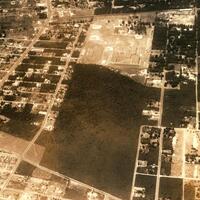
The collection includes photographs, mostly color slides, of the Love Canal site and related activism events. There are views of the abandoned homes, children playing near the site, toxic waste barrels, the demolition process, protests and activism events, as well as aerial views of the site. In addition, there are maps of the region and affected sites, Love Canal Homeowners Association documents, and Hooker Chemical advertisements. Most of the collection dates to the late 1970s and early 1980s.
Browse within this collection
Browse similar collections

Collection Facts
Historical Context
The Bayles family have been identified with the town of Brook Haven and the village of Port Jefferson for generations.
Scope of Collection
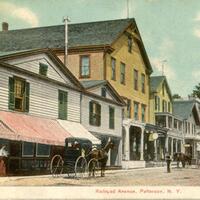
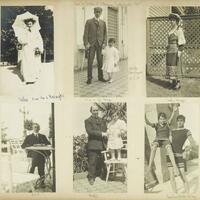
The collection consists of scrapbooks compiled by the Bayles Family in the early 20th Century. The scrapbooks contain postcards, photographs, and other ephemera relating to Miller Place, L.I, the Long Island Railroad, and various towns in Suffolk County.
Browse within this collection
Browse similar collections
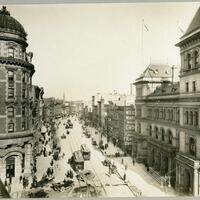
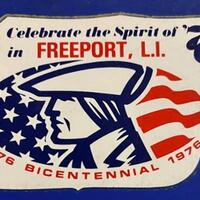

Collection Facts
Historical Context
Suffolk County was an original county of the Province of New York, one of twelve created in 1683. From 1664 until 1683 it had been the East Riding of Yorkshire. Its boundaries were essentially the same as at present, with only minor changes in the boundary with its western neighbor, which was originally Queens County but has been Nassau County since the separation of Nassau from Queens in 1899.
Scope of Collection
The collection consists of over 400 photographs showing the history of various towns and villages in Suffolk County in Long Island. Subjects include: residential and commercial buildings, people, the Long Island Railroad, civic events, schools, amusement parks, agricultural activities, etc.
Browse within this collection
Browse similar collections

Collection Facts
Historical Context
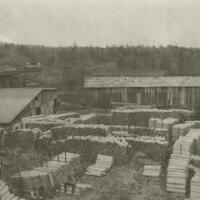
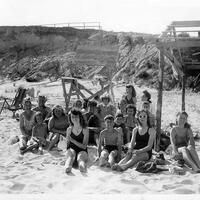
The high quality sand found on Long Island was used for over a century in making the concrete of the New York City skyscrapers, sidewalks, subways and bridges. Between 1870 and 1920, workers were drawn to Long Island from all over Europe to mine this in demand resource. By 1930, 100 million tons of sand had been delivered from Port Washington – the major sandmining area, to the metropolitan New York area. Out of dozens of sandmining companies that flourished in the 1920s, McCormack Sand Company continued to mine the area of sand through the 1980s until its lease expired.
Although not widely known, the sandmining industry on Long Island was a significant contributor in the construction of New York City’s skyscrapers, sidewalks, subways and bridges. From 1898 to the 1980s sand was mined in various parts of Long Island, the majority of which took place along the eastern and western sides of the Port Washington peninsula.
Scope of Collection
This collection contains photographs, documents, artifacts through various community donations. Also included are oral history interviews conducted at the Port Washington Library in the 1980s, 1990s and 2000s.
Browse within this collection
Browse similar collections

Collection Facts
Historical Context
Postcards were a primary medium for communication from the late 1800s to the mid-1950s. They are ephemeral sources of history and visual culture that document and communicate points of view, social norms, and history. The golden age of the postcard is considered to be from 1907 to 1915, spurred by the Universal Postal Union's authorization that one side of a postcard could be divided to accommodate both an address and a message. This change allowed one side of the card to be dedicated to imagery.
Scope of Collection
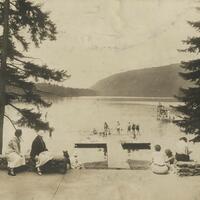
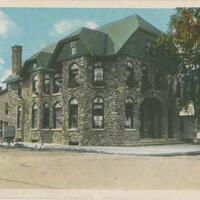
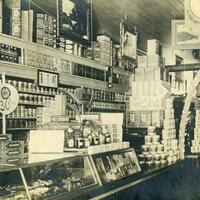
The Long Island Postcard Digital Collection comprises more than 150 postcards produced between the early 1900s and the 1930s that depict places and people primarily located on Long Island, New York. Locales in Brooklyn, Queens, and the Bronx are also represented in the collection. Subjects represented in the collection include: architecture; business; daily life; education; environment; military; nature; people; recreation; religion; sports; and transportation. The items are part of the Long Island Postcard Collection (SC 346) at Special Collections and University Archives, Stony Brook University Libraries.
Browse within this collection
Additional Information
The Long Island Postcard Collection is comprised of black and white, sepia, and color postcards (10 linear in.) that depict places and people primarily on Long Island, New York. Locales in Brooklyn, Queens, and the Bronx are also represented in the collection. The items were produced between the early 1900s and the 1930s. The collection is organized in two series and then alphabetically within each series. Series 1: Nassau County and Suffolk County and Series 2: New York City.
Browse similar collections

Collection Facts
Historical Context
The development of Long Island during the nineteenth and early twentieth centuries, both physically and economically, is closely tied to the development of New York City. The postcards in the Long Island Postcard Collection were assembled to document this development by showing the unique scenes of everyday life that could be found here – whether on mansions or on farms.
Scope of Collection
The postcards in the Long Island Postcard Collection were assembled to document the rise of Long Island’s development during the nineteenth and early twentieth centuries. The collection, deeded by Dowling College, highlights postcards of both the North and South Shores and documents mansions of the Gilded Age, local landmarks, and scenes of everyday life.
Browse within this collection
Browse similar collections

Collection Facts
Scope of Collection
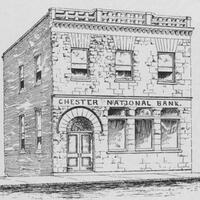
Significant aircraft manufacturing began on Long Island in the early 20th century and boomed during the war years. Long Islanders helped transform aviation from a dangerous sport into a viable means of transportation, while also producing a large portion of the nation’s aerial arsenal in times of war. From the first frail biplanes to the warbirds of World War Two and the sleek fighters of the jet age, aviation companies on Long Island helped make aviation the integral part of our world that it is today.
Browse similar collections


Collection Facts
Historical Context
The Long Island collections at Special Collections, Stony Brook University Libraries are premier sources for the study and research of regional history. The collections document how Long Island has been shaped by geography, the environment, social changes, culture, artistic and literary influences, and its people. Long Island history is a main collecting focus and the collections include primary and secondary source materials from the earliest settlers through the present.
Through the acquisition and preservation of diverse collections, and comprehensive reference and outreach services, Special Collections enrich the educational, scholarly, and entrepreneurial endeavors of Stony Brook University. Access to collections is open and equitable. All are welcome to pursue their research interests through Special Collections and University Archives.
Special Collections has been recognized and honored for its contributions to regional history. The New York Board of Regents and New York State Archives awarded the department with the “Annual Archives Award for Program Excellence in a Historical Records Repository.” In August 2012, a research guide for the department's Long Island documents and books was lauded by The Scout Report, a division of the National Science Foundation’s National Science Digital Library (NSDL) Project. In 2020, Special Collections and University Archives was the recipient of the Three Village Historical Society’s Kate Wheeler Strong Memorial Award in recognition of significant contributions toward the fostering of interest in local history and a fuller appreciation of the rich historical and cultural heritage of the Three Village community.
Scope of Collection
The Long Island Digital Collection comprises manuscripts, correspondence, photographs, books, works of art, maps, and more drawn from the holdings of Special Collections at Stony Brook University Libraries.
Browse within this collection
Additional Information
The Long Island collections at Special Collections, Stony Brook University Libraries are premier sources for the study and research of regional history. Long Island history is a main collecting focus. The collections include primary and secondary source material from the earliest settlers through the present.
Browse similar collections


Collection Facts
Scope of Collection
Over the course of the 20th century there have been about 70 airfields located on Long Island, the majority of these were active in aviation’s ‘Golden Age’. Large airfields like Mitchel and Roosevelt were the exception, most tended to be small with only simple structures. Others however were unique. The exclusive Aviation Country Club in Hicksville catered to the tastes of wealthy Long Island aviators and Curtiss Field in Valley Stream was the largest civil airport here for a time. Floyd Bennett Field in Brooklyn was New York’s first municipal airport and North Beach in Queens eventually evolved into today’s sprawling LaGuardia complex.
Browse similar collections

Collection Facts
Historical Context
"The Long Beach School District prior to 1911 was part of the Oceanside School District. In 1913 Long Beach became an Incorporated Village which included the first 50 homes and fulltime residents. The first school was a one room school room in the Nassau Hotel where a teacher gave instructions to the students who attended. The need to expand the schools because the residents living here year round instead of just summer residency which, increased the need to build a school which was a storefront on Park Street and Magnolia Blvd. The Long Beach School District officially began on September 5, 1915.
Magnolia School opened in 1922 with 6 classrooms, 3 teachers and a principal. In 1925 the property for the next school to be built was in the West End at 91 Maryland Avenue. The first Superintendent of schools for Long Beach was Walter Schwalje from 1924- 1942. Superintendent Schwalje in 1926 had Central School expanded the main building by adding 2 wings, which included a gym. In 1930 there were 1410 students in the district and the plans for a new school on Lindell blvd and the bay site was prepared in 1934. The Lindell School opened in 1940. Richard Maher was Principal in 1929 until 1942 when he became the 2nd Superintendent of schools for Long Beach School District.
The independent Long Beach Union Free School District was formed in 1924, and in 1951 it became a City School District."
Scope of Collection
The Long Beach Public Schools Collection contains photographs from 1914-1930’s.