

Collection Facts
Historical Context
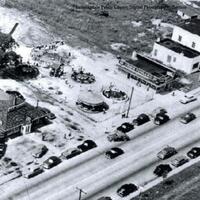
Mastic Beach and its sisters, Mastic and Shirley, are unincorporated hamlets in the South Shore town of Brookhaven, about a 90-minute drive from New York. Their quiet beachside life attracts middle-class families and the occasional weekender.
Scope of Collection
This collection contains postcards accessioned by the Mastics-Moriches-Shirley Community Library originally from the personal collection of Milton Price of Islip, N.Y. He was a photographer and owner of Tomlin Art Co. which was based in Northport, N.Y. The collection contains hundreds of postcards predominantly featuring images of landscapes and buildings on Long Island during the mid to late twentieth century, largely captured by Milt Price himself. The bulk of the collection contains postcards of locations in eastern Long Island due to an elevated level of tourism on the North and South Forks, but postcards featuring Nassau County (including Jones Beach), New York City, Block Island, and other areas outside of New York may be found within the collection. Note: Collection processing and digitizing is currently in progress and additional images will be added to the digital collection periodically.
Browse within this collection
Browse similar collections

Collection Facts
Historical Context
The Mill Whistle was a periodical published by the Berst-Forster-Dixfield Co. of Plattsburgh N.Y. to be distributed to employees serving overseas in the armed forces during the Second World War. The Mill Whistle contained stories of goings on back at home, as well as ways for soldiers to communicate with one another, as well as post their changes of address as they were reassigned or moved.
Scope of Collection
This collection contains issues of the Mill Whistle dating between 1944 and 1946.
Browse similar collections

Collection Facts
Scope of Collection
This collection includes a scrapbook which lists the name, address, date of birth, occupation, battalion, and service dates for Town of Tuxedo service personnel.
Browse similar collections

Collection Facts
Scope of Collection
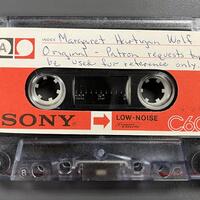
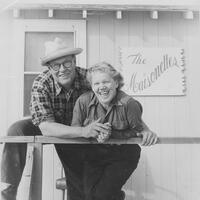
Military Memories & Veterans' Voices was a program held at the Voorheesville Public Library on December 3rd, 2017. The program shared stories from local military personnel who had been interviewed by young people from the community as a way to learn and honor their service.
In the weeks prior to the program, students from Voorheesville Central School District and local Boy Scouts ranging in age from grades five through eleven interviewed twenty-six veterans and active service military members. The interviewees' age range spanned seven decades and their experiences stretched from those who fought on Iwo Jima to a current navigator in the Air Reserves flying research support missions to Antarctica. Through their conversations, the participants learned the stories of their neighbors and the living history around them.
The collection consists of video recordings of five of the interviews as well as a number of photographs provided to the Library by the interviewees.
Browse within this collection
Browse similar collections


Collection Facts
Scope of Collection
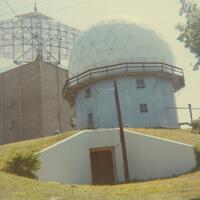
For over twenty years, Dr. Curtis Hemenway led the Dudley Observatory in collecting and analyzing so-called “space dust,” usually under the funding the NASA or the Jet Propulsion Laboratory. From the mid-fifties to the mid-seventies, Dudley launched probes and balloons into the upper atmosphere in order to collect and examine the micro-meteorites to be found there. The documentation from this process is the strongest part of Dudley's modern collection.
Browse within this collection
Browse similar collections

Collection Facts
Scope of Collection
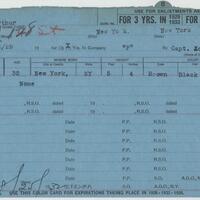
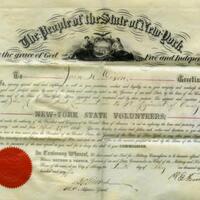
The collection consists of files delineated by the various American wars. Within each file is an alphabetical listing of names and any discovered information on the rank, division of service, birth date, death date, and internment record for the veteran. Some information consists of enlistment records, troop ship records, newspaper clippings and recorded information on the cause of death.
Images and other archival materials are added as discovered through Merrick Library's collection.
Browse within this collection
Browse similar collections

Collection Facts
Historical Context
The Merrick Library began in 1891, in the hayloft of a stable on the Cammann family farm, where Edward C. Cammann and good friend Richard P. Kent had put together a collection of 50 books given to them by family and friends. A few months later, the library was moved to a shack on the William Hewlett farm on Merrick Avenue, between Merrick Road and Kirkwood Avenue. A third move brought the Library to a 15-foot room on the ground floor of the newly-built tower of the Merrick Water Company on Kirkwood Avenue, behind the Church of the Redeemer.
The library's fourth home at 2369 Merrick Avenue was constructed in 1897 at a cost of $1,150, on land donated by Edward C Cammann's aunt, Katherine L. Cammann. That same year, Miss Lina Miller became Merrick's librarian.
Scope of Collection
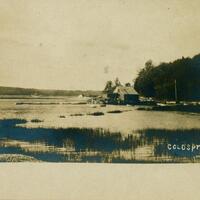
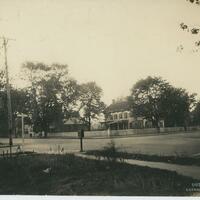
This small collection contains a variety of items including promotional travel postcards relating to the town of Merrick.
Browse within this collection
Browse similar collections

Collection Facts
Historical Context
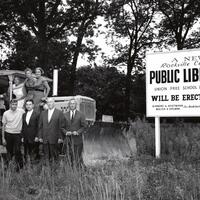
The Merrick Library began in 1891, in the hayloft of a stable on the Cammann family farm, where Edward C. Cammann and good friend Richard P. Kent had put together a collection of 50 books given to them by family and friends. A few months later, the library was moved to a shack on the William Hewlett farm on Merrick Avenue, between Merrick Road and Kirkwood Avenue. A third move brought the Library to a 15-foot room on the ground floor of the newly-built tower of the Merrick Water Company on Kirkwood Avenue, behind the Church of the Redeemer.
The library's fourth home at 2369 Merrick Avenue was constructed in 1897 at a cost of $1,150, on land donated by Edward C Cammann's aunt, Katherine L. Cammann. That same year, Miss Lina Miller became Merrick's librarian.
Scope of Collection
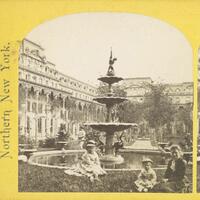
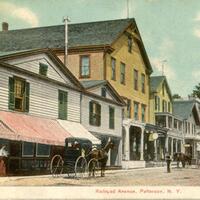
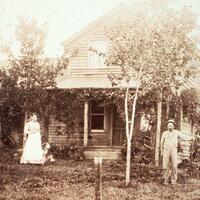
In 2014, the Merrick Library received the Merrick Historical Society’s collection and the photograph collection from the Merrick Life newspaper. These consist of original analog materials of photographs including panoramas, scrapbooks, maps, books, artifacts and ephemera. A wide array of topics are covered including early education, business, civic organizations, government, religion, and the performing arts.
Browse within this collection
Browse similar collections


Collection Facts
Historical Context
The Early Modern Period followed the Middle Ages and lasted from the close of the fifteenth century to the end of the eighteenth century. During this time period, Europeans began colonizing the Americas, had economic growth, and larger amount of scientific experiments occurring.
Scope of Collection
The Medieval and Early Modern Studies Collection includes manuscript leaves, manuscripts, printed book leaves, and books produced mainly in Europe from about 1200 to 1837.
Browse within this collection
Browse similar collections


Collection Facts
Historical Context
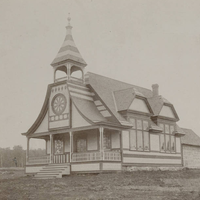
When Geneva Medical College moved to Syracuse in 1872, becoming the Syracuse University College of Medicine, its first classes were held in a building in Clinton Block area near the Erie Canal. Then in 1875, the College of Medicine moved to an old carriage factory building on McBride Street (called Orange Street at the time) and remodeled some of the laboratories and other spaces as students began taking classes. After 20 years, the carriage factory building could no longer be used due to its age and deteriorating condition. In response the college raised enough money to construct a new building on 309 South McBride street, a structure which still exists today. The carriage factor building was demolished and students began taking classes in the new building in 1896.
Scope of Collection
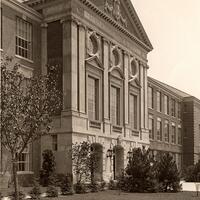
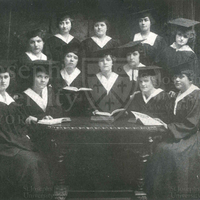
This collection contains photographs of the original Clinton Block, the carriage factory building on Orange (later McBride Street) and the 309 South McBride Street campus of Syracuse University College of Medicine. The images include the exterior of the buildings, as well as interior pictures of laboratories, library, and lecture halls. There are also photographs of the students and faculty. Correspondence, including invitations to the campus opening, and newspaper clippings are also contained in the collection.