
Collection Facts
Historical Context
The St. Lawrence-Lewis School Library System collection consists of high school yearbooks from area high schools. Mountain Echo is the annual yearbook of the Clifton-Fine Central School.
Scope of Collection
This collection consists of issues of Mountain Echo dating between 1953 and 2009.
Browse within this collection
Browse similar collections

Collection Facts
Historical Context
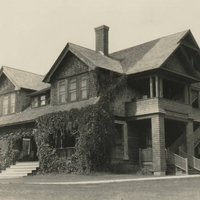
Begun around 1919 by Pierre Bernard (1876-1955) and Blanche DeVries, the Clarkstown Country Club was a center where guests learned Eastern Philosophies, yoga, music and dancing. Guests also participated in sports and watched elephants perform tricks. Bernard had many exotic animals, in addition to elephants. This included a chimpanzee, tigers, and lions. There were many rumors and misinformation about the Club being published in the 1930s and 1940s, and it appears Bernard did not try to stop the rumors. The club at its largest grew to cover 160 acres, with thirty-four buildings.
Scope of Collection
This collection contains photographs of the Clarkstown Country Club. It includes exterior and interior shots of buildings on the club grounds, as well as images of its construction. The collection also contains several photographs of the elephants who lived at the club.
Browse within this collection
Browse similar collections

Collection Facts
Historical Context
Named for Northern New York entrepreneur Thomas S. Clarkson, Clarkson University was founded in 1896 in Potsdam, New York, first as the Thomas S. Clarkson school of Technology, then becoming the Thomas S. Clarkson Memorial College of technology, then Clarkson University in 1984.
Scope of Collection
The collection consists of numerous annual issues of the Clarksonian, Clarkson University’s yearbook, dating between the years 1927 and 2008.
Browse within this collection
Additional Information
Clarkson University Library
Browse similar collections

Collection Facts
Historical Context
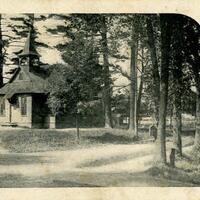
Named for Northern New York entrepreneur Thomas S. Clarkson, Clarkson University was founded in 1896 in Potsdam, New York, first as the Thomas S. Clarkson school of Technology, then becoming the Thomas S. Clarkson Memorial College of technology, then Clarkson University in 1984. In its early days, the school’s focus was on teaching technical skills such as electrical engineering, wood-working, applied chemistry, and machining. The college also had music groups and a photography club.
Scope of Collection
This collection consists of a number of postcards containing images of the Clarkson College campus, dating roughly to the 1900’s. Most of the photographs are of the college’s wide variety of engineering shops and laboratories, as well as of student clubs and organizations.
Browse within this collection
Additional Information
Clarkson University Library
Browse similar collections

Collection Facts
Historical Context
Named for Northern New York entrepreneur Thomas S. Clarkson, Clarkson University was founded in 1896 in Potsdam, New York, first as the Thomas S. Clarkson school of Technology, then becoming the Thomas S. Clarkson Memorial College of technology, then Clarkson University in 1984.
Scope of Collection
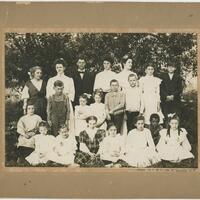
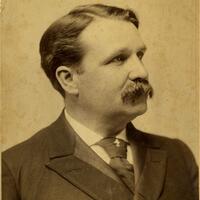
The collection contains photographs and other materials relating to the history of Clarkson University. Included are numerous photographs of the Old Main building, as well as numerous items relating to the first women to attend the university in 1904, as well as another class containing women (the first at that university in 57 years) from 1964.
Browse within this collection
Additional Information
Browse similar collections


Collection Facts
Historical Context
The Clarkson-Normal Ice Carnival began to be held annually in Potsdam, New York in 1931. The carnival usually included a wide variety of figure skating, skiing, and other events. This yearly festival played a large part in the civic and college culture of Potsdam – so much so that, according to the programs, it was considered on par with Olympic festivals held in nearby Lake Placid.
Scope of Collection
The programs in the collections include the names and photographs of performers and troupes, the names and photographs of the fair’s King and Queen, as well as rosters of the various comities which ran the carnival. Also contained are a large number of advertisements for local businesses, as well as Greek organizations at the local colleges.
Browse within this collection
Additional Information
Browse similar collections


Collection Facts
Historical Context
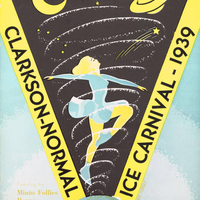
The Clarkson-Normal Ice Carnival began to be held annually in Potsdam, New York in 1931. The carnival usually included a wide variety of figure skating, skiing, and other events. This yearly festival played a large part in the civic and college culture of Potsdam – so much so that, according to the programs, it was considered on par with Olympic festivals held in nearby Lake Placid.
Scope of Collection
These three photographs show the king and queen of the 1934, 1939, and 1950 Ice Carnivals.
Browse within this collection
Additional Information
Browse similar collections

Collection Facts
Historical Context
George Clarke (b.1768). A great-grandson of Lieutenant Governor George Clarke, he left England and moved to Albany, New York, in 1806 to administer his family’s American property. In 1817 he purchased 340 acres in Springfield, New York, and began the construction of Hyde Hall, which would become the center of Clarke’s extensive agricultural and industrial investments empire. Philip Hooker, the noted Albany architect, drew plans based on Clarke’s conceptual vision. The mansion and its English-style Picturesque park setting were mostly completed by the time of Clarke’s death in 1835.
Scope of Collection
Includes correspondence between 1850 and 1920, invitations and calling cards; school papers, a scrapbook, photographs, wills, address books, poetry, prescriptions, recipes, and games, as well as papers concerning Mary Gale Clarke's involvement in the Springfield, New York chapter of the Daughters of the American Revolution (DAR).
Browse within this collection
Browse similar collections
![The [George Nathan] Newman Collection of Photographs of Vanished and Vanishing Buffalo](/sites/default/files/styles/browse_thumbnail/public/content/collection/covers/VHB004.jpeg?itok=iQTc6n6S)

Collection Facts
Historical Context
George Clarke (b.1768). A great-grandson of Lieutenant Governor George Clarke, he left England and moved to Albany, New York, in 1806 to administer his family’s American property. In 1817 he purchased 340 acres in Springfield, New York, and began the construction of Hyde Hall, which would become the center of Clarke’s extensive agricultural and industrial investments empire. Philip Hooker, the noted Albany architect, drew plans based on Clarke’s conceptual vision. The mansion and its English-style Picturesque park setting were mostly completed by the time of Clarke’s death in 1835.
Scope of Collection
Include correspondence, drafts, promissory notes, rent collection accounts, tax documents, legal papers, railroad construction and funding material, insurance policies, hops accounts, farm commodity documents, accounts, bills and receipts, account books, business diaries and checkbooks, and lastly, maps, all of which are associated with eight generations of the Clarke family. Also included are eighteenth and nineteenth century land papers (royal land grants), leases, and releases related to the family’s tenants, bound tax assessment books, bound rent books, pamphlets of notes on various farms and transcribed deeds, and surveys and papers concerning the family’s holdings in New York State and Wisconsin. George Clarke (1768-1835), the Builder of Hyde Hall, business papers prior to 1835 folded each pre-1835 business document into a 1-1/2 inch strip and labeled, dated, and numbered each on the end. Late eighteenth and early nineteenth century leases and deeds appear labeled with patent, farm number, tenant, and date.
Browse within this collection
Additional Information
Hyde Hall
Browse similar collections

Collection Facts
Historical Context
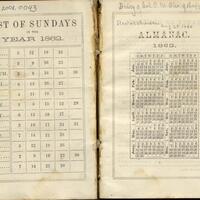
Charles F. Weller enlisted in the 15th Pennsylvania Cavalry in 1862 when he was 17 years old. Charles was on active service until the end of the war, campaigning in Virginia, Maryland, and Tennessee. He marched with Sherman, was in Captain McAllister’s Company “G”, and fought in Hagerstown. Weller participated in the Battle of Antietam and the Battle of Chickamauga among many. While Weller was a soldier in the Civil War, he wrote 50 letters to his girlfriend, Kate McElwain of Beaver County, Pennsylvania. Weller mustered out on June 21, 1865 and received an honorable mention for his meritorious service and soldierly conduct. Weller married McElwain soon after the war, and eventually settled in Omaha, Nebraska.
Scope of Collection
This collection consists of letters and a journal written by Charles F. Weller during his time as a soldier in the United States Civil War. Weller describes some of his experiences and actions during the war, in both his letters and journal entries