


Collection Facts
Historical Context
Nestled in a verdant valley among the rolling drumlins of Central New York, the hamlet of New Woodstock is a portrait of Americana worthy of a Norman Rockwell pastoral or a John Muir nature essay. At the heart of the community is the New Woodstock Free Library, chartered by the State of New York in 1939 to bring culture to the country and art to the bucolic landscape. The library is for all “The Growing Place.”
In such a setting of natural beauty and historical richness, art in all its variety thrives. Since its inception the library has been the catchment for the works of artists and artisans. Numerous exhibits and curated shows have provided individuals of all ages and ability with a venue for display of their works. Over time, the library acquired a representative collection of works that reflects the growth of individual artists and community tradition. The Growing Place Collection is the virtual avatar of the community’s history in art.
Scope of Collection
Comprised of paintings, etchings, drawings, and other works of art, this collection documents the local community of artists in New Woodstock, NY.
Browse within this collection
Browse similar collections


Collection Facts
Historical Context
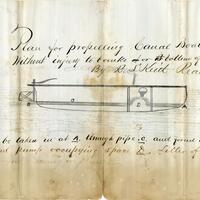
In 1871, facing a decline in canal traffic and revenue due to the growth of railways, the government of New York State offered a $100,000 reward to anyone who could find a replacement for animal power on the Erie Canal. Potential solutions needed to be able to move a boat laden with 200 tons of freight, at a rate for no less than 3 miles per hour, without unduly damaging the canal or its structures. Such a device or apparatus needed to be simple and durable, and be readily adaptable to the some 7,000 vessels then operating on the canal. Hundreds of letters poured in to the committee created to oversee the contest. From all over the country, both professional engineers and amateur inventors submitted their designs for consideration. They ranged from simple modifications of existing steamship technology and designs, to new, radical, and often ill-conceived approaches, all of varying degrees of practicality and plausibility. These letters represent a just a small sample of those designs submitted. They highlight many of the more novel solutions which were presented to the committee. In addition to written descriptions of steamship propulsion methods, some letters in this collection include diagrams illustrating proposed designs. By 1873, the steam power committee had selected those designs which it felt were viable, and from which working boats had been constructed. On October 16, these craft we brought to Syracuse, from which they would race from to Rome, stop for the night, and continue onward to Utica – with detailed measurements of speed and coal use taken along the way. The vessels there assembled were the William Baxter, the Port Byron, the Charles C. Pope, the Central City, and the William Newman – all craft which cleaved fairly close to either the screw or paddle wheel designs common on the steamships of the age, instead of the more fanciful designs which some had proposed. Competition was fierce, and although the Baxter ultimately made the trip with the fastest time, no ship, in the eyes of the commissioners, adhered to all of the criteria set down in 1871, and thus no prize was awarded.
Scope of Collection
The Great Steamboat Race Letters collection features contest entries that proposed innovative designs for steam powered canal boats.
Browse within this collection
Browse similar collections


Collection Facts
Historical Context
The root idea for the sculpture is one of the family as a fluctuating, ever-changing, rather than static unit. While the form of the sculpture is contemporary, the concept is meant to be timeless. A statement of past, present, and future, having no beginning or end as such, but rather a part of a larger continuum. The three main vertical columns represent the family. The two lower columns the male-female-father-mother tandem. The third column is the fruit of that union, the child, rising out of that structure toward the future. The box-like forms represent the home, the base of the family unit. The wings on the sides suggest forward movement and the change that the meaning of family is and has been going through. The wings also represent peace (symbolized by dove). Beyond this definition, the total form is meant to suggest movement to the new and unknown, reaching out of the earth toward the new horizons of space - always moving forward.
Browse within this collection
Browse similar collections


Collection Facts
Historical Context
Union College was founded in 1795. A small, residential, independent liberal arts community, Union today remains one of the oldest non-denominational colleges in the country with a rich history that blends respect for tradition with an emphasis on integrating the humanities and social sciences with the natural sciences and engineering in dynamic and innovative ways.
Scope of Collection
This collection contains documents sharing the history of Union College.
Browse similar collections

Collection Facts
Scope of Collection
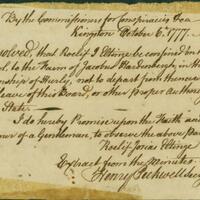
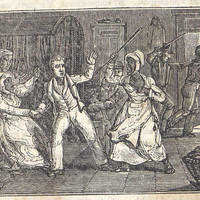
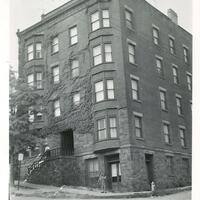
The collection contains four issues of The Emancipator, an anti-slavery newspaper dating from 1838 through 1839. The articles pertain to the abolitionist movement.
Browse within this collection
Browse similar collections


Collection Facts
Historical Context
The College of Saint Rose was founded in 1920 by the Sisters of Saint Joseph of Carondelet as a Roman Catholic college for women. Its founders selected the name of Saint Rose to honor the first canonized saint in the Americas. An evening division was developed in 1946 to meet the needs of World War II veterans and, in 1949, a graduate school was added to provide master's degree programs. Men were admitted to both the original evening and graduate divisions, and in 1969 the College became fully co-educational. In 1970, the Board of Trustees was expanded to include laypersons in addition to the Sisters of Saint Joseph. Thus, The College of Saint Rose became an independent college. The college ceased academic instruction in June 2024.
Scope of Collection
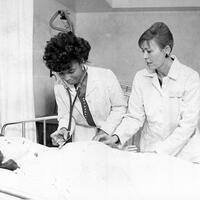
This collection contains images of yearbooks from the 1920s at the College of Saint Rose.
Additional yearbooks from The College of Saint Rose are available on Albany Public Library's New York Heritage collection.

Collection Facts
Historical Context
The College of Saint Rose was founded in 1920 by the Sisters of Saint Joseph of Carondelet as a Roman Catholic college for women. Its founders selected the name of Saint Rose to honor the first canonized saint in the Americas. An evening division was developed in 1946 to meet the needs of World War II veterans and, in 1949, a graduate school was added to provide master's degree programs. Men were admitted to both the original evening and graduate divisions, and in 1969 the College became fully co-educational. In 1970, the Board of Trustees was expanded to include laypersons in addition to the Sisters of Saint Joseph. Thus, The College of Saint Rose became an independent college. The college ceased academic instruction in June 2024.
Scope of Collection
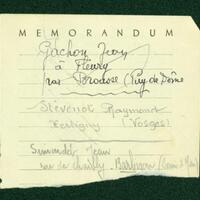
This collection contains documents written by students of the College of Saint Rose.
Browse similar collections


Collection Facts
Historical Context
The College of Saint Rose was founded in 1920 by the Sisters of Saint Joseph of Carondelet as a Roman Catholic college for women. Its founders selected the name of Saint Rose to honor the first canonized saint in the Americas. An evening division was developed in 1946 to meet the needs of World War II veterans and, in 1949, a graduate school was added to provide master's degree programs. Men were admitted to both the original evening and graduate divisions, and in 1969 the College became fully co-educational. In 1970, the Board of Trustees was expanded to include laypersons in addition to the Sisters of Saint Joseph. Thus, The College of Saint Rose became an independent college.
Scope of Collection
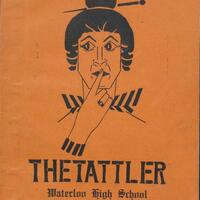
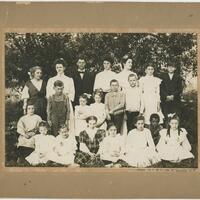
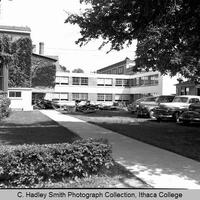
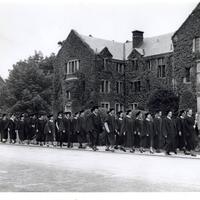
This collection contains photographs sharing the history of the College of Saint Rose, including its students and faculty. The college ceased academic instruction in June 2024.
Browse similar collections


Collection Facts
Historical Context
The College of Saint Rose was founded in 1920 by the Sisters of Saint Joseph of Carondelet as a Roman Catholic college for women. Its founders selected the name of Saint Rose to honor the first canonized saint in the Americas. An evening division was developed in 1946 to meet the needs of World War II veterans and, in 1949, a graduate school was added to provide master's degree programs. Men were admitted to both the original evening and graduate divisions, and in 1969 the College became fully co-educational. In 1970, the Board of Trustees was expanded to include laypersons in addition to the Sisters of Saint Joseph. Thus, The College of Saint Rose became an independent college. The college ceased academic instruction in June 2024.
Scope of Collection
The Oral History Collection consists of audio recordings of interviews that were conducted from 1979 to 2012. The women interviewed were students, professors or employees at the College. Many of them were Sisters of Saint Joseph. The interviews document college life, the changing views around higher education for women, and the experiences of women religious before and after Vatican II. With the support of their order, many of the sisters interviewed received Ph.Ds. or took high level administrative jobs, which was unusual for women at that time. Most of the interviews are accompanied by a biography, summary of the interview, and list of topics covered in the interview.
Browse similar collections

Collection Facts
Scope of Collection
This collection contains maps of the College of Saint Rose campus from the twentieth and twenty-first centuries.