A 1957 housing study showed that many poor Geneva families lived in substandard homes that were overcrowded and lacked plumbing and central heating. This included families living in the Dixon Tract, an area on the east side of the city where homes were built for laborers during World War II. Built to be temporary, several homes housed German prisoners of war before reverting to family houses that eventually showed their age with poor electricity and bug infestations.
Many of the Black families who formerly lived at Dixon moved into the new Charles Homes public housing project in 1961, along with other low-income white families and a rising Hispanic population. There were few other affordable housing options. In 1966 federal Urban Renewal removed additional substandard houses in the downtown area. Home ownership has since been notably unavailable to low- and moderate-income families.
Beginning in the 1960s, activists pushed the city to apply for federal funding for scattered housing, rather than centralized apartments. Community leaders focused on inadequate housing for low-income families regardless of race. Privately run organizations Geneva Home Improvement Corporation (GHIC) and Community Unified Today (CUT) improved and built homes around the city. (87)
“On Exchange St. we need housing…houses for the poor white, the blacks and Puerto Ricans. The kids are playing in the street…there’s no homes for them.”
- Mary Ann Mallard, in response to the planned city recreation center ice rink on South Exchange Street, 1976.
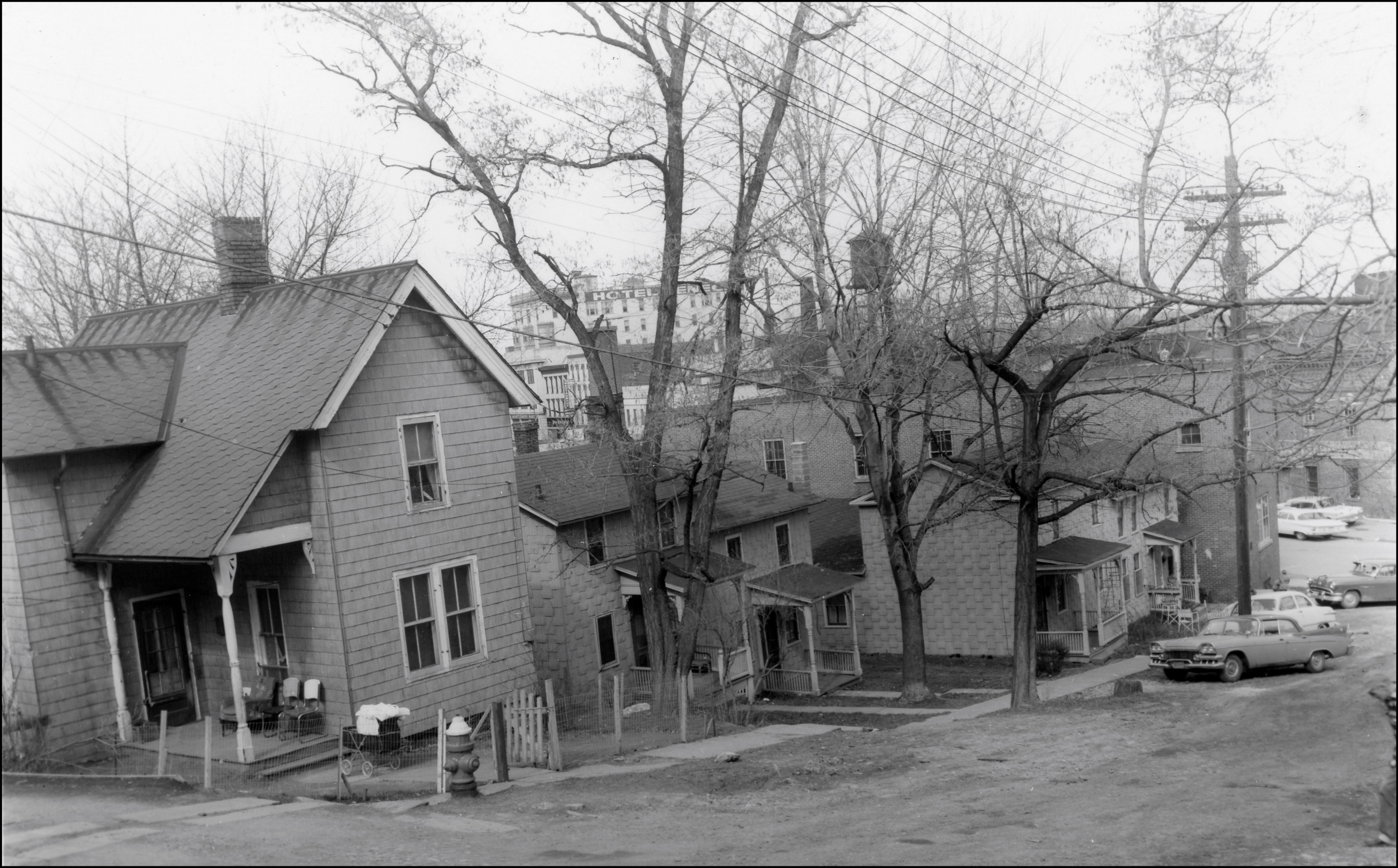
Urban renewal displaced Black families living on East Washington Street (shown here). City officials found there were few affordable places to move these families, highlighting the housing problem.
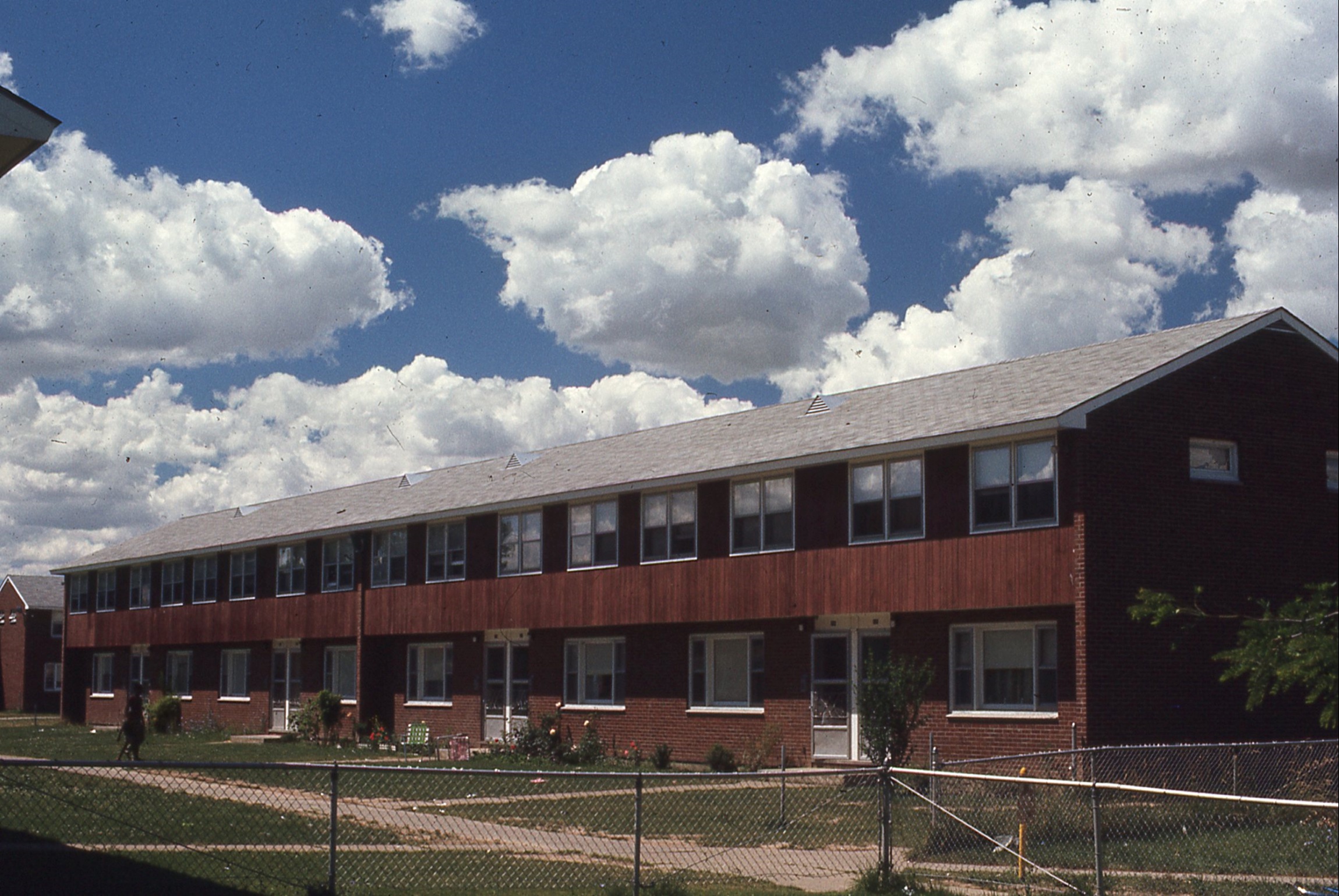
John J. Chartres Homes opened in 1961 on the eastern edge of the city and was renamed Courtyard Apartments in 1996 along with a $7.2 million renovation.
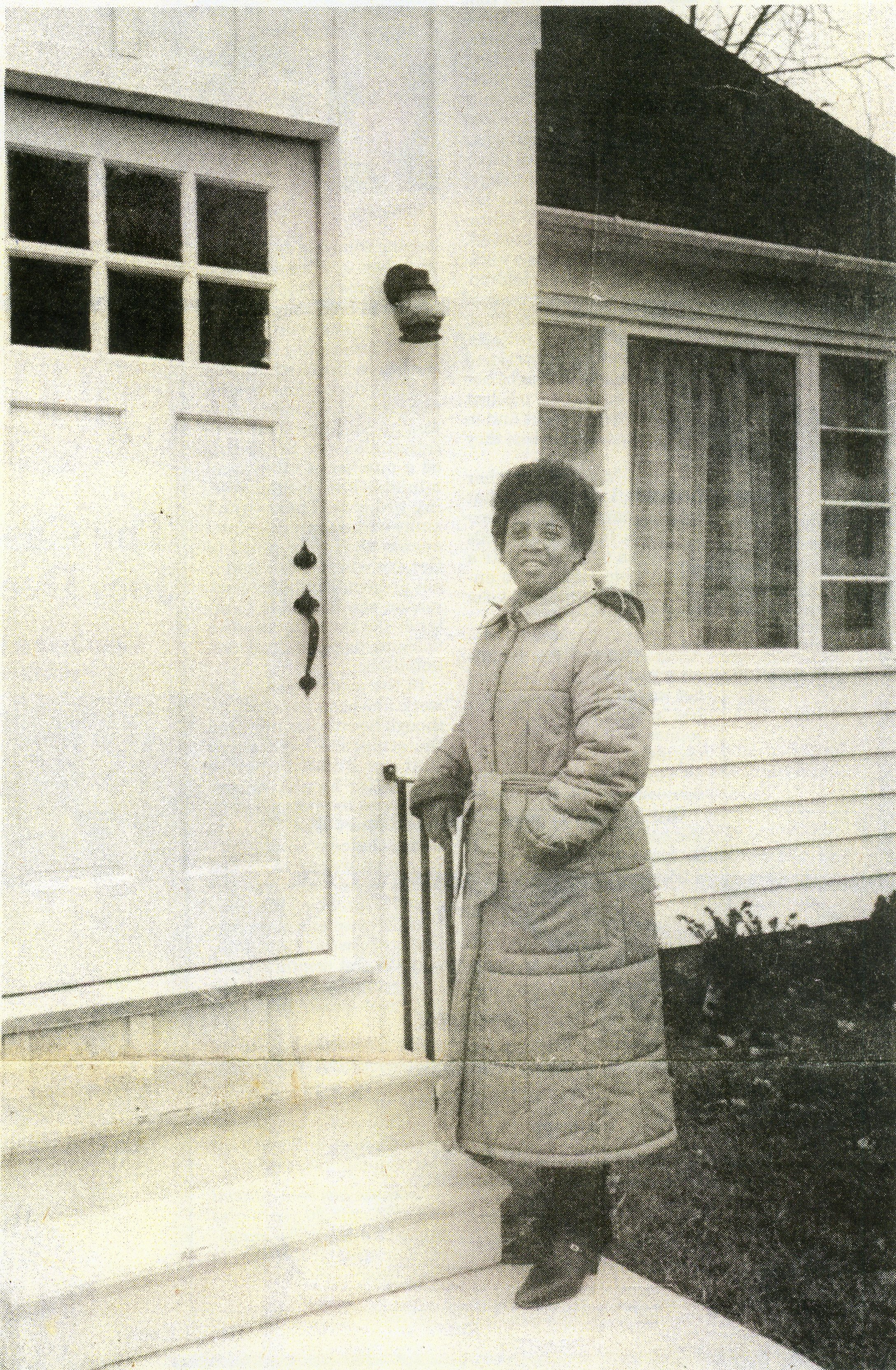
In 1974 Community Unified Today (CUT) was formed to provide housing, childcare and family support services to low-income people. In 1987 CUT moved houses from the Hamilton Street Wegmans site and sold them to Lillian Collins (shown here) and others.
In 1968, Geneva Homes Improvement Corporation, a private sector group, formed to help families leave public housing and move into their own homes. Services included rehabilitating and selling houses, and guiding people through the homebuying process.
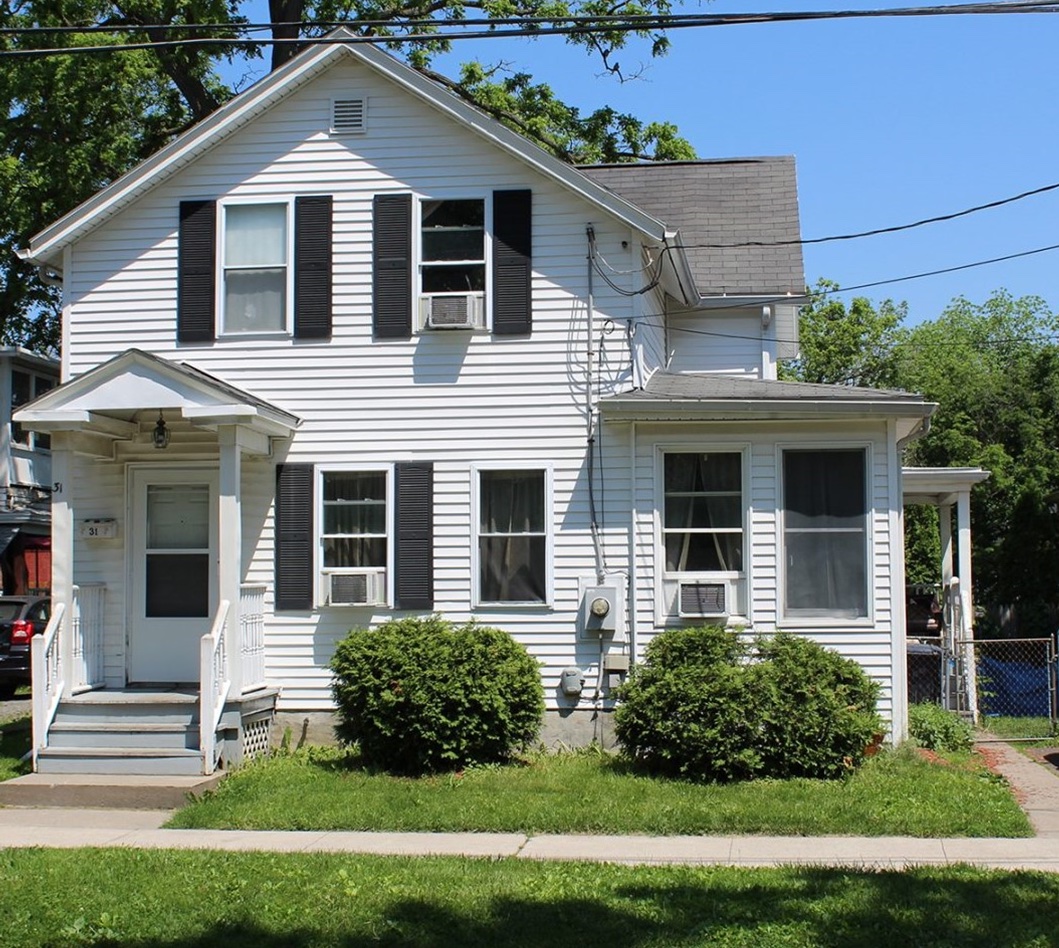
In 1979, the Geneva Housing Authority began its Scattered Site program, renting single- and multi-family homes around the city. In 1994 it began selling some of its homes to low-income families.