Like many cities, grassroots organizations developed within the local Black community to protest for equal rights. A local branch of the NAACP was established in 1960, raising awareness for better housing conditions, discriminatory hiring practices, racial imbalance in the school district, and improving neighborhoods.
Established by City Council in 1964, the Geneva Human Rights Commission (GHRC) handled housing and job discrimination complaints. In 1968, the Community Action Self-Development Corporation (COMAC, inactive around 1974) was formed to organize the black community. Their goals included opening a community supermarket, credit union, and professional community organizer.
“Don’t let the green grass fool you…This is the beginning of a new day – Geneva has become concerned about all its citizens – but it doesn’t mean the end of racism and segregation.” – Reverend James Knighton, St Paul Baptist Church, 1980
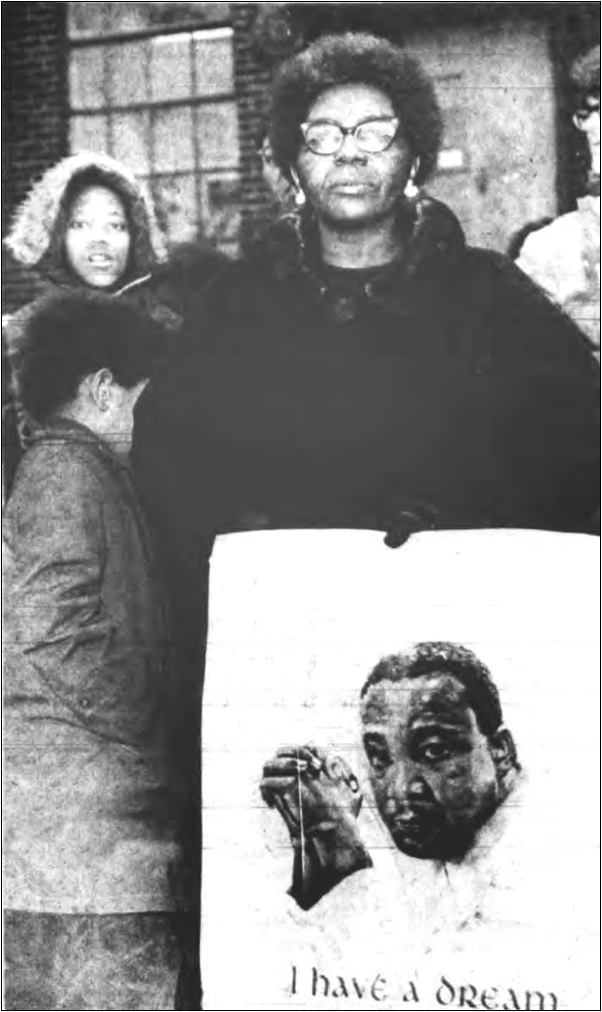
Mary Ann Mallard (1924-1995) fought for Dr. King’s birthday to be a school holiday, and was president of the Ontario County Welfare Rights Organization. Geneva Times.

The Martin Luther King Jr. Committee developed out of student protests from 1972 to 1976 over the school district’s refusal to recognize Dr. King’s birthday as a holiday. The Committee continues to march every year on Martin Luther King Jr. Day, followed by a church service and dinner.

In 2020, the People’s Peaceful Protest stemmed from the Black Lives Matter movement. In addition to organizing marches, members proposed a local law for a police accountability board. Finger Lakes Times.

Though the Geneva NAACP mostly went dormant around 1970, the branch was rejuvenated in 1980. The group, including James Singleton pictured here, picketed the school district in 1981-1982 over failure to hire more black teachers and administrators. Geneva Times.