Humboldt Park
The rocks found in Humboldt Park date from the late Silurian Period to the middle Devonian Period (about 425 million years ago). The region was covered by warm ocean. Sand, silt, and clay, carried by rivers, were deposited as thick layers of sediment. Marine organisms, like the eurypterids and trilobites, thrived in this tropical ocean and their remains accumulated along with the sediment. Over millions of years these materials became compressed into massive layers of sedimentary rocks we see today.
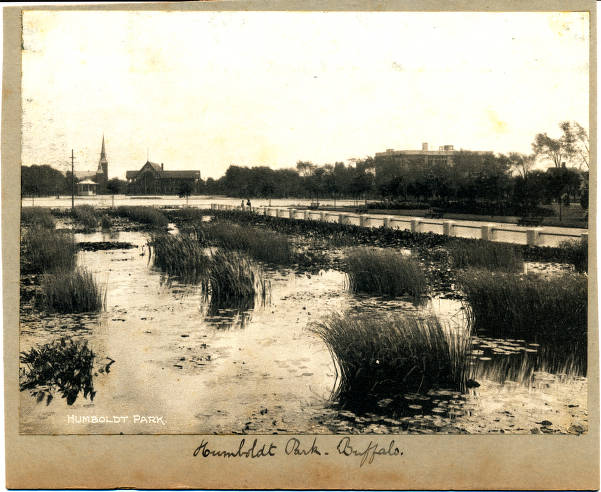
Stereoscopic view of Humboldt Park, ca. 1905
Image source: Buffalo Olmsted Parks Conservancy found in New York Heritage: https://nyheritage.contentdm.oclc.org/digital/collection/NYBFL/id/490/rec/11

Onondaga Limestone
Hayes Hall along with many other of UB’s South Campus buildings were constructed of Onondaga Limestone

Another specimen of Onondaga limestone
Historically, Buffalo was home to many quarries for Onondaga Limestone as it is a popular construction material.
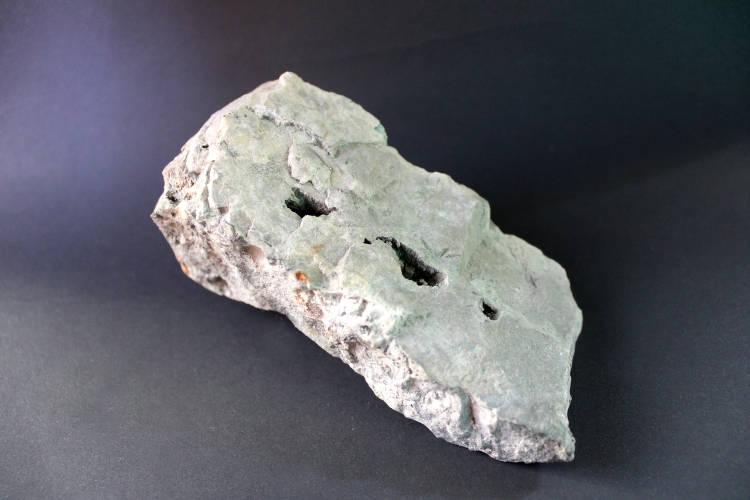
Akron dolostone
The pitted surface of the Akron Dolostone is created when fossil corals are weathered away.
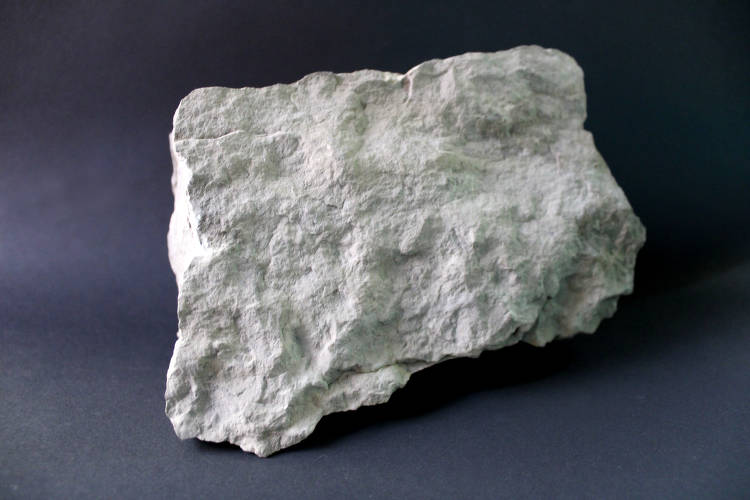
A second specimen of Akron dolostone
In the Buffalo area, Akron Dolostone has been used to build buildings and to make cement.

Bertie dolostone
The Bertie Dolostone is famous for its eurypterids, an extinct sea scorpion and New York’s official state fossil!
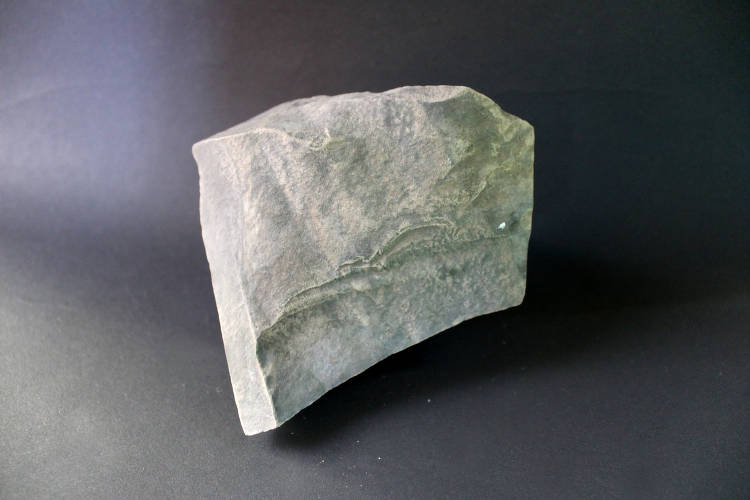
Another piece of Bertie dolostone
The diversity of marine life that can be found in the Bertie dolostone indicates that it was deposited in a lagoon.

Camillus shale
Halite and gypsum can be found in abundance in the Camillus Shale. This deposit is an important source of these minerals in New York State.
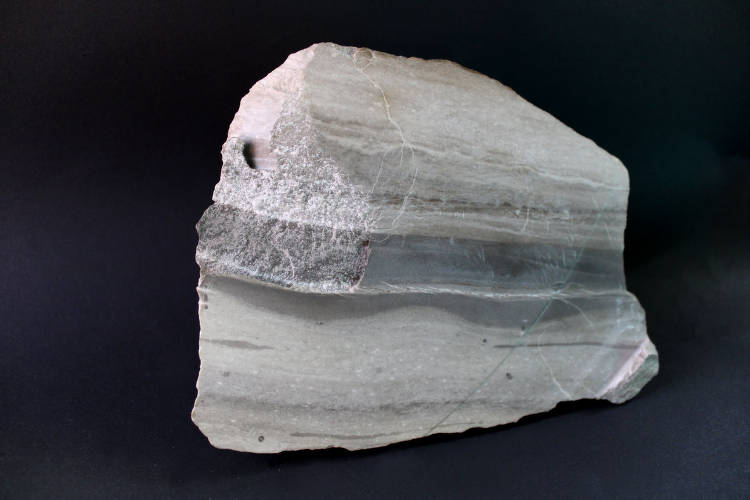
Camillus shale and dolostone
At the time this deposit was laid, New York was below the equator! The rocks indicate a landlocked sea that slowly evaporated, creating dolostone and other minerals.

Lockport dolostone
When this rock was deposited, the sea around it was much saltier than sea water and contained many dissolved minerals. Because of this, we can find minerals such as calcite, galena, fluorite, and gypsum in this formation.

Another specimen of Lockport dolostone
Dolostone is like limestone but is more durable. Because of this, the extremely hard dolostone works well as a caprock for Niagara Falls.