The three types of rocks (igneous, sedimentary, metamorphic) are subdivided into numerous groups and types on the basis of various factors, the most important being chemical, mineralogical, and textural attributes. Look at the variety of specimens found in a geological collection!
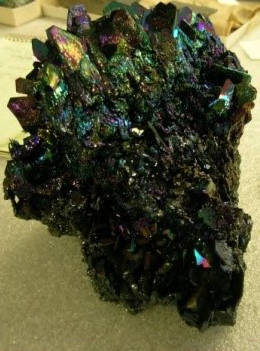
Carborundum is synthetic rock. Carborundum is silicon carbide (SiC), a synthetic material used as an abrasive. Invented in 1890, it was manufactured in Niagara Falls and is hard enough to cut glass. In addition to naturally occurring geological phenomenon, manufactured materials are also present in Geological Collections.

Petrified wood is a fossil. Petrified wood is a tree that has turned to stone! Through the process of permineralization, minerals like quartz fill the spaces within the organic materials.

Sandstone is a rock. Rocks are naturally occurring aggregates of solids made of one or more minerals. This sandstone is composed of grains of sand. Many minerals can form sand grains, but the most common mineral to make up sand is quartz.
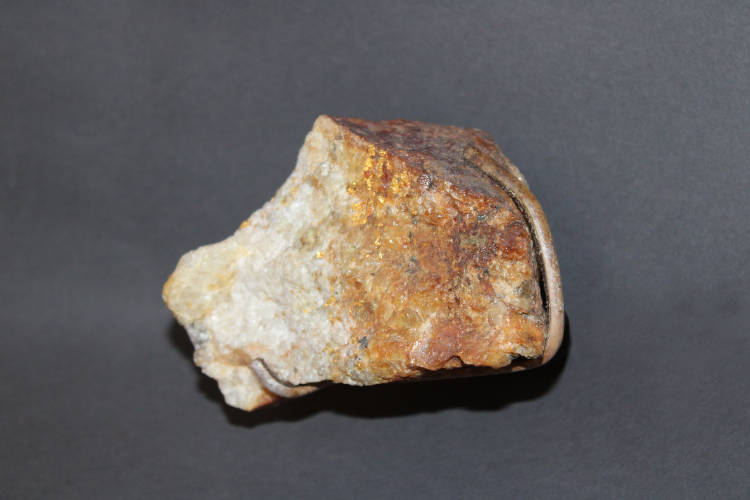
Gold is a precious metal. Among the earliest metals valued for their beauty and rarity were gold and silver. Used in currency, jewelry, dentistry and even the electronics industry, these precious metals have a wide range of uses.

Silver is a precious metal. Among the earliest metals valued for their beauty and rarity were gold and silver. Used in currency, jewelry, dentistry and even the electronics industry, these precious metals have a wide range of uses.
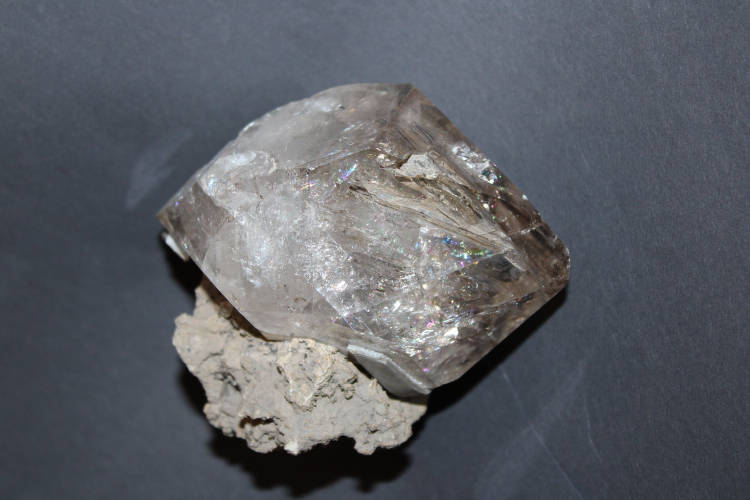
Herkimer diamond is a mineral. This mineral known as the Herkimer Diamond is not a diamond at all! It is quartz – one of the most abundant minerals on the planet.

A trilobite is an example of a fossil. Geologists also look at fossils, which are evidence of past life. Some fossils are formed when an animal or plant or is buried in sediment. Footprints, burrows or even animal dung can also be preserved in rock as a fossil. Trilobites are extinct arthropods that lived during the Paleozoic Era and are a common fossil in Western New York. Their closest living relatives are the horseshoe crab!

A eurypterid is an example of a fossil. The eurypterid, or sea scorpion, are extinct arthropods that lived in this area over 400 million years ago! It is the state fossil of New York. It is in the emblem in the center of the seal of the Buffalo Society of Natural Sciences.
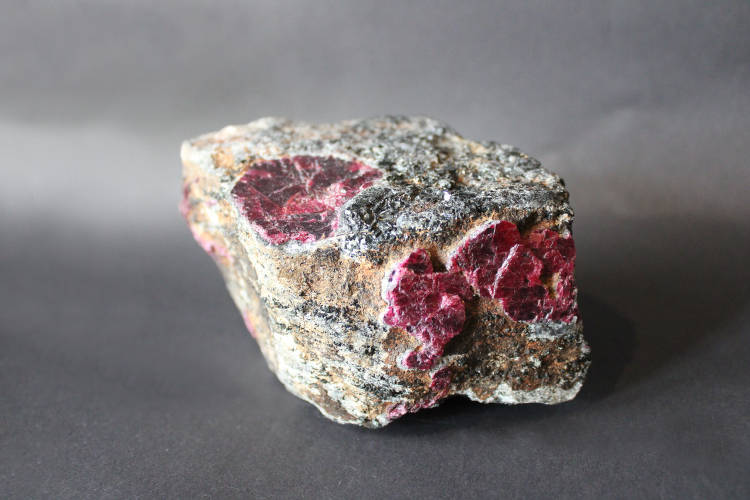
Corundum var ruby is an example of a mineral. Rubies and sapphires are two different forms of the mineral corundum. Tiny amounts of chromium result in the vibrant red of a ruby.

Ruby is an exmaple of a gemstone from corundum. Gemstones are minerals that occur in nature and are valued for their beauty and rarity. When cut and polished, they are used in making jewelry and other adornments. Rubies are a form of the mineral corundum. Tiny amounts of chromium result in the vibrant red of a ruby.

A core sample is a cylindrical section of rock. Using core samples like this one, scientists can determine the location of a diamond vein or interpret layers of rock to find evidence of climate change or tectonics in an ancient environment! Cores are collected using a large machine that can drill into the Earth and remove the core of rock.