The port’s most important commodity was grain. Buffalonian Joseph Dart’s 1842 invention of a steam-powered grain elevator helped establish the Queen City as an ideal location for grain transportation. Dart’s elevators were equipped with buckets on conveyor belts that could transfer grain directly from a ship to an elevator for storage or a canal boat. This was previously done by hand carrying buckets, a process that was ten times slower. Over time, many grain elevator improvements were made, ultimately leading to the cylindrical concrete structures we see today. By the mid-1880s, Buffalo had over 30 elevators that could transfer more grain than any other U.S. port. Other important commodities transferred were coal, flour and feed, sugar, steel, automobiles, copper, iron ore, lumber, general merchandise, wool, dairy products, and limestone. These massive buildings lined the mile-long “elevator alley” giving the area a feeling of industry and might. Though only a fraction of these imposing structures survives, they remain an important aspect of Buffalo’s architectural legacy.
Buffalo’s Central Wharf was the hearth of Buffalo’s business from the mid-1800s to the 1880s. It was located along the upper side of the Buffalo River from the Commercial Slip to the end of Main Street and included a row of three to four story buildings and a wood plank dock. Tenants included warehouses on the lower level, wholesale merchants, telegraph services, insurance agents, and the Board of Trade. The wharf was a scene of the constant motion and the bustling sounds of canal boats and wagons unloading barrels of goods, westward travelers boarding steamboats (often playing music), fleets of hand-propelled water taxis, curious observers, and business people negotiating trade. This international hub of the grain industry was demolished in the 1880s as railroads became the dominant means of transporting goods.
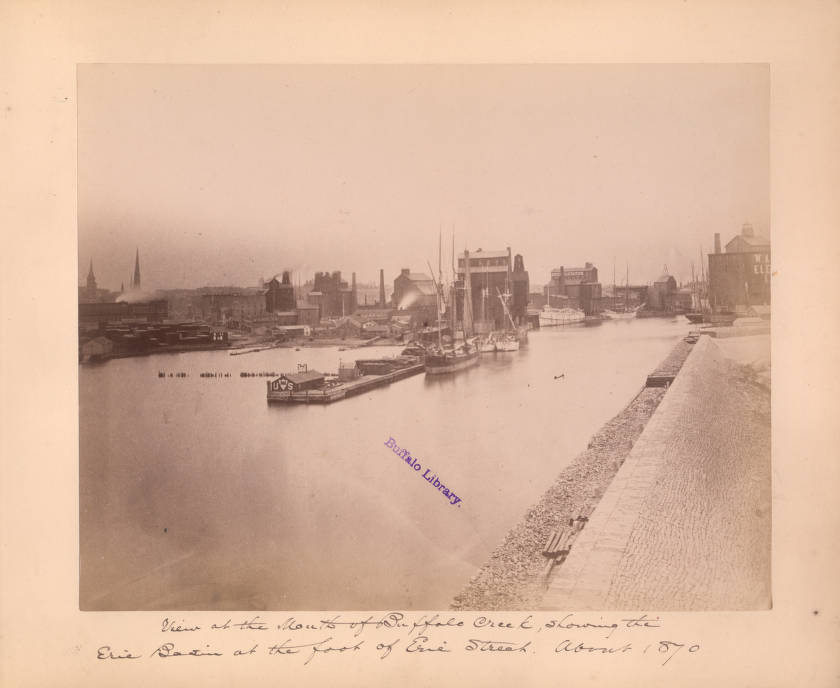
A circa 1870 view of Erie Basin at the foot of Erie St.

Grain elevators at Buffalo Harbor circa 1895.
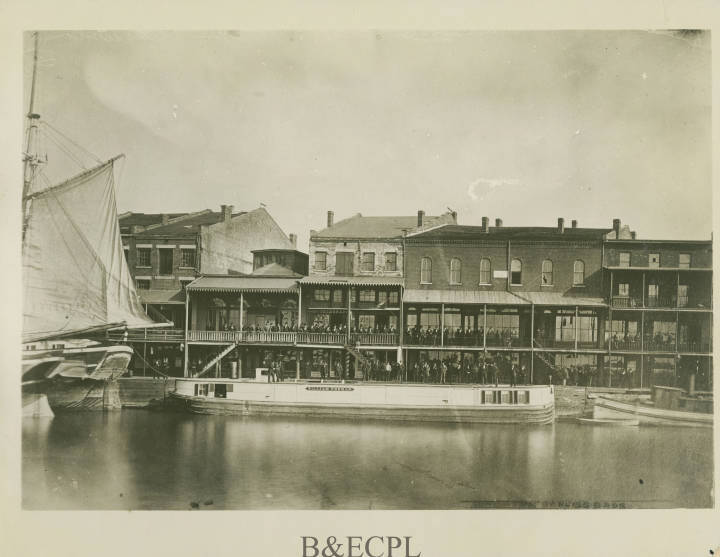
Old Central Wharf, Front St., west of Main St.
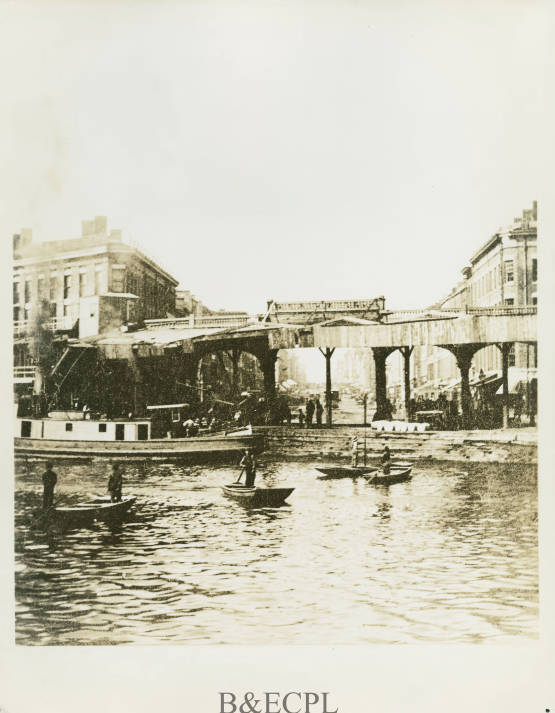
This scene of the foot of Main St. in 1867 shows water taxis.
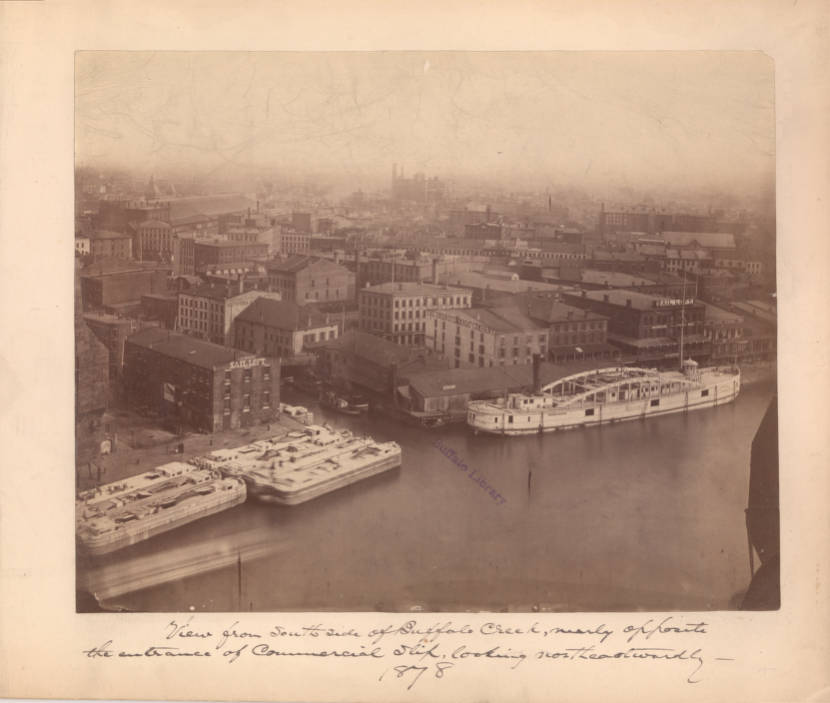
1878 photo depicts a view from the south side of Buffalo Creek looking northeast including the bottom of the Commercial Slip and the Central Wharf.
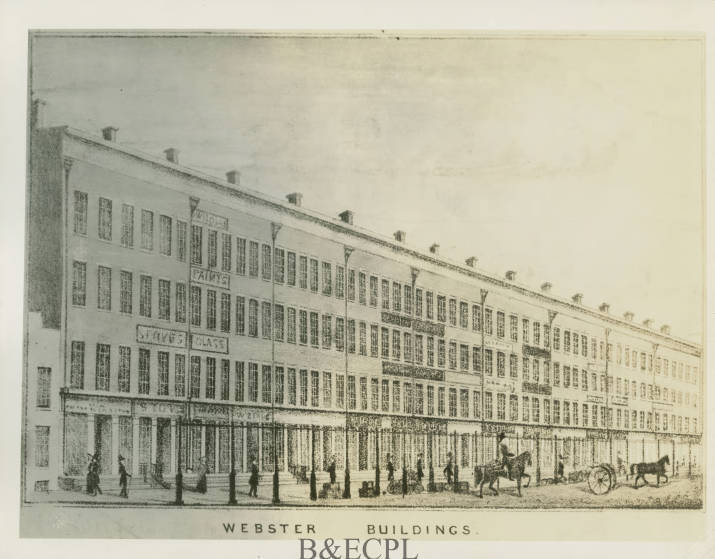
The Webster Block, 55-87 Main Street, about 1838. This block was part of the Central Wharf.
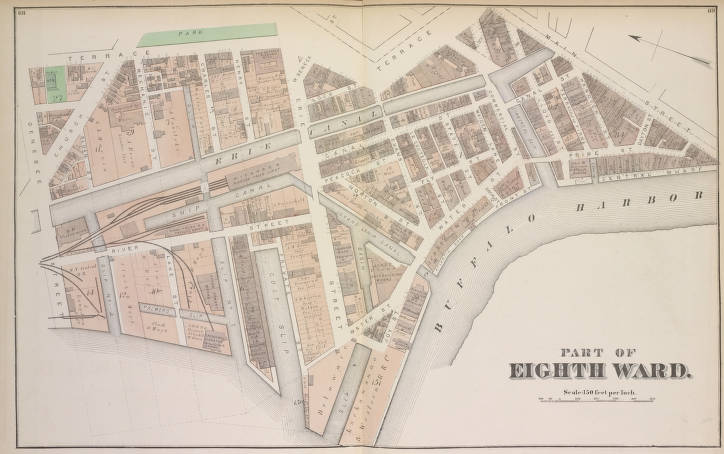
The Central Wharf depicted on an 1872 Buffalo atlas, at the corner of Main Street and Buffalo Harbor.